[00:00:00] Speaker A: Foreign.
Welcome to wealth on Main street, where conversations about growing your wealth are fun and entertaining. Wealth isn't just about money. It's the skills and the knowledge that we develop to pass on to future generations. Tune in each week to grow your mindset and your net worth at the same time.
[00:00:35] Speaker B: So I'm in my 50s, I'm in my 60s. Isn't this going to be too expensive? The overwhelming majority of people that we help are between the ages of 45 and 65, especially the people who are like, they're 47. I'm like, you're on the young side.
[00:00:47] Speaker A: It's the graph of how things have grown since 1900. Nelson would say, oh, look, the mountain wave graph of lies. Because it looks like a mountain, right, with all these peaks and valleys in it. Well, what did he get? He got magic beans, right? If you're watching this and you're trying to get financial advice in 60 second sound bites, stop doing that. It's great for piquing your interest, but do not accept any of that stuff.
[00:01:12] Speaker B: They're not Becoming their Your Own They're just owning a policy. They're like a policy collector. They're just storing money in there. They're not actually using it.
[00:01:19] Speaker A: In our book Cash Falls a Leader, we use one of the analogies of the financial minivan. And you know, I'll confess, I'm a minivan guy.
[00:01:27] Speaker B: I'm not here to compete with your investments. I'm competing with your checking and savings account. And I'm willing to bet you that it's doing nothing for you. I'm going to build you a better warehouse first before you get any one of those dollars. A job in an alternate universe is that business that relied on the banks. When the going gets tough, banks tighten up. And so that business then withers on the vine and it's not here anymore. And that doesn't fit on a balance sheet.
[00:01:51] Speaker A: You have to put your mask on first before helping anyone else. The truth, and the reality is you will be incapable of properly helping that individual if you have not first helped yourself. By the way, 70 is the new, like 50 these days. So I would encourage people to start thinking about a longer range of life.
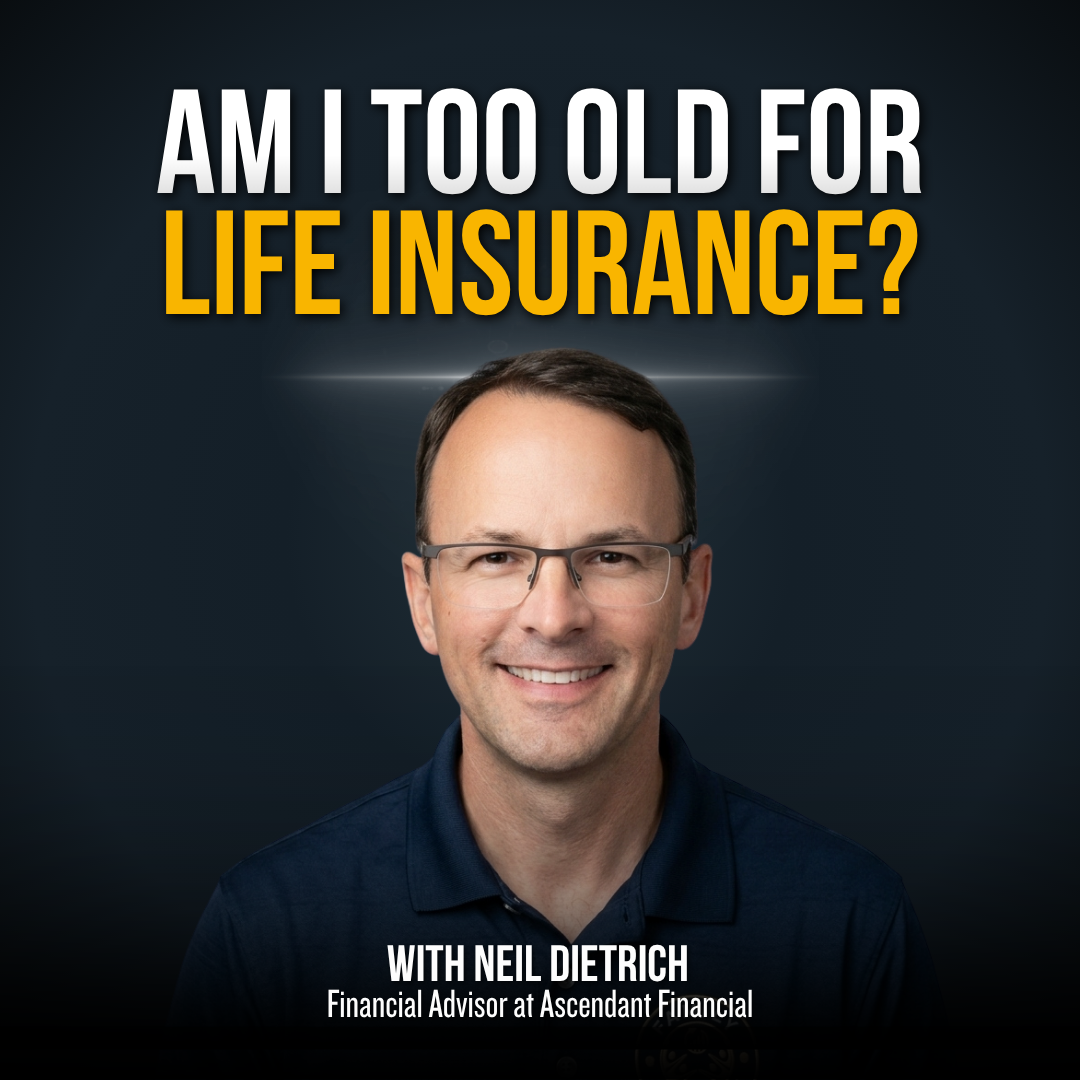
Life in the trenches as an infinite banking advisor, helping clients figure out the financial chaos that they create in their life. How do we put all these pieces together, help them on their journey, help them define and clarify some of the goals, the things that they know they want to do but aren't sure how to clarify or say out loud. That's some of the work that we do here at Ascendant Financial. That's how we help our clients. Now we're joined by one of our top advisors, that's Neil Dietrich. He's been on the show before. He's a recovering lawyer, much in the way that I'm a recovering electrician.
And we're going to talk about some of the, I call it the real world trench stories. Now, these aren't really stories of specific client engagements. It's more about the feeling and the gist of the types of commonalities and questions that we keep hearing from people. Even after doing this for 17, 18 years and serving people all over North America, we get a lot of common threads. So we have frequently asked questions. We have a, we have a frequently asked question page. You can go to IBCfaq.com and you can learn all about social media, some of our frequently asked questions. But reading them and hearing the story and hearing some of the analogies that go with it really gives people, I think, a lot of better context. So, Neil, I'm excited that we're going to unpack some of those today, and I'm glad that I'm doing it with you today. Welcome back to the program.
[00:03:24] Speaker B: Well, thanks so much, Richard. I'm excited to get started with this because there is, there's a lot of recurring themes and I think it's important that people sort of who are maybe new to the concept or they're, they've been in the concept a little bit more and sometimes just need that refresher.
It can't hurt. Repetition is a great teacher. Right. So here we go.
[00:03:41] Speaker A: Amazing. Awesome. Well, you know, Neil, you've, you know, one thing I appreciate about you, so obviously many people on the show or regular listeners might know that I'm a Colby certified consultant. You've learned a lot about Colby in the last couple of years. And, you know, you're, you're one of many individuals here at the organization that has a, what we call a higher fact find, a long fact find, type of a score which, which helps you dig into things and get into the, get into the little details that matter. You know, liking research, a real voracious need for more information. I always appreciate that about you. But more importantly, because of your background in law, you also, your inquisitiveness and your curiosity also lends you to figure out how to answer or ask really good questions. So I think that really probably plays a role and shows up in some of your client, your initial meetings, your ongoing servicing of Clients and you, you hear questions and it, you know, oh, let me take a note of that. That's really interesting because, like, you're curious where the thinking comes from, from the question. And then you're thinking, well, what kind of question could I ask that might help enhance or improve that thinking? Am I kind of catching the gist a little bit there?
[00:04:47] Speaker B: I think you are. I think just the other day, in fact, one of my teammates, I overheard a bit of a rumor saying Neil's really picky about his wording.
[00:04:54] Speaker A: Right.
[00:04:54] Speaker B: In emails and how they go out and how they're framed. And what I'm trying to think of, if I receive that email, what are the different ways I could interpret it? So that's why I get pretty picky about wording and just try to understand because I'm thinking about how is the audience going to receive that?
So you're absolutely right.
It's understanding not what the question is, it's understanding what is the questioner hoping to understand in posing that question. Are they really curious about how something grows, or is there something more behind that layer of the onion?
[00:05:26] Speaker A: Right. The question, what's the actual question? The question behind the question. Often our initial questions that we ask as individuals, so this is, you know, taking general infinite banking out of equation. You're just an individual seeking to learn and know something. We start with initial questions or the first ones that pop into our mind, but really those are often like a, like, like a seed or a starting block of what's actually in the background. We just haven't found either the right words or, or been able to put them together to ask what we really want to know because we're sort of working it out on the fly. I think that happens for a lot of us.
[00:06:00] Speaker B: Do you remember, Richard, when you were in, like grade three or four and you had to write a story and your teacher was like, hey, we're going to do a brainstorm. And you'd write out all these comments or words on a, like, this is a brainstorm. I remember being introduced to that concept. It's almost typically when somebody's new to something, the first three or four questions, it's almost, they're getting, it's like a verbal brainstorm because they're getting their feet, they're getting their bearings, and then they're starting by about question four or five, they start to get their bearings, and we can go a little bit deeper. That's what I find.
[00:06:25] Speaker A: Yeah, I, I, I would concur with that. So in that vein, let's let's take a look. I know you came prepared with a couple of these things that you've been hearing, you know, recently and in your time here serving individuals and serving clients. And again, as I identify, I think your perspective is unique and interesting because of your background.
So which one of these things would you think we should kind of tackle and unpack first?
[00:06:48] Speaker B: You know, So I think when people come across this concept, when they, when they hear that the tool we're using, and I can't stress that off, the tool that we're using is life insurance. More specifically, participating whole life dividend paying participated whole life insurance, their brain brings in that, that previous knowledge base, I call it baggage, but it's a previous knowledge base. And then they try to fit that square peg in the round hole. And so they're, they're, they're sort of struggling with that. And one of the things that comes up with that is the age.
Right. So I'm in my 50s, I'm in my 60s. Isn't this going to be too expensive? You know, wouldn't I be better off to do it on my kids who are their teens or their 20s? And you know, I think what, what they don't really realize is that the overwhelming majority of people that we help in Ascendant at Ascendant are between the ages of 45 and 65. So I like telling people that, especially the people who are like they're 47. I'm like, you're on the young side, right? You know, so you almost feel relieved because you would never go down to the local bank. Because we're solving for your need for finance. We're not exclusively solving for your need for insurance. That's our, that's a tip of our spear is your need for finance. You wouldn't go down to the bank and say, well, I don't think I'm going to open a savings account because I'm 53.
You know, you wouldn't, that wouldn't even enter most people's mind because they're, they're there and they have all the sort of banking knowledge. And age doesn't really come into the equation because they're worried about, they're dealing with a financing problem.
[00:08:16] Speaker A: Right.
[00:08:17] Speaker B: And so that, that insurance baggage tends to do a lot of tripping up. And that's where, that's where we're here to sort of help out.
[00:08:23] Speaker A: Not sure if Becoming Your Own Banker fits your goals. Trying to figure out if this is even for you. Well, save some time. Look, our free 7 Simple Steps report is the fastest way to find out. It's designed to give you total clarity and focus your effort on what really matters. Plus you'll get access to four of our best selling books as a bonus. Go ahead, get it at seven steps ca. That's seven steps ca.
Yeah, I mean I would concur with that. And this is a, a question that we've covered a variety of times, but I think it's good to. Again, repetition. But the way we covered and the perspective of COVID shifts and changes and sometimes a different vantage point or way of looking at it might just be the, the little piece that an individual needs to say, oh, I like, I totally get that. Now a couple things that come up for me, Neil, as you identify that is first off, everyone's been on an airplane.
Most people got their earphones in or they're watching the television already or they're sleeping, you know, with their head against the side of the window and they're doing a safety demonstration, which we all should be paying attention to. Some people do. And I'll confess, I don't pay attention as much anymore. Roughly every third or fourth flight I pay close attention.
But you know, they talk about the mass. In the event of cabin depressurization, the masks are going to come down. You have to put your mask on first before helping anyone else.
As parents or grandparents or people who, you know, love and care about the people around us that we're traveling with, we have this often innate like need and desire, like, oh my God, I have to help this individual. And it's almost overwhelming. But the truth and the reality is you will be incapable of properly helping that individual if you have not first helped yourself. So the analogy of putting your mask on first is the same way you should think about approaching most life insurance. Now that's not necessarily infinite banking, but if we're, if we're putting an insurance contract in place and our intention is to be able to practice the concept and that that policy is going to help service our ability to do that.
Well, we just put some logical pieces together and it's like, cool, you don't have proper coverage or good coverage or enough coverage or the right coverage right now, or the coverage you have presently is about to expire in three to four years, or you can renew it, but you're going to be renewing it at 800% increase in premium, which case you won't renew it. You're going to phone somebody and say, get rid of this thing. You're going to Stop paying for it, you're going to cancel it and your coverage is going to go down like a rocket ship and you're going to be older and your probability of getting new coverage also goes down. So it's like it's not just one thing, it's actually a ripple effect of a sequence of possible events that are, that aren't just possible, they're likely. They're probable. Right. In law and in a courtroom environment, you would engage around probabilities, around a theory and to engage people in questioning, would you not, Neil?
[00:11:12] Speaker B: Yeah, absolutely. Especially when you have circumstantial cases. Right? So where if you're going to prove a case by circumstantial evidence, you have to close all the other reasonable possibilities. So this is the only likely possibility. Right. So it's that deductive reasoning. Right. And I think sometimes people, they'll approach this concept and think it's kind of like a one trick pony. There's only one way of doing it. And I always like to point out, especially to the newer people, I mean, I just love going back to the book. You know, there's a reason why it's called The Infinite Banking Concept. And you know, I always say that when I'm speaking to my, my prospects. You know, this can show up in different ways for different people. And so that's why it's important for us to, to speak with somebody and at least Initially, for first 10, 15 minutes, figure out what it is they're hoping to accomplish, where do they want to go. Right?
Because let's be honest, there's a ton of information about infinite banking out on the web there. And do you want to spend hours and hours and hours just watching one video after other? Hey, I did. That was fine. But, but if, but if, if you can start and somebody can curate two or three videos and a book around your specific needs and desires when, when that save you a lot more time. Right? So, so it's always kind of again, funneling, filtering, understanding where what this isn't. People don't always care about the concept, they care about what it can do for them. Right. And so the sooner you can have that conversation, I find that the better people are, are, are, are more, I
[00:12:36] Speaker A: guess you could say I like how you frame that and, and I'll, I'll just extrapolate a little bit more.
The reason you're looking at the concept in the first place or it intrigued you or you want to learn more is because you have some problem you want to solve. You may not have defined or clarified what that is.
A lot of our role when we meet with clients initially is to try to unpack and figure out with some deductive reasoning and some good questioning, to try to learn and interpret based on what's going on in your life and your circumstances and what you're telling us that you want to do. What does that truly mean? What does that. What is that? If we can read it back to you in a way that says, oh, that makes total sense, like, yeah, yeah, that's what I want.
We're trying to understand what is this going to do for you and why does it matter? Because if you don't understand what that is and you're not clear on how it's going to help you solve a given problem or sequence of problems in your life, often they're ones you don't even know you have, by the way, people will very frequently realize, oh, I didn't even know that was a problem. I didn't know that was a problem. And I want to solve this one. You're telling me if we do this, I can. I can kind of solve this one. I can definitely solve that one. I can solve the one that I came in that I wanted and maybe a few others along the way. That sounds pretty cool. So. So those types of conversations, they're very fun and engaging because it's a discovery process, discovery for the client, and it's also discovery for us because we don't know the client's circumstances. There's some. There's some fun, there's some intrigue in that. That's why every conversation, it's not like we're just running through a sequence of canned questions because everyone's life is very unique. I'll give on this topic about, you know, age and that sort of thing. I want to. I have a couple examples recently. So, literally, before we stepped into this recording, Neil, I mentioned that I was on a call with a gentleman who's about to settle a policy.
Very wonderful guy. He is. He's technically age 61, but his insurance age is age 62. Now, when you're in that category and you're in that 60s decade of life, you're, you know, when you put a dollar in for premium, you get a lower amount of insurance than a person that's 50.
That person puts the same dollar in, he gets a higher amount of insurance. If the person is 40, they put the same dollar in, they get a higher amount of insurance. That's all it is. It's just. It's just A sequence of balancing the same dollar gets you either more or less insurance based on your age. It's math. It's very basic. Okay, Farmers, business owners, look, stop letting banks control your growth. Our book, growing your own capital shows you how to finance equipment, land, inventory, and the expansion of your own family system. Get a free digital
[email protected] that's growyourowncapital.com now, there's a need of insurance. And this is a gentleman who, again, wonderful guy. He's got a great family, great situation overall. Grandkids, the whole works. Gets to see his grandkids every day. And we're just kind of joking about how they might have deleted some of his emails on his phone.
[00:15:28] Speaker B: Right?
[00:15:29] Speaker A: Super funny. I mean, it's like, hey, got kids? I get it. But what's unique is that, you know, everyone will remember, at least everyone who was alive at the time. There was this big kind of meltdown that they Talked around, around 2008. Well, this particular gentleman, he was impacted by that substantially, him and his wife and their family. And it caused, you know, some devastating financial impact that at a later, quote, unquote, later stage of life, you know, in their. In their mid to late 40s or what have you, you know, moving into the early 50s, they're literally starting over from scratch.
Well, time, we have. We have so much time to be here on the planet, to do things.
And if you just had 20 to 25 or 30 years of your financial life virtually obliterated, you only have so much time to build it back up again. And that is not always easy, especially if now you're moving countries, you're finding new work, like you're restarting a career, like, literally that, that can. That would cripple most people. And many people have experienced it. He's not unique in being the only one.
But because of that, it also means we're in a position where they may not have today the same resources to deploy into a policy, but they also have a need of coverage. Why? Well, there's still a mortgage because of the financial impact. So the mortgage isn't paid for. Even though all of the conventional financial advice said that by the time you're this age, your mortgage will be paid for.
Neil, how many people have you met in their late 50s and in their early to mid-60s that still have a mortgage? Would you say that is the norm?
[00:17:03] Speaker B: I would say, especially with the advent of those home equity lines of credit. Let's redo the bathroom. The basement. Readers, I need A new car. There's very few that are, that are mortgage free in those late 50s, early 60s still. Even though when they bought the house in their 30, it was going to be a 25 year old mortgage, right.
Late 20s.
[00:17:22] Speaker A: And they may have been mortgage free at one time. Maybe they've done something else, maybe they bought some property, like they might have done something valuable with it, who knows? But the reality is, I think far and wide when we meet with folks, you'd be surprised that I, I'm just going to take a guess, but I would say roughly 70% of everyone that we meet that's above the age of say 54 still has a mortgage. And some of them are, it's a large, like it might be 40 to 60% of the equity of that house. For some people it's even more. And so there's a need of coverage.
He's got grandkids, he's got, you know, kids that are, you know, he might be helping support financially right now because they're struggling or they're, they're, you know, daughters on maternity leave. Like these are things that are happening with everybody. So the need of coverage is high and we have a term insurance that's existing that's literally six months from going up 800% in premium. It's going to go from 300amonth to like whatever, 1000 or $1200 a month, which means there's no possibility of keeping it.
So that becomes illogical. But there's a need of coverage. We have to replace it anyway. So is our conversation all about infinite banking? No, it shouldn't be, but that's why he reached out and, and the reality is we have to solve as many problems as we can with the budget we have to work with.
So does he have all the coverage he needs? Probably not, but it's a heck of a lot better than if he were to keep the term insurance. That's going to go up and then he's going to drop in a couple of years. Any he's building up an asset, it's going to be there forever. Some of it, there is a portion of term, it's a lower amount. Will it cover their portion of debt? Most of it. We're moving in the right direction and you know, he's going to have a minimum premium somewhere in a range around $350 a month. Well, that amount is what he was paying for the combined term for him and his wife prior. Okay, so we're moving that dollar over, but we haven't still Solved all the problems, like, there's a lot of moving parts. To put this all together took concentrated effort, and to be perfectly blunt, concentrated effort for a policy that won't contribute a great deal of financial income or commissions to me.
And actually, I would say, Neil, if I had someone who had a couple hundred thousand dollars in good investment capital and savings, and they make, you know, they make a household $200,000 a year, and their mortgage is basically paid for, and now they're looking at doing a policy that's 30, 40, $50,000 a year. It's actually probably twice as easy to help that person than it is to help this individual for, for. For more than double the income potential. So not everyone's going to go help this individual, but he needs help.
And people don't really realize that that's the type of work that we do.
[00:20:05] Speaker B: Absolutely. And it's, it's, it's important, too, because, you know, in that scenario, and I'm not saying this happened in that scenario, but where you have somebody who, you know, their investments collapsed, they're sort of. Their safety net collapsed, and then they're trying to rebuild, sometimes they'll come into this conversation and they'll be looking at it like an investment, right? And so their focus will be, okay, how fast is it going to grow? And so on and so forth, because they're thinking, I have to play the same game, but I want to play it a little bit safer. And what a lot of people don't understand is that you're actually buying a contract with contractual guarantees, right? And so a lot of people struggle with that.
And they're like, how fast does it grow? They want to compare it to a stock they own on the stock market.
That's a whole other conversation about how I have investors who like to build a banking system and then invest. That's a whole other conversation. But one of the things that people definitely understand, especially if they're homeowners, is a mortgage.
And they understand that when they sign those 3,000 pages and one of the last pages is all the interest that's going to the bank, they understand that they are a contracted party with the bank, and that bank is going to receive flows of income from them.
And in a way that's very similar. There's a lot of similar characteristics to owning a policy that can help you implement the concept or process of Becoming Your Own Banker. Right? Because there's contractual guarantees, there's sequencing in terms of when your premiums need to go in, except the flows of money. Are not flowing away from you anymore. They're flowing towards you. And so when I say to people, well, it's not really like that because your cash value has to match your death benefit either by age 100 or age 121, they still have a quizzical look on their face because they're so used to. Yeah, but I own this stock in the stock market, and generally it does this except for in 2008 or in 2000 or about every 17 years when the stock market implodes. By the way, Richard, not that I'm a stock market person, but we're 15 years into this bull run. So, I mean, if you have a plan, if your plan for retirement is based on the stock market, continue to do this for another 30 years, you might want to just look at the history of the stock market for the last 60 years, because they tend to go sideways for about 10 years after about 15 or 20 years of a bull run.
[00:22:20] Speaker A: You know what Nelson used to call.
You know, because you always see when you go to a typical financial office or someone, they have the big chart on the wall, and it's like a big kind of plaque, and it's the. It's the graph of how things have grown since 1900 or whatever year they picked to use on the big chart. Nelson would say, oh, look, the mountain wave graph of lies. Because it looks like a mountain, right, with all these valleys in it. So we call it the mountain wave graph of lies, right? And because he said, well, we live in a world of lies. You know, there is no. There is no sunrise or sunset. There is only earth. Turn right? And so these are. These are. These are technical lies that we tell just because they're a half truth, right? There are truth based on perspective, not necessarily on reality. And that perspective can shift and change. So you can look at the same thing and potentially see it from two different vantage points. Hey, if you're getting value from this and you haven't subscribed yet, hit the subscribe button right now. Look, we're marching towards 10,000 subscribers, and every single one helps us bring more powerful content. On taking control of your money. Well, yeah, I love what you said there because I actually wrote this down before. You mentioned that. You remember Jack and the Beanstalk?
[00:23:26] Speaker B: Yeah, yeah, the three beans.
[00:23:27] Speaker A: Well, what did he get? He got magic beans, right?
[00:23:30] Speaker B: Yeah.
[00:23:31] Speaker A: Well, people think and they hear. They watch some videos. They. First of all, my God, if they see him on the Instagram or the Tic Tacs and you get, you.
Please, please, please, if you're watching this and you're trying to get financial advice in 60 second or 120 second sound bites, stop doing that.
It's great for piquing your interest, but do not accept any of that stuff because you know there's valuable information cut off before and cut off on the end and very little of it might actually be relevant to you in your situation. Everyone's situation is different. So what works for this person or that person often will not work for you for many reasons. Your attitude, your aptitude, your desire, your financial capacity, your restrictions based on country, location, geography. Like, oh my God, there is just a whole host of different reasons why that's not the case. So please, please stop doing that. But people will go ahead.
[00:24:26] Speaker B: I want to say this about Instagram and TikTok. I mean, I haven't come across it yet, but I find it pretty funny that they don't ever have legal disclaimers before the 10 second clip. Right? So that should tell you something I like.
[00:24:40] Speaker A: I like how you're no longer the lawyer, but the lawyer never leaves you, Neil.
So, so, but the thing is like, like those things are designed to generate interest and they're generate clicks and views and we get it. Like marketing is mar. I understand that. And hey, we, we do marketing. We have those little things.
We really do try very much try to make sure that when we create these little clips that we're not telling little half truths and we're trying not to sensationalize the message. We want you to get to a longer form piece of information that you can actually digest and take some time and take some notes and think through your own situation. Jump on one of our live webinars. You know, every month, Neil, you've hosted a number of these. We have an ask me anything session where our existing clients and many of our existing clients come to those sessions and, or brand new people learning this for the very first time can come on and ask any question they want. You put it in the chat, you have a group of people trying to field those questions. Are you going to get the absolute best answer? Maybe not, but it's going to be better than the, than the, than the 60 second sound bite for a person you can't even engage with on freaking Instagram. I mean, come on, give your head a shake. All that being said, sorry, that's my little soapbox. The, the magic pill. What happens with all these social media stuff? And even, even to be fair, a lot of it on YouTube, there's a ton of that stuff. And I, I do believe, I, I hope that's the case. If you feel that we do this, please comment below. If you think that we're sensationalizing, I don't believe that's the case. But if you think so, let us know. But there's a ton of people saying, well, you can do this and you can do this and you can have your cake and you can eat it too and you can get your policy working in 17 places at once and you have $1 doing 18,000 jobs. Because that makes a lot of sense. What they're doing is they're trying to oversimplify things, but they're telling a half truth. So we have to figure out how to be truth tellers. And you as the consumer, you have to start to tune in your radar. You know when, you know when the FM station is off tune, I'm using a dial because I'm that old. But like, you know, like you now you press the buttons, it like skips every two. You can't even dial it in properly anymore. God, that frustrates me. But anyway, so you're tuning in the dial to like get on the station and if you drive too much further and you move away from the, you know where the tower can reach you, you might have to tweak it again to try to bring that back in tune. Does that make sense? Well, that's the same way that you have to start to dial in. What's true about this, about whole life insurance, about this concept, about the way that money operates in your life, about cash flow, about where your money is actually draining out of your life, about how you can have a dollar that goes in as premium, it's no longer your money. You have a contract and then you can borrow against that contract, the insurance company's money, not yours, but money that's part of a co ownership structure that you are now a participating owner in. So you're borrowing from that pool that you co own and then you can deploy that capital to some other ports. You can go buy a stock if you want, or a piece of real estate, or pay down a mortgage or pay off a debt, or buy a tent trailer or a computer so you can learn how to use artificial intelligence. Whatever the thing is you want to do, you need to use capital to do it. So you're either using your capital and then it's gone forever, or your capital is residing inside of a contract that you own and control that is optimized to grow in a boring way like clockwork, every single day. Or year.
And then you're borrowing from a co ownership pool to deploy capital to do the things you want.
That's what's like, that's what's true.
[00:27:59] Speaker B: All right.
[00:28:00] Speaker A: And someone saying that you could just put a dollar in and you're going to get 17,000 uses of your dollar is not accurate. It's not correct. Just like someone saying, well, when I put money in here, isn't an investment. That's not correct. An investment. So we used to do this. Now you, you wouldn't have participated in these in the past, but we used to do live events, a lot of them in person. And they were small groups. We would have. I think the biggest one we did was maybe like 100 people on average. We did kind of like 15 to 25 people in a group. And we had whiteboards. Man, I love it when you get a whiteboard. Man, I just like, give me, you know, you know, when you get the marker that doesn't work, throw that thing on the wall. Let's give me another one. And we would draw things out and we would always ask people, okay, look, what are the characteristics of an investment?
So what, what we would say, what does investment or investing mean to you? And then we would just. People would feel. We would write it down, write it down. The word. Everything. Everyone said. We would write it down and say, okay, great, let's draw a line. And then we write the word savings. Now when you think of savings, what does savings mean to you? And we would get a litany of different responses. And we would write all those down. Now, we did that for, God, I don't know, like six years. Like, like a pretty good chunk of time. So, yeah, roughly speaking, you could say I asked those questions to approximately 1,000 Canadians.
[00:29:10] Speaker B: Yeah.
[00:29:12] Speaker A: Do you know how consistent the responses were?
Oh, I bet you they were ludicrously consistent. Okay. And, and sometimes someone would say, oh, investing means like rate of return. It means, it means growth. It means freedom. I'm like, wow, freedom. That's interesting. So we'd write it down. There would be some outliers that weren't always the case. But then when we got to the root of what they meant, well, what they really meant is they had already recognized that savings in the current world doesn't. Can't help them do that. You know what I mean? Like, because they weren't earning enough on the savings, so they were saying the same thing, but they weren't, they weren't clarifying the language correctly. When we think about investments, investments have the Potential of gain, but they have the equal potential of loss.
Investments can go up and they can go down. There is no exception.
If it's an investment, it can go up and it can go down, period.
When you think of savings, like a savings account or something, that demonstrates what people believe savings are. They would say secure security, peace of mind, accessible. I can get to it when I need it.
Somebody would say low growth or low interest. Sure, maybe that is the case. But it also has all these other characteristics. Does that make sense? And so when you put all these things together and you get people to really see it objectively, like, oh, I see, this is what the world, especially in Canada now, our American friends have done a, done it where every type of financial product has some weird number to it. You got a 403B, a 401K. It's a set of numbers in a random letter to connect with 29 or IRS tax. But I'm like, my God, how would you like to think about everything around some numbers? Weird. I'm not saying we're any better here in Canada. We've got problems, we got acronyms.
Our problems is that the, the naming convention by some government bureaucrat that voted on this at some committee Nelson would say, you want to ever get nothing done form a committee? They decided to name these things and the name itself has poisoned the brain of the population. Right. RRSP Registered Retirement Savings Plan. Well, what most people do is they invest in it. And so now they take what they know savings to be and then what they believe investing to be. And they've merged these words together over a 40 year period of time in their mind and they can't separate them until they can look at it objectively. Does that make sense?
[00:31:34] Speaker B: Yeah, yeah. So couple things, lot lots to unpack here, Richard, which is fantastic. So a couple, couple things that I wanted to point out is I think fairly, and I was guilty of this, I think fairly, when somebody comes across this concept, the reason their mind goes to investing is because of that whiteboard that you show. The savings is not doing anything for them. They have to get that money out of savings. We can talk about inflation and melting ice cubes and the whole bit, but that is predominantly why I need. This is going to grow any day. One guy I was talking to yesterday, he goes, neil, I'm a hard assets guy. Why would I divert money into this? Right? And I said, can we slow down for just a second, sir, if you don't mind?
I'm not here to compete with your investments. That's not what I'm doing. Most people can't conceive of the fact that they're checking in savings account, that they have a choice in how they bank. So I said to him, sir, I'm not competing with your investments. I'm competing with your checking and savings account. And I'm willing to bet you that it's doing nothing for you. And that's why you need to get your dollars out of it so quickly. Right? You're flowing money through it and it's not really helping you. I'm just, I'm competing with that. I'm going to build you a better warehouse first before you get any one of those dollars a job. Maybe it's investing, maybe it's fixing your roof, maybe it's buying a car, but I'm going to build you a better system that's going to enhance anything else you want to do with money.
It's, it's tough for people to have that paradigm shift because they always grew up with, I put my money in the bank first and from there I give it a job. So, so there's that piece.
The other piece is there's a lot of information out here about Becoming Your Own Banker. And it's conflated with how does a dividend paying whole life insurance policy work. People think that if I know how it works, if I know how it works, I'm going to be good at implementing the process of Becoming Your Own Banker. Doesn't hurt to know about it, but I like to go back to this sort of analogy around the skill set of learning how to operate a motor vehicle. Okay. Learning how to operate a motor vehicle, as you know, Richard, it can be very dangerous. Right? You have to have the right skill set. You have to have the right instructor, the right teacher. You have to have the right conditions, right? And that is something that you need to be coached on. You have to pass a test. Generally speaking, to hop in a vehicle, learning how to drive is very different from owning a vehicle. So when I was 16 and I got my driver's license, did I have to know a few things about the vehicle? You know, where are the brights? How do I turn the windshield wipers on? You know, how do I, how do I put it? How do I check the oil? Maybe I want to change a tire. I need to know some things about a car. But, but Richard, do you think I needed to know like what the idling speed was or, or the specific, how fast the specific pistons were, were firing or anything like that? Like the Real minutia of the car.
[00:34:08] Speaker A: You probably didn't need to know how to charge the battery. You didn't need to know what an alternator was. You probably didn't need to know why there was a fan belt. None of those things.
[00:34:16] Speaker B: Right, right.
[00:34:17] Speaker A: What's an accident?
[00:34:18] Speaker B: Right. You know, I mean, I grew up around the farm, so I kind of learned those things anyway. But the average driver doesn't need to know these things. Sometimes when we get people in here is they think that they need to know how a policy works and how it grows and every last minutia of it.
You know, as Nelson likes to say, your behavior is going to do far more for your banking system than anything that's going on at the life insurance company. And so I always try to get people to that.
That mindset of I have to learn skill set. I have to learn the strategies on how to use the tool, because it doesn't really matter how the damn tool works. If I don't. If I don't know how to use it right, I won't turn any out any good work, as Nelson would say.
[00:34:56] Speaker A: So I want to piggyback on the learning to drive a knowledge. I love that because, you know, people understand that they remember being. Whether it's 16 or however old they are, a lot of people are getting their license until like the age of 20 these days, probably because of the cost of car insurance, number one, when you're young.
But fundamentally, I remember when I was 16 and I got my license and I had kind of been driving previously because our parents had a business and there was a need for people to drive to get things done.
Being a farm kid myself, but I didn't learn the rules of the road very effectively prior to that. I knew how the operation of the vehicle. I understood all those, the mechanics of the doing part, but I didn't have all the road rules clear.
And so I had a driver's instructor ideal thing. They would have to slam on their. Their magical brake in the passenger seat every once in a while. Right. And, and, and then, of course, getting the license and then having the freedom to do that. So it gave me freedom, which I appreciated. Similar to how having a policy gives you a new sense of financial freedom in your ability to control your destiny. The car gives you the ability to choose. I have it, I have to pay for it. I got to pay that insurance. I got to pay for the fuel. But now I can choose the road that I want. If I want to go on a road trip, I can do it, there's a sense of empowerment and control and freedom that comes over that when you're driving a motor vehicle. You get the same equivalent financially once you learn how to become Becoming Your Own and you start the process. But just because I can go on a road trip doesn't mean that I know everything about that. Did I research, maybe I didn't research the weather condition or is there good construction on the road or whatever. And I also maybe taking a little bit of risk because I've never driven that, driven that far from home before. Right, right. When you cross borders, you just using. I just moved back to Alberta from British Columbia and when I moved to British Columbia and I had to get my license set up there and get a new BC one and whatever, I learned some things that I didn't know about how many motorcycles are on the road and how we need to be prepared for that. You're from Alberta, you got to watch out for this. Like there's motorcycles year round and they do this and they do that and, and there was a few other intricacies that were kind of different than my entire life had taught me about previously. And so I had to learn some distinctions because the geography changed and the, the governing body shift a little bit. Well, you go state to state, there's going to be certain different rules and there's also going to be.
There's the unwritten rules, there's the written rules that are the government rules and there's the unwritten rules about how people on the road actually apply those in practice. Right. You come to Alberta and you get on a highway, people are going, they're going, you know, they're going pretty fast. They're going 130 on the highway and they're probably not supposed to do that.
[00:37:21] Speaker B: Right.
[00:37:22] Speaker A: You go to other parts and maybe they're doing it a lot slower. You know, I've been on what's the, what's coming out of Toronto. What is that? The 404-0141. So that, that, that highway has its own television show about problems that occur on that road. Right. So like that, that's, that's literally entertainment, unfortunately.
Dangerous road the way people drive. And so the other thing is we have different weather patterns, right. And so driving in the winter, driving on ice, driving in a snowstorm versus driving in hail, driving in the rain, driving in the desert heat, like these are, there's all these different dynamics, but the principles of driving are the same. Then applying those principles of driving to what's going on in your unique Circumstance or life or what life throws at you. That's the coaching process. That's you Becoming Your Own Banker. In the policy scenario, it's getting the policy, paying the premium, taking a loan and learning how to use it, learning how to pay it back, how much of it you want to do, how, what investment you want to do with the money. Those are the geography of the road. Does that make sense?
So the same way we look at driving a car is the same way you need to kind of think about embracing a new way of learning, of financial way of doing things in your life.
[00:38:31] Speaker B: Well, and I take it one layer further, Richard, because when we look at policy construction, somebody says, well, get me a policy. That'd be like saying, I'm going to go buy a car or a vehicle. There's all sorts of different makes and models and manufacturers and features and the whole bit. So it's not just like, well, slam it together and here you go. I like to say, are you looking to do some off roading with the Jeep or are you looking into getting into the sports car? Like you're looking at a Lamborghini. Those two things do very different things. Just like policies can do very different things. Right? So the car analogy keeps growing.
[00:39:01] Speaker A: Right?
Well, that's one of the reasons why in our book Cash Follows a Leader, we use one of the analogies of the financial minivan.
And, you know, I'll confess, I'm a minivan guy. My wife hates it, but we have a minivan and I knew we were going to get one. It's actually technically like my third minivan. Don't. Don't yell at me. The first one was a bank Reaper.
[00:39:20] Speaker B: No, they're great.
[00:39:21] Speaker A: A 750 vehicle that lasted me three years. It was a great purchase to be perfectly fine.
But, you know, they're very utilitarian. They don't look very pretty. You know, you don't drive by them on the highway and say, wow, look at that beautiful minivan. Oh, not a Sienna. That is something. It's a head turner. You know, that doesn't come up in conversation, I think, on those road trips. But, you know, usually has enough power to haul a trailer. A hitch. You can hook a bunch of things on it. You can put the seats down or up, and you can reconfigure. You could haul drywall.
[00:39:51] Speaker B: Literally.
[00:39:52] Speaker A: I had 2 by 12s, 2 by sixes, and 2 by, you know, 2 by fours in the vehicle last Saturday for a project I did to raise my gazebo up. So, like, I don't own a truck, I can do 80% of what I need, 90% often without the use of a truck. Because I have a minivan and on a. It's our daily driver for our children. And I can throw the dog in it. We just did a road trip, a 12 hour road trip to Chilliwack through the mountain pass with our minivan with air conditioning and a sunroof and all the bells and whistles, reasonable gas mileage. And we had literally, I had a. I had a paddle board, I had beach chairs. I had all a cooler, like everything under the sun. And a good friend of mine, also an infinite banker, he had an antique chair that he wanted to send from Calgary to a friend in Chilliwack. Can you fit it? I'm like, I don't know. Let's find out. Would you believe it, Neil? We were able to get that done. That's how powerful and utilitarian the magic of a minivan is. Can it go as fast as everything on the road? No.
Can it keep up? It can.
It can do everything that a car can do and many things better than most cars. It can do. It inferior to most trucks, but most people don't need a truck all the time. And most people. You know what I mean? So it's like this bridge connection.
That's what a whole life insurance policy does for people financially, right?
[00:41:14] Speaker B: Absolutely, absolutely. And you're talking me into buying my second minivan here.
[00:41:18] Speaker A: Richard, your wife can't call me and say that he's upset with me because I already get that from one vantage point.
[00:41:27] Speaker B: Yeah, no, yeah. She was the one who wanted to buy the first one and I. We loved it. It worked out well. And now that we got a dog, I'm thinking, should that be the next. Should we go back, right?
[00:41:35] Speaker A: So when your dog gets older because we, we had to put. Put one of our dogs down about two years ago now. And being able to get up, you know, if you have an SUV or something higher, it gets trickier. So again, it's lower to the ground because it's a bigger base. It's like even little, like little things like that that you don't even consider.
It's just doing it automatically. Like it's automatically set up to do those things. It's, by the way, cup holders. My God, just the amount of cup holders you get, there's nothing like it.
[00:42:03] Speaker B: But see, here's the thing, Richard. Tying this back to ibc, you own that Vinnie van and you use it, right? There are people who are car Collectors and they just want to have it. And there are people that own dividend paying whole life insurance policies and they've gone through us. As much as we try to invite them to events, they're not Becoming their Your Own they're just owning a policy. They're like a policy collector. Right. They're just storing money in there, they're not actually using it. And there's a big difference between owning a policy and implementing the concept, as you and I both know. But you know, if you're, if you know it's user or lose it, as Nelson says. Right. And so if you're not implementing the process, if you're, you get excited about this and you're like, I'm going to get a policy and okay, I got a policy. So I'm infinite banking. No, you're not. You need to know how to use it. You got to come out to the events. You got to keep learning. This isn't a, okay, I got my policy, now I'm going to turn my brain off and it's just going to be another asset that I own. That's, that's not it. That's not the jam. It's, it's Becoming Your Own Banker. So I always like to say to clients and leads, you know, if you're somebody who just wants to hand your money over and have somebody else management, we're probably not going to be a great fit. We're here for people who actually want to take back control and learn and put the time into learning and use their minivan. Use their financial minivan.
[00:43:13] Speaker A: Yeah, and I would, I would piggyback on that a hair because you're right, there are people like that. And I actually have some clients who are car collectors. In fact, one gentleman, interesting guy, of course, he, he, he has connections to dealerships, so he, he understands cars pretty effectively, but he actually owns rental properties. But the rental properties have garages and he has lifts installed in those rental properties. And he doesn't rent the garages because he parks collectible cars in there so he can store them. So it's kind of a unique situation.
[00:43:41] Speaker B: Yeah.
[00:43:42] Speaker A: And, and there are many cars people have because they love them and they're collecting, they're beautiful. But you can only drive them two months or three months out of the year. So they get low mileage. And you're right, they're just sitting there parked, collecting dust. And when you have something like in the real world, if you have a car that just sits there and it collects dust for while it never Moves. It doesn't get the oil and the gas and the fluids don't get moving through the vehicle. The tires don't get moved. They end up going deflated. You get bald spots and they get all these. Literally it deteriorates and eventually the weeds are going to take it over. All right, now that can happen. So user lose it. In the scenario where you have a good policy, you're not going to lose the policy unless you stop paying the premium. What you are losing is the opportunity and the potential of what that could do for you and your family in other areas of your life. That's what you're losing. So you're abdicating future opportunity away by not taking the initiative and getting practice. The way you get good at everything in life is through practice, including driving a car.
Absolutely.
[00:44:38] Speaker B: Absolutely. I wanted to circle back to something else that's, that's coming up. And, and sometimes people see this with cars too. At the risk of stretching this analogy is it is the cost, right. They look at it as costing too much. And you know, when we go through some of their financial snapshot, we'll see. Now, it's not for many people, but sometimes we'll see people, especially business owners. All my retained earnings are sitting in my corporate bank account. Well, who as Jason and you always say, like, who's retaining them? CIBC or you? I asked a business owner just last night, you know, they certain amount of money sitting in a savings account. And I said, I asked him that question. Well, you know, the bank is. I said, what do you think the bank is doing with that money? Well, they're probably investing and making money off of it. And I said, and are you getting any benefit from that other than like the meager amount of interest they may be paying? Well, no. Right. So this isn't about cost. This isn't about chewing up cash flow. This is about simply storing what you were storing anyway in a different location that actually is going to benefit you more and it's going to actually solve problems by actually solving them. Right. So I think it's a mentality shift of I'm already accumulating capital, I'm just going to accumulate it in a different location.
[00:45:42] Speaker A: And, and there's efficiencies. So like as an example, on our minivan, it has a little gas efficiency thing that you can click on and off if you want to have a little bit more efficient usage of, you know, gas or whatever. And most of the time we have it on, sometimes we turn it off because we, we want a Little bit more pep or something you want to do. And there's a voluntary choice. There's. Well, that's the same thing that happens with that corporate bank account. So there's the storage component, but then there's also the efficiency. And like as an example, you have someone who pays a quarterly tax bill or pays for a large expense two or three times a year, but they have to make sure the money is built up and stored so that they can make that big, that big payment. Well, between the days when the money is there and building up and the day that the payment goes out, that's a dead time. That's not creating any efficiency. And so sometimes, not always, but sometimes. And over a progressive amount of coaching, we can start to slide pieces or components or large chunks of that into or through a system of control that either the person or the business now has access to. And people can't necessarily visualize that because they've never had that experience before. But we do that for people all the time. And often that's one of the ways that we find that we can enhance the family protection and the legacy potential by simply working with the money that is not optimized on a regular basis. It might already have a job it's dedicated for, but it's not being leveraged in a way that it can create other benefits for them. And that's a simple way to start to enhance insurance coverage, create a long term asset, build up for major other purchases. Like, there's so many things that can be done there.
And again, everyone's unique, but that's part of the fun. It's like a puzzle piece. It's like every time you meet a new family, you get new pieces of a jigsaw puzzle and we get to try to put it together. And then we get to say, okay, you didn't really know what the picture on the front of the box is, but now we've got a picture here. Do you want to take a look at it?
[00:47:38] Speaker B: Exactly, exactly. And that dovetails so well with people who want to take control.
Right. They're not abdicating that control. They want to learn. They, you know, we like to say, you know, there's, there's sort of four characteristics I like to share. What, what are the characteristics of my most successful clients? Right. So they're willing to learn and invest that time in learning that that's what you're sort of speaking to. Right. They, they're willing to rethink their thinking. Generally they have some assets or they're cash Flow positive. And, and I think probably most importantly it's, and it's Nelson's first golden rule, which is they like to think long term, right? This isn't microwave success. This isn't, I bought Bitcoin or I bought, you know, some stock and it's going to go through the roof tomorrow, right? That's not what this is. This is slow and it's boring. And I think that's why there's so many people out there trying to sensationalize the message because they're, they're trying to compete with that sort of 10 second attention span mentality that too many people have right now. And it's, it's really, if you slow this down and just take the time with it, it's going to work out better than anything on those TikToks or Instagrams.
[00:48:45] Speaker A: And so for me, I, I agree with everything you just identified. Your cash flow positive is critical. You can't do this process if you're not cash flow positive because you're, you're going to be, you're going to create a negative impact if that's the case. So if you, if that's not the case for you. And sometimes people don't realize that they actually are cash flow positive because of how they're allocating capital. Right? Like you might be sending a thousand dollars a month of extra money to repay certain debts over and above the minimums. Well, technically that's cash flow positive. You're just allocating that positivity to a specific event. So, so we can help adjust that to think how can we make that more efficient? That's a different conversation. So sometimes people, Neil, you may have discovered this, they say they don't have any extra money or they're not, they don't feel like they're cash flow positive. But that's because they've given every money a job. But they don't realize that that job was intentional because they've been doing it for a while. Does that make sense? So that's a common occurrence that people have and we have been trained and our team is trained to be able to identify and give you new perspective. You choose your path, you decide the, the road is here. You can go whatever direction you want to do. But often if you don't, if you can't see it, you know horses, my daughter likes riding horses. Sometimes they put these little blinder things on them so they don't get distracted by other things going on around them, especially in like large public places. A lot of times People are walking around in their financial life because they're so accustomed to doing things in a certain way or what's going on and they, they have unintentional blinders that are there.
Our role is that we can peel those things back and we can present information that's yours in a way that maybe you hadn't perceived or looked at before. And it creates really powerful discussions, good eye opening and a new way of thinking. That's the rethink your thinking kind of model that happens there. But for me, when I think specifically about the types of people I like to serve, I agree with all the things you identified. Big learning is a huge component, a desire to want to learn, to want something more for your life. You have to have strong family values. I don't want to work with someone who doesn't have strong family values because that's, that's personally to me important. And we will align better if that is the case. Yeah. And then additionally for me, I personally like to work and serve people who don't feel that they have much trust in the system, whether that's the, the bureaucracy of the, of the larger government system and how they're doing things and their, your personal level of control over what's happening there or the banking system in aggregate in general. And you, you fundamentally feel that you want to be able to start taking more control back in these areas of your life.
I like working with those kind of individuals. We tend to align a little bit more philosophically on things and, and we have fun conversations because of it. So that's just unique to me. Our advisor teammates, everything you identify, these are core tenants. I think for everyone in our organization that we want people who demonstrate these characteristics. And then individually as advisors, we have our own kind of niche or bubble and who we most like to serve. Over and above that. Absolutely, absolutely.
[00:51:37] Speaker B: I, I think, you know, I was fortunate enough to. My parents were entrepreneurs and they were both in the construction space and then a little later on in the farming space. My dad grew up on a farm and so I've got soft spot for people like that. You know, they're, and I'm, they're not these mega companies, right. With 20,000 employees or something like that. Right. Like they're people that are making go. They got a half dozen employees. They're trying to get bigger. You know, that that's, I really resonate with a lot of people that are sort of in that, I don't want to call it struggle, but let's be honest, it's It's a grind. It can be a grind. Absolutely right. And, and how can we, I mean, there's day after day we're hearing about all the different taxes that are being paid and, you know, the wealth grabs here and there. How can we protect them for. And it's not to take away from somebody else. It's to protect what these people have legitimately earned. Right. You know, and, and what, what's. What can we do for them within the parameters of, of the different tax codes, whether it's the IRS code or the CRA code, you know, just. Is it, you know, it's sort of that. What do they call it, the American dream or the Canadian dream? Like, trying to keep that thing alive because it feels like it's taken a lot of hits lately, you know?
[00:52:40] Speaker A: Yeah, I agree. And I, and I think most people, certainly most people watching our content would, would feel that they may not have put a label on it or their finger on the pulse of it. Exactly. But there's a, there's a general feeling, you think about what's going on in your life where you're losing elements of control incrementally, sometimes exponentially, especially for a lot of businesses, depending on what sector your business is in.
These are things that, where every time you see that a little piece of control over your life, your business, your, Your family structure, whatever it is, is chipped away from you. That should be a direct signal that you need to start seriously looking at this type of activity so that you can have control over critical areas of your life, so that when these outside influences, these outside changes happen, you have this stabilized force of where you know, you have autonomous control over key elements of your life. That can be an empowering force. The. Regardless of what the winds of change bring, you know what's solid, participating, whole life is solid. Your ability to control it and understand how to use it.
That is empowering and becomes a solid and liberating force in your life.
One of the things I love most about what we do and when we serve people and they've become clients for a while and they attend, they engage like you indicated, they're regularly coming out or attending our client coaching sessions or what have you is I constantly and continually hear people's like, I am so glad that we have this.
You would not believe the peace of mind knowing that we have this in place does for us. I used to worry about blank or worry about blank and worry about blank. And I was just reflecting the other day how I have no concerns about those things anymore. I was at the water cooler at work and so, and so was talking about how the sky was, you know, Chicken Little, the sky is falling. And I just sat back and thought, no, I'm doing okay because I'm Becoming my Your Own And there was just that, there's just like this, you know, when your shoulders are back, your posture is good, you have, you have a confidence about life.
This is a financial confidence. And it allows you to make appropriately logical decisions without having to pull, you know, crazy levers because the levers are sometimes pulled out from underneath you. Right. And, and you need to have that empowering, stabilizing force so that you can maneuver through the winds of change. This is one way to do it.
[00:55:10] Speaker B: And, you know, it's a point. It's an important point, too. And Richard, you have, you have the perspective of time, too, right? So personally, in my life, I've been on this journey for about six years, and I've been on it. I'm in my third year now as advisor, right. And so my client base, we're still in a lot of, a lot of clients that are still in that capitalization phase, right? Not to say that it's that they don't have that.
They do build that confidence, right. But it grows every year, right? Especially when you get kind of through that capitalization phase and you're seeing, okay, well, there's even more in my banking system, you know, and, and there can be stress in the first year or two, right? Because there you. Not a dollar in, dollar out. It's not, not that scenario. But, but again, that's why you got to think long term, right? Because you're going to be doing this anyway. You're going to be for the rest of your life. You know, you're going to be putting a dollar in a bank, a banking system, if you're using the traditional one. And chances are you're pulling out about 98 or 99 cents by the time you pay fees or whatever it is, Right. And that scenario, that equation, if you don't do something about it, it's going to be consistent for the rest of your life. Whereas if you set something up like this, the first few years is not going to be quite that equation, but every year thereafter, it gets better and better and better. Right? So what kind of tailwind do you
[00:56:17] Speaker A: want to create something? I want to let our listeners know and this is coming. I'm hoping that we. It'll be launched, you know, maybe in February and then in the next year in 2027, and it's a new book that the Nelson Nash Institute is putting together. And this book, all kudos goes to one of our colleagues who's been on the podcast before, Tom o'. Connell. Shout out to Tom o'. Connell. Amazing guy. Really appreciate Tom and really, this is his idea. He brought this up to me at one of our think tanks about two years ago. And then he, I said, wow, this is a great idea, Tom. We have to do this. Like, go talk to David and everyone at the end of night, let's see if we can make this happen. And he took the game ball, he ran with it. And what this is, is a collection of stories of real client when real client engagements with The Infinite Banking Concept. And it's a cross group. I think there's going to be maybe somewhere between 13 and 15 stories in the first book and then, and then we can do volumes of it as time goes on. It's a lot of effort to put these together, by the way, and Tom's kind of taking the lead. And so I'm going to have a story of one of my clients in that book. And you know, the names are changed and you know, but, but the general circumstance, the story is all the same. It's just, it's just the names are changed for privacy reasons and what have you. And, and, and so this will be a collection of people use who've used this process or power whole life to have these different occurrences, events and successes in their life.
And as you were discussing that and you kind of mentioned like, say you're new in the journey, you don't have clients who've had 10 years of policies yet as an example, and I literally had a message from this gentleman yesterday in regards to some Colby stuff. Amazing guy, him and his wife, they have a great business. They've got a business in Alberta that's in the oil and gas industry and that's been up and down, it's an up and down cycle. And there's been some, there's been some government manipulation in there a couple of times here and there you have a few different.
The winds of change go with the insert of a new government and then out certain. And this created some chaos. So there's been several times in the last 20 years, you know, 15 years, where their, their business is also almost kind of, they almost had to shut their doors.
And it's literally been a roller coaster. And in those times, the policies that they had set up is what was able to get them through it. It was able to help them make Payroll, it was able to help them cover some of their, their necessary bills during those really lean years.
And I'm not saying it was easy, it was not easy. But the policy stayed in force and they kept growing and then they're in a position where they could grow their program again. And then they're in a position. Well, now they've gotten rid of their, their business operating like a million dollar business operating line of credit. And they have fully replaced that use and need with their holding company which now finances whatever the operation needs.
So then they've used that to now go and buy real estate assets for their business, their office, their shop, a couple of other little small commercial buildings that they have renovate them, not have to make any payments for six to eight months while they did all these massive renovations.
And then the operating company leases or whatever pays back to replenish the pool. This is real life. And a business that could have shut its doors is now using policies, an equivalency to go and buy out some of their smaller, call it competitors are not necessarily competitors, but like to, to amalgamate because they have slightly different arms to what they do in different geographic locations that opens up new markets for them. This has all been created by intention, with some focus, a lot of energy and work, but financed by insurance policies.
[00:59:44] Speaker B: And meanwhile, in an alternate universe is that business that relied on the banks and during those uncertain times when that business went to go knock on the bank's door, the bank is also in business and it's also scared and it's not in the lending business or the terms are not favorable, or insert all the horror stories that we all know. When the going gets tough, banks tighten up and so that business then withers on the vine and it's not here anymore, right? And that doesn't fit on a balance sheet, that doesn't fit in a spreadsheet. And that's what too many people miss, is that you can add all the numbers, you know, God bless them, I love engineers, but sometimes they miss that part. Some other people do too, right? Lots of people miss it. There's things that just don't show up on a balance sheet because it's not a product, it's not an equation, it's a concept, it's a lifestyle. Right? And that's a prime example of it.
[01:00:34] Speaker A: And, and quite literally it's your life. So we have financial conversations, but we actually have life conversations. And then we figure out how your finances, pre infinite banking and post infinite banking fit into your life. And guess what? Those, the, the fit adjusts over time because life adjusts over time. Yep, absolutely. Neil, I think we crushed it today. I hope people really enjoy this episode. And, and these are really good questions. We talked a little bit about, you know, am I tooled to do this? And blah, blah, people who are like 45am I told this like clearly no.
By the way, 70 is the new, like 50 these days.
So I would encourage people to start thinking about a longer range of life. We talked a little bit about people who think this is like an investment and comparing it all that we talked a lot about cars and minivans. That was interesting.
And then also just, just people recognizing that, you know, you don't need to know every single minute detail about a piece of whole life insurance. What you need to understand is how are you running money through your life and what is it that you want the money that's going to continue running through your life to do and where do you want to use it efficiently? That's what you need to understand. And if you start from that premise, then you can start asking questions about how whole life insurance will support that initiative.
That's the framework that we would suggest people use. Neil, awesome having on the program today. Thanks again. I can't wait to have you back on for the next piece of the next couple questions we're going to dig through. For those of you, of course, watching on YouTube, you're going to see some magical new videos recommended. That's probably because you should watch some of them. There is no such thing as having arrived in knowledge. Keep the journey of learning alive in your life and for as many generations as possible. Cheers.