Episode Transcript
[00:00:00] Speaker A: Foreign.
Welcome to wealth on Main street, where conversations about growing your wealth are fun and entertaining. Wealth isn't just about money. It's the skills and the knowledge that we develop to pass on to future generations. Tune in each week to grow your mindset and your net worth at the same time.
[00:00:35] Speaker B: I got this capital, I've built up 50,000, $100,000 of cash value and now what do I do with it? I don't have any more debts to pay off and it's just kind of sitting there. Well then it's just that, what do you enjoy doing? What do you understand? For some people that might be investing in a business that they know about, or they're a business owner, they could expand their business, they could buy another business that's similar.
[00:00:53] Speaker A: Everything looks good on a spreadsheet. What can never be put on a spreadsheet is your attitude and behavior. And that's the number one thing that actually impacts the result of what the spreadsheet is trying to show you. Market conditions will impact it, but it won't impact it as regularly and as frequently as your own behavior. If your behavior doesn't recognize those market shifts and changes because you're not paying attention, then whose fault is it?
[00:01:16] Speaker B: Is infinite banking right for everybody? No. Do you have the mindset, the desire, the discipline and the willingness to learn and exchange, expand your thinking and to be able to move forward. As Nelson said, you're not willing to do what others aren't willing to do, then you're not going to see the results you wish you could get.
[00:01:30] Speaker A: So walk us through an example of how someone could use a policy loan to buy dividend paying stocks or fund a drip portfolio. So someone comes in and they're having a conversation, they say, you want to do that? Maybe they're an existing client. How would you begin the process of discussing that with them?
[00:01:46] Speaker B: Yeah, so somebody comes in and you know, first of all, you just got to figure out where people are. So, so let's say they're an existing client and they've understood the concept of infinite banking. They started a policy and they've been building it and it's got, you know, they've taken care of some debt and they're now in a position where, hey, I've got this capital, I've built up fifty thousand, a hundred thousand dollars of cash value and now what do I do with it? Right? I don't have any more debts to pay off and it's just kind of sitting there and we start to get antsy and the answer is maybe I shouldn't do anything with it. Just wait for the right opportunity to come along. But on the other hand, most people don't like to do that, and so they get antsy and so they got to figure out something to do.
Well, then for some people that might be investing in a business that they know about, or they're a business owner and they could expand their business, they could buy another business that's similar. I worked with a lot of chiropractors and it's like, well, you could buy another chiropractic office with a younger, younger chiropractor and help them get started. And again, my realm is the investment world. So I don't, I, I've dabbled in real estate, don't have as many great stories to tell, just bad ones usually. So I just decided to stick with investment world because that's where I. Where I've been for many, many years. But I would say, you know, we've got this capital. Let's talk about what's a safety level for you. There's amount of cash value we never want to borrow against. It's your emergency opportunity fund. Right. And maybe that's three to six months of your living expenses.
[00:03:07] Speaker A: Right.
[00:03:08] Speaker B: That's a number you have to come up with, a number you're comfortable with, but that's a number we're going to leave alone. Anything above that, that's money that we might put to work somewhere. And. And so then I would say, well, if the stock market is something you're okay with, that you're interested in with, you know, that you've got some experience with, that might be something that you could begin looking at. Maybe you already have a portfolio that's sitting out there. Maybe we enhance that portfolio. We could borrow against the cash value, add it to the portfolio. I would do it in a way. I would recommend doing it in a way that is going to generate some kind of revenue from it. And I don't want to quote numbers because somebody will come and get after me for compliance because I said I promised some kind of rate of return. But whatever that rate of return is, I typically will recommend that whatever I can get in income, I'm going to take about half of it and I'm going to start paying back the life company.
So it really doesn't matter where someone starts from. I think from a safety standpoint, it makes more sense to start with the life insurance side because of its stability and its longevity and it never loses value. Right. The stock market, I can't say that about. Right. It can fall short.
So I have to be much more conservative with my investment portfolio. I have to set stricter rules and stricter limits on what I can do with it because it can lose 50% in 6 to 12 months. Where my life insurance will never do that. It's, it's faithful. And so I'm going to, I can go ahead and utilize that as my stability side and then use it to go into the investment world to do the things I want to try and utilize. And then I can go back and forth and I think, to me that's just a beautiful, It's a beautiful thing. But, you know, is it right for everybody? No. Is infinite banking right for everybody?
[00:04:39] Speaker A: No.
[00:04:39] Speaker B: It's. Do you have the mindset, the desire, the discipline and the will, the willingness to learn and expand your thinking and to be able to move forward if you are, man, lots of opportunities and fun things we'd love to help coach you on.
If not, then, you know, well, I hope. Hope you grow then.
[00:04:57] Speaker A: See you later.
[00:04:58] Speaker B: I mean, I mean, I help just about anybody, but you, you have to do the work. You know, I might. My favorite story, I think Jason shared one time was, you know, you go to the, you go to the gym. I have a gym membership. I wish I used it more than I do, but I have a gym membership and I did hire a trainer one time early on when we first moved to Tennessee and, and the trainer would tell you what to do, but the trainer couldn't lift the weights for you. I wish they, you know, wish they could have. But, you know, the trainer can do the work, but then I don't get any benefits from it. I just watch them do something and go, I don't know if it was worth. It wasn't a great show. So you pay for the membership and then you pay for the coach and then you're like, I got to do the work they tell me to do so I can see the benefits and the results of that. The same thing applies with all the things we're doing. You got to put the work in and learn and apply life insurance. You got to put the work in, learn about investments. But if you're willing to do that, man, it's, it can be awesome. If not, then as Nelson said, you've. I mean, I hate to say, but you kind of lost the game already, right? If you're not willing to do what others aren't willing to do, then, you know, it, it is what it is. You're not going to See the results you wish you could get. So you can't just wave a. Wave a wand and hope that it works.
[00:06:02] Speaker A: Everything looks good on a spreadsheet. What does can never be put on a spreadsheet is your attitude and behavior.
[00:06:08] Speaker B: Yeah.
[00:06:09] Speaker A: And that's the number one thing that actually impacts the result of what the spreadsheet is trying to show you.
Market conditions will impact it, but it won't impact it as regularly and as frequently, usually as your own behavior. And also, if your behavior doesn't recognize those market shifts and changes because you're not paying attention, then whose fault is it? It's not necessarily the market's fault. Everyone wants to blame it.
It's you not being present of mind about making adjustments or changes on a regular basis.
[00:06:43] Speaker B: Growing up, my dad was an entrepreneur. He was a hairstylist. But he was always working hard and making money and investigating and learning different things. And I remember him going over a tax return with me that had my name on it and I had to sign it when I was 13 years old. And I'm thinking, what in the world is this about? And, you know, my dad was using all kinds of strategies where I was an employee, you know, in his business and all of that stuff. And, and I did help out and, you know, those kinds of things, but he was using strategies that I was not aware of. And sadly, he passed away when I was only 16 years old. And so I missed out on learning a lot of those things that he understood. And I had to kind of learn them, you know, the hard way. Learn, you know, learn them on my own, those kinds of things. But so the value of teaching younger generations is very important to me.
But you know, the education side, just like we can have insurance on our car, we can have insurance on our investment portfolio.
I bet most people don't know that's possible.
Right. If the market does tank, wouldn't it be really cool if I had insurance that when the market goes down, my insurance goes up and it helps offset the down of my value of my portfolio? I get money that's sitting there that I could then add to my portfolio and heck, I could buy things while they're on sale. Wouldn't that be cool?
Right. That's what we're supposed to buy when things are low, right.
So what if somebody just handed me some cash because I put some insurance on my portfolio, had the ability to buy when things were on sale, and when they go down 30%, that's a super sale. Right. And then who knows how long will it take for it to recover? I don't know, it will recover eventually. The long term market always typically goes up. It's just very choppy and volatile along the way. So if I can give it enough time, I'll see results from that.
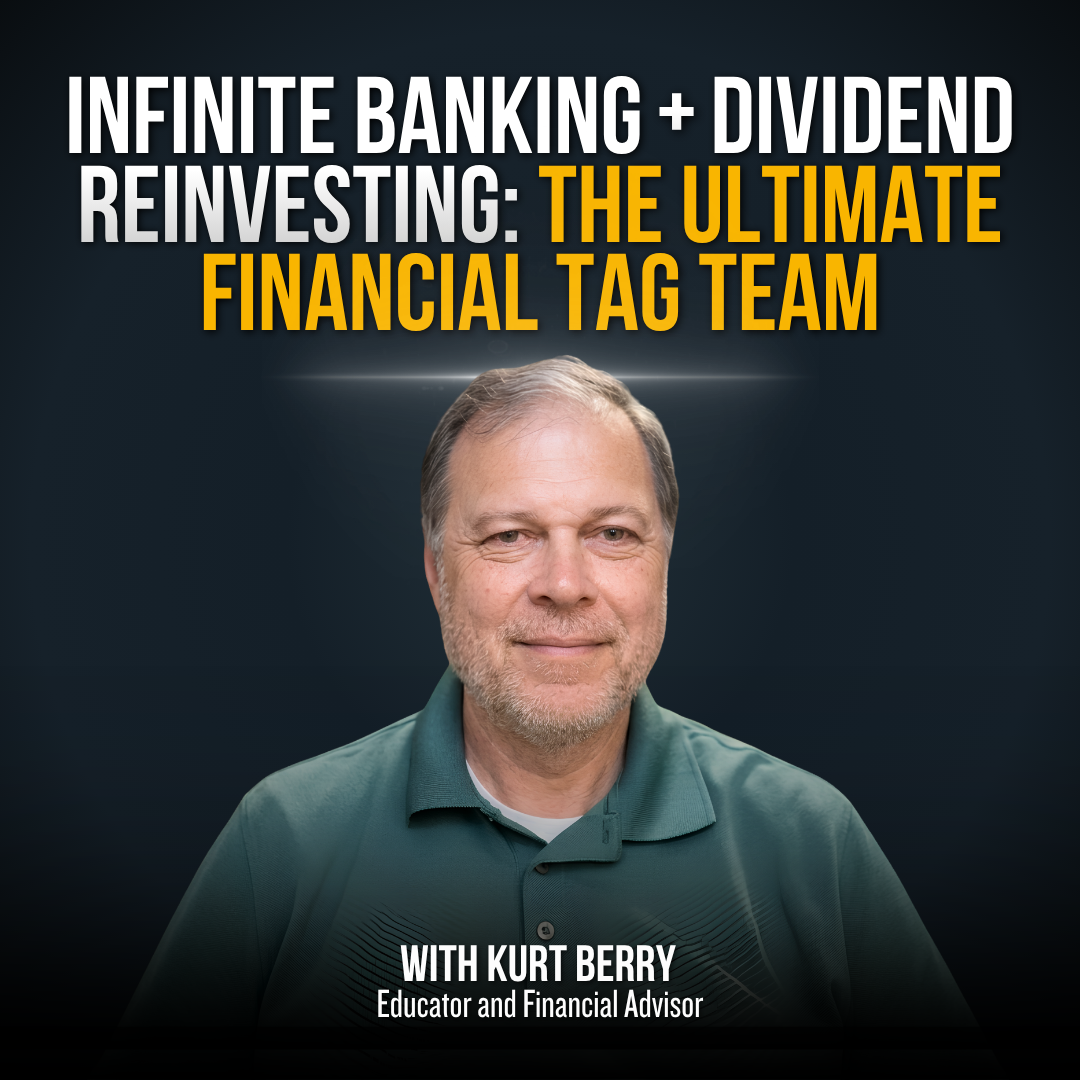
[00:08:29] Speaker A: What is the ultimate financial tag team Dividend Reinvestment combined with ibc. Now Jason Lowe created an on demand masterclass showing exactly how these two powerhouses can work together. And you can access it for free. Go to wealthonmainstreet.com drip wealthonmainstreet.com drip but
[00:08:52] Speaker B: anyway, so it's just gaining knowledge, applying that knowledge and then I can build in buffer again. I can reduce the risk of my strategies by using things, gaining knowledge and reducing the risk of my overall things that I do. So anyway, I think it's fun to keep learning.
[00:09:11] Speaker A: Well, I really like that. And that's an important extra thing for our listeners to be aware of things that they can do. You know, circling back to the idea of borrowing from a cash value policy, taking a policy loan or a cash surrender value loan if that's what you want to do, because both are possible. But so you take a policy loan from the insurance company, you have ultimate control. You don't have to make repayments. The fact that you don't have to is part of where people get caught and get stuck because they don't have to. They think that they don't need to and they forget Nelson's primary principles. I love what you suggested, Kurt.
Nelson would say you shouldn't take a policy loan unless you first have a plan on how you're going to repay it.
So you plan for the repayment before you complete the loan transaction. If you're not doing that, that should be step one of rethinking your thinking. So if you're out there and you're practice trying to practice this concept and you have policy loan with no plan of repayment, you might want to hit the pause button and say, okay, maybe I need to amalgamate my loans and do a self consolidation and reset my own personal expectations of how I'm going to do this. That would be a good starting block. Okay, so if that's you, please, please do that. Reach out to your coach, have that conversation. They'll, they'll do their best to help you. All right, but your scenario, I really like the simplicity of it, Kurt, because simple is good.
Let's just say I borrowed $10,000 on a policy loan. I put it in my drip portfolio. Maybe it takes a couple of Months to get operational. And now I'm generating, I'm just, I'm picking a random number for no purpose. I'm generating $200 a month from that in regular income, that whatever that number is, I take 100 bucks and I start repaying the policy loan. My cash value keeps growing.
This number starts to come down a little bit. This number goes up a little bit. Let's, you know, just to keep the things simple, I go a year or six months and let's just say maybe I had a, maybe I had a policy anniversary date. So I was already committed to paying my premium for my regular cash flow or however my funding sources were. I fund a premium that increases things maybe a little bit more. I've got a chunk here. Maybe I take another 10,000 loan and I go and stick it back in and I start get that flywheel going again. All right. But having that commitment of making money come back to the policy, the habitual nature of making sure that's happens is part of the process of Becoming Your Own Banker. If you're not doing some degree of that, you are not Becoming Your Own Banker. You're still letting someone else do it and you're not taking the responsibility of that role properly. The simplicity of taking 50% and doing it makes sense. Could you take more, take less? You can make your own rule. But I like your rule court. I think it's great. I think that's simple and easy. Building an amortization is another good thing. So you have a commitment and maybe you're only making an interest only payment if that's the case. But at least you're making something right. So you're holding the loan at bay, you're keeping it stable. And then when you take more, well, then you have to increase your payments so that you're doing interest if that's what you want to do. But you have to have some clear and concise method where you are being an honest banker. That is critical. The other thing you said when I asked you the question about how would someone go about doing it, do you notice how you prefaced everything with what position that client needed to be in before they started? Well, let's assume they know infinite banking. Let's assume they've practiced with some policy loan Let's assume that they've made some loan repayments already. Let's assume they've gotten rid of some of their consumer debt and we've taken care of that so they're in a better financial position. And now let's assume they Set aside their emergency fund of three to six months. So it's like literally here, here's 25 things that you need to do first before you should even be considering that as part of your strategy.
[00:12:45] Speaker B: Right.
[00:12:46] Speaker A: And that's exactly. I didn't preface you to do that. You just did it because you know that that's an appropriate way of looking at things. And you're right. The next thing you said is, well, well, we have people who've done that, and now they're just getting itchy, they're getting antsy, they're building up capital and they've got too much in there. Like, I got to do something with it. It cool if that's you now, first off, while that's building, you should already be investigating the strategy you want to do so that when you have enough and you say, when I get to this mark of 25k or 50k and I want to start taking action, I already know the action I'm taking. So don't let yourself get to that position and be like, what am I going to do now? Well, you still have to do the educational process. Like, you. You can't circumvent that. Just because you got 50 grand there or 100 grand there doesn't mean, like, great, well, take a policy loan and throw it at the next thing that comes up my door. Because I want to have growth. Like, that's just not. It's just not logical. So apply some common sense into what you're doing. And I think that's really important. You were really clear to specify the need of making sure that kind of emergency fund. There's the three months, the six months, whatever that number is, that is so critical. Here's one of the key tips I would add, and I'd love to hear thoughts on this. One of the things I share with people, most of. Most of my client families, and I'm sure many of yours, they have a system. System, meaning it's a combination of parts working. That's what a system is. An engine in a car is a system. It's not one thing. It's not just the engine. It's like, oh, we got this. We got a fan belt, we got an alternator, we got the battery. Like, it's all these components working together to make the car run. Well, a family system is usually multiple policies.
Okay. And so you might have three, four, six policies in your system. You got three kids, each got one. You got two on the primary income earner. Let's say it's the husband you got one on the wife, like, there you go, there's your system. Maybe you got one in the corporation.
When you're at a stage that you've practiced with loans, you've diligently repaid a number of loans. If you haven't taken and repaid, I would say a minimum of three policy loan I don't think you should be taking policy loan to invest because you haven't practiced anything yet. Not sure if Becoming Your Own Banker fits your goals. Trying to figure out if this is even for you. Well, save some time. Look, our free 7 Simple Steps report is the fastest way to find out. It's designed to give you total clarity and focus your effort on what really matters. Plus, you'll get access to four of our bestselling books as a bonus. Go ahead, get it at seven steps Ca. That seven steps ca. That would be like, I think, a good minimum starting point. All right. Even if it was like for a computer that you, you pay $2,000 for, maybe it was your Christmas gifts for the year. Something you have to have skin in the game and know how to do the transactional process. Otherwise you shouldn't be leveling up to the next thing because you haven't reached the qualifying process to go to the next level. Right. It's like in video games. You have to develop skills in the early levels to figure out how to go and beat the boss, right? Well, if the boss is growing your investment portfolio, like, you got to figure out the skill sets to get there.
But what I would encourage people to do is pick one policy, clear it. If it's got a policy loan, you clear that loan from scratch and you start from scratch with that policy and you make that one policy your opportunity fund investment policy.
You keep whatever else you have doing other things for your day to day, your family life stuff, buying the next car, buying the next house renovation. The things that you're doing with start with only one. So you have one simple silo to operate in.
And the other thing is going to make the accounting a lot easier for you. So some compartmentalization can be good there. Not for all people, but for a lot of people, it helps them say, look, I can now focus and understand the policy on Suzy, the one that's got 25 grand. That's our opportunity fund policy. And then as you grow and you develop your skills, could you go and clear another one off and say, okay, well now I got two that we're using for that purpose, but that would be an appropriate thing that you should consider if you've got 50,000 of capital, but it's spread out over five policies, and this one's got 10 and that one's got this, but they all have outstanding loans, you're actually likely, I believe, my personal belief is you're very likely to create absolute chaos in your life, increase your stress level, probably have more not fun conversations with your spouse. Right.
And you're going to make your conversations with your advisor more complicated.
Create a level playing field to set yourself up for the best level of success. What are your thoughts on that, Kurt?
[00:17:16] Speaker B: I just go, always go back to simplicity.
[00:17:18] Speaker A: Right?
[00:17:18] Speaker B: I want to make things as simple as possible.
Not only just for me, but I want things to be simple for my family, but I want to be able to communicate things simply so that people can do things in a simple way.
Complexity brings confusion.
Simplicity brings the ability to move forward and take steps. So anytime you can simplify what you're doing and, and just keep the whole process as simple as possible, you're going to be better off just because you don't have to think so hard and doesn't, doesn't take as much energy to have to figure out what to do next. And so I think it's really important, you know, just, you know, you've got to, everybody's got their own method in their own style, so figure out how that works for you. And, and, you know, but you've got to, I think just keeping things as simple as possible is a winning, a winning strategy.
[00:18:00] Speaker A: So now one of these, there's two other questions here I want to cover. And we'll, we'll be quick on these ones here because we've, I think we've, we've know the horse is already dead. I don't want to keep beating it too much. But two, two of the key questions that came up from some of these webinars and things is number one, what happens if the market drops significantly? So you've, you've, you've got your drip investment, the market's dropped, but you used a policy loan, so the policy loan outstanding. Okay, so we'll talk about that in this. The second question is who exactly is this combining your infinite banking model, your, your warehousing of capital controlling the banking function, and your drip investing dividend reinvestment approach best suited for. So I think we've already kind of addressed who it's best suited for. You're in a position, you've got an emergency fund, you've taken care of some debt, you've repaid loans, you've got the right habits in place and you've also identified and researched the drip strategy you want to move forward with. So like it's all the skills around infinite banking you've practiced and developed and you've got a good, you know, lay of the land there. And you've also figured out the, this is the drip strategy I want to move forward with and I've done some research on there. I already have my account set up.
Now you might be in a good position and I have an emergency fund like that's who this is for. Okay. If you're not that person, then stop looking at it essentially.
The other question though, about what happens if the market drops significantly and you've got an outstanding policy loan.
My first reaction to this, Kurt, is if you have been practicing repaying the loan following Kurt's good advice of take 50% of the income that's generated and use it to reduce the loan balance, well then you're already in a better position because you have been reducing the loan balance, which means you're likely not in that position or the degree to which that position is impacting you is vastly different. Okay, the second piece that comes up for me is that again, what, what is your long term intent?
Is your dividend reinvestment strategy based around selling the investments or is it based around a long term output of the companies that you've chosen? Do, do you have any idea about what is the underlying investment and what's your expectation of the future and then what's your time horizon? So time, all those things. So those questions you should actually know before you put the money into the investment. So if you got the ten grand in there and it drops to five grand, but you know, or have really good confidence based on having a clear strategy that three, six years, seven years from now, that's back up to 10 or 12,000 and you know that that's a likely occurrence and you're going to follow through.
That's something you should have pre decided before you got going a little bit. So that's my take on it. I'd like to hear your thoughts.
[00:20:45] Speaker B: Yeah, I would say so. Again, if somebody has the life insurance in place that gives them a lot more options and choices that than if you don't. So that's why I think it's super important to build that piece into what you do. And most people don't. They're, they're playing, they're on offense, they have no defense. We've got to build some defense onto your under your team.
But for, you know, the market is going to go down and we just don't know exactly when. So we just have to, we have to understand that when it does, what game plan do we have in place?
[00:21:19] Speaker A: Are you tired of watching your hard earned money leave your family and go to the banks? Look, our number one best selling book, Don't Spread the Wealth shows you exactly how to build a family banking system that creates true generational wealth. Get the free digital copy plus over 4 hours of bonus videos and our guide to hosting family banking meetings. Go to don'tspreadwealth.com that's don'tspreadwealth.com so again
[00:21:44] Speaker B: I would say there, there are ways to put insurance on that so that when the market does drop 20, 30%, which it certainly can do and has demonstrated as early as, you know, just even within the last two years, it's done that if I have some insurance in place, I could use that insurance. Oh, there you go. Look at that. Woohoo. Celebrate. Put insurance on. It's awesome.
When you put insurance in place it can in essence just like, just like if I have auto insurance on my car. We were using the car story earlier, right? I have auto insurance on my car. It's required here in the United States. If I own a car, I have to have car insurance.
Well, the reason I have that insurance, I pay for that insurance every month. But I don't have, I don't need the insurance every month. Hopefully I never need it. But once in a while you do.
And when it does, my car has lost its value, right? I got damaged, it's destroyed, maybe it has no more value, it gets totaled or maybe the insurance comes in. But now I get this check from the insurance company and I use it to rebuild, replace the car, right? Well we can do the same thing with insurance. We can't do it necessarily dollar for dollar. But if the market goes down 20%, if I could get 10 to 15% back in cash from the insurance, well that's, that's a major change for me. And so it doesn't put me in as bad of a position as if I just lose the 10 or 20% and now I gotta figure out how to overcome that, right? And then I've got this loan against my policy. How am I going to pay that back? It's going to be challenging. So I just again, knowledge and education and discipline all come into play in those kinds of things that can remove, not remove, but again reduce the risk that we take. When we get into the markets so that we can be in a stronger position for when, not if, but when things don't go the way we planned, it's going to happen. We just don't know when. So what, what strategies have we learned to put in place so that when they happen, we're still going to be in a stronger position than if we didn't do it? So anyway, that's kind of what I would begin educating somebody if they were working on that. And what are those tools? How do you make that work and kind of go from there? Yeah.
[00:23:49] Speaker A: Love it. Kurt, this was a lot of fun. I really appreciate you coming in, sharing your, your wealth of knowledge, your, your, your time horizon, some of the personal stories. And I think that a lot of our clients who are at that stage, they, they want to begin or they want to start investing, they're a little bit on the fence on how and they're trying to figure out how do I, how do I figure out how to do this while I got to deal with the hockey practice and the soccer and, you know, all the family obligations that keep us so busy? Because we all have a limited amount of, we have all have so much time in a day that we can, you know, put into the effort. And you've got your work life, your family life, you got to sleep, you got to eat, you put all those things together, you got to go get your walk in with a dog and the workout, like you're dealing with a finite amount of time that's left. And so we encourage people, get, put the earbuds in when you go for the walk, when you're on the car and you're driving. Listen to content like this. Listen to things that are going to put you in the zone of like, maximizing that future output, maximizing your learning so that you can begin to take those active steps towards that future that you want. Thanks for giving me this, Kurt. This was great. Appreciate it. For those of you, of course watching, as you know, we always have new videos that pop up that says, oh my God, this is great content. We think it is. We think you should watch it. Go ahead and click one of those. Now continue that ever present journey of learning.