Episode Transcript
[00:00:00] Speaker A: Foreign.
Welcome to wealth on Main street, where conversations about growing your wealth are fun and entertaining. Wealth isn't just about money. It's the skills and the knowledge that we develop to pass on to future generations. Tune in each week to grow your mindset and your net worth at the same time.
[00:00:35] Speaker B: There's got to be another way. How is it that the wealthy people use money? It really came down to real estate businesses and whole life insurance. That's the. The key three tools that wealthy people use.
[00:00:48] Speaker A: Dollars don't do anything until they're told what to do. You're the one that tells the dollars what to do. How we go about creating or building The Infinite Banking Concept and implementing in our life happens for people from multiple different vantage points. There's no one way.
[00:01:02] Speaker B: And so we just have to recognize how things work and start to say, well, how do I use that to my advantage, my family's advantage, rather than just what the brochure says I should do with it.
[00:01:12] Speaker A: But Nelson would say an investment should only be in something that you know a great deal, deal about. Everything else, I repeat, everything else is speculation.
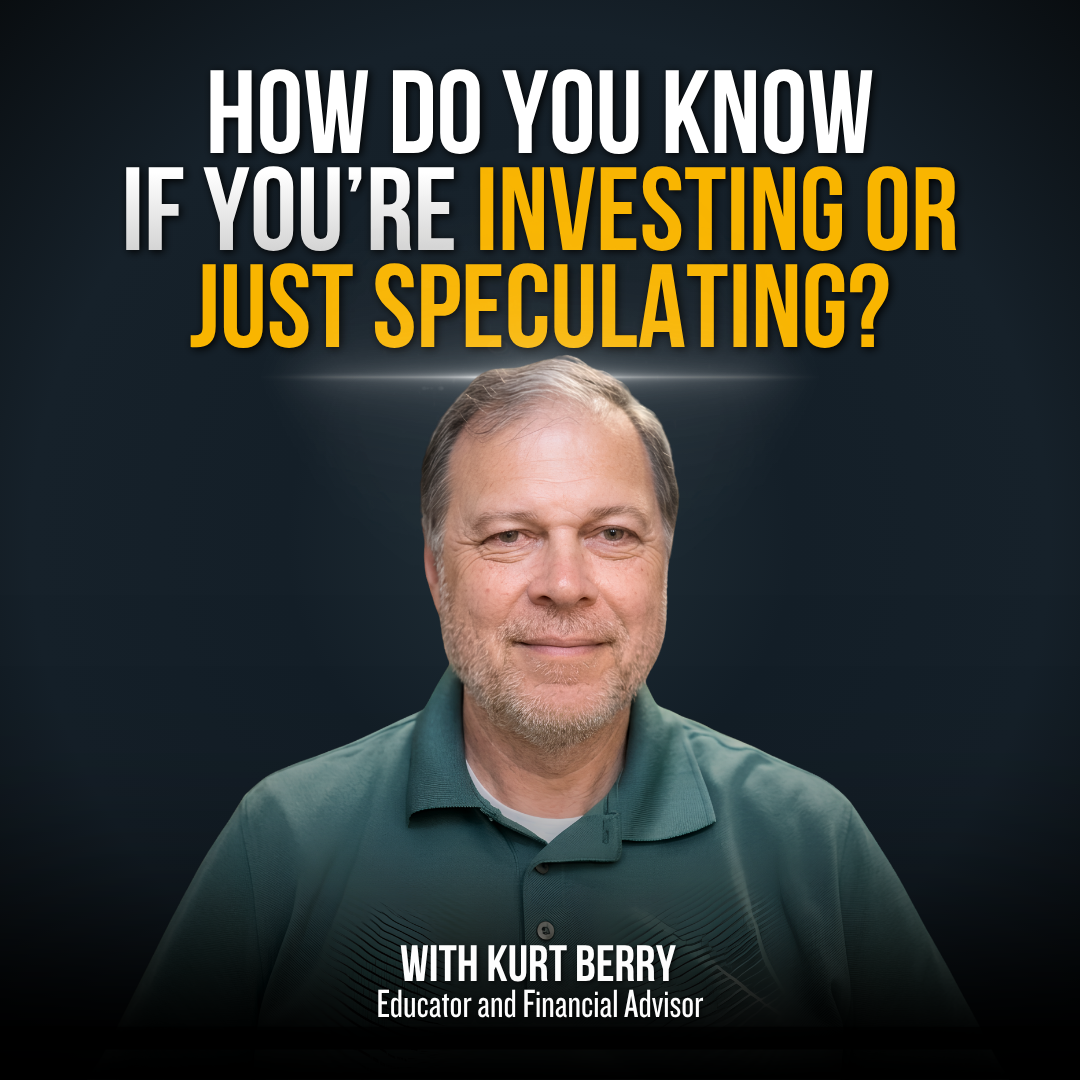
All right, you want to invest money, Totally get it. Everybody does. You should be investing for growth. Everyone should do that. But you should know what you're doing. Now, our mentor, R. Nelson Nash, one of the things he said that I absolutely love, it resonated personally with me in a way that, that just truly connects. And I'm going to ask our guests about this in a moment.
But Nelson would say an investment should only be in something that you know a great deal about.
Everything else, I repeat, everything else is speculation. Is that what we believe or what we think investing is, is going and buying this investment product? I'm going to go buy them. I'm going to buy a mutual fund, I'm going to buy a stock. And that's. Now we're investing or we're an investor.
Not really. You're actually speculating because you don't know anything about, you know, anything about the business model or the strategy behind it. People that actually do investing and do it professionally, they understand strategies, they have a goal and objective, they have a knowledge base. They might know something about the company or the industry, etc. So understanding how you're putting capital to work based on what you know is important. We're going to speak with Kurt Berry today. Now, Kurt's been on our program before. One thing I love about Kurt, that he's been doing this for a while, for really almost 30 years. And ultimately he's an educator, he's a teacher and he loves to tell stories.
So we're going to dig into some of the things that Kurt's been doing, you know, personally himself, and we're going to talk a little bit about combining The Infinite Banking Concept, okay, the, the process of Becoming Your Own Banker, the utilization of money running through your life, financial energy and how that energy can be accessed to then apply into investment strategies. And we're going to focus more on the kind of drip investing style, stock markety type world for the purpose of our conversation today.
But anytime we're talking about investment type, okay, investment style, that could really be applied to any other investment style. So focus today as we go through our discussion on the strategy element, not the oh, this is the next best, greatest slice of bread way that I can go put my money to work. I hope that's clear for all of our listeners today. You know, you didn't start in the insurance or The Infinite Banking space. You actually really started more in the kind of investment realm from a financial advisory perspective. And in that, that, that history of being in the business, you've seen something, it's kind of like, what's the expression, you know, where the bodies are buried. There's your own personal experience that you as a, as both like an advisor and a consumer, you also have to invest money, you have to do things for yourself and your own family. And you've gone through some cycles. You live through the 2008 stuff.
Not very fun, not awesome. That was kind of pre, infinite banking world for you, right?
And you saw people virtually get obliterated to some varying degree. Maybe some of your clients, probably a lot for yourself and a lot of the things you'd been learning about and hearing about from the general financial world.
Did you find out after that experience that what you thought to be true wasn't necessarily 100% true?
[00:04:30] Speaker B: Yeah, I mean in 2008, the great financial crisis was our 401ks turned into 201ks. It was a really sad time for a lot of people and it made me start thinking about what is really happening here. And the typical advice, you know, in the financial industry, you're taught what to teach, you're taught what to say, you're taught what to think. This is our presentation, this is how we present this information.
It's got some kind of triangle chart or some kind of thing, you know, foundationally you should do this and then middle of and they're and all the company. I've been with many companies through the years and they all have the same kind of format and teach the same kind of things. And what you find out is that my goal in getting the industry was I wanted to help people be able to live on half of their income and have half of their income to give away.
That was my dream when I started.
And after about 12 years in the business, I did have one client that actually hit that goal.
The problem is that person was already giving away about 40% of their income. So we really didn't. I mean, they were pretty much doing all the work. It wasn't because we had figured out this amazing solution.
What I was finding for all the most rest of my clients is that yes, they were growing and were gaining assets and things like that, but there was, there wasn't anyone who was even close to the ability to do what I wished we could do. There's got to be another way. How is it that the wealthy people use money? And so I started doing some research and asking some questions and it really came down to real estate businesses and whole life insurance. That's the, that's the, the key three tools that wealthy people use.
And obviously investments can be part of that discussion from a business side as what businesses are people invest in. Businesses really what it's about. So I come from the investment world, so I thought, well, there's got to be a way to use investments in that process. And I keep trying and experimenting things and ultimately feel like we've got a process in place now that can help people accelerate the idea of again, as Nelson doesn't like the word retirement, I don't either. But reaching that place of passive income or financial freedom or whatever you want to call it, work, life, optional, those kinds of things, that's what everybody wants.
The question is, how do you get there? And can you get there? Can we compound the time, shrink the time down to make that happen for the average person? I really think you can. If they're willing to change the way they think about how money works. To say that, hey, we can use tools in a unique way or different ways. Infinite banking is that process.
What kind of tools can we use? We can use whole life insurance, but we can also use investments to make, to make that work and accelerate the time frame. Well, are you willing to put in the time and the effort to learn and rethink your thinking and start to put in some new tools and processes that can move you in that direction? That's really what we've been working on and helping people think about and understand, and then they go at their pace.
[00:07:40] Speaker A: Well, and I think, you know, to, to add some context to that, we have people who listen the show from all, all walks of life, all age dynamics. What I think is really interesting is that a lot of people are seeking that, but they're seeking it. They're, they're seeking the quick win. They want the Ferrari, but they have the Toyota Camry budget.
Right? They have the year 2000 Volkswagen Golf budget that has the rust and all the things. So they're struggling with debt. They're not being, covering their bills. They're going out and eating, you know, dinner every three days. Like they're doing all these habits that don't support the discipline requirement to go and accomplish what you just stated. What is the ultimate financial tag? Team Dividend reinvestment combined with ibc. Now Jason Lowe created an on demand masterclass showing exactly how these two powerhouses can work together. And you can access it for free. Go to wealthonmainstreet.com drip wealthonmainstreet.com drip so what I want to quantify for the listener is that, sure, everything that you just said, Kurt, is absolutely possible. We live in the world of possibility.
But you can't have that and then not also put in the time, effort, and energy to create it. Now, energy can be our time, it can be our research, our knowledge base, listening to podcasts, engaging in content. Then you got to move into practice, whatever that looks like. And then there's also the financial energy. So you, you can't really separate. If there's like these three or four core components like I just identified, pull one of them out. Okay, well, I don't have the same financial energy as the next guy. I can't really, I don't have any money to put into the system. So we pull out of the equation, you're not going to make that timeline. It's not going to work out. Okay, let's say you got the money, but you have no effort or energy or time to apply into moving the money around and doing the transactional requirements and jumping on the webinar, learning how to do it. You're also not going to get very far in that scenario, which is you agree. Forget about products. Think about understanding what's a key strategy and what are you at your personal risk level, knowledge base, understanding, willing to do. And so we don't want our clients and our listeners to just start throwing money randomly like, like at a dartboard blindfolded to say, oh, this, I heard this was a good idea.
[00:10:11] Speaker B: You know, you Just described in my industry, I mean, I get paid if people let me manage their dollars. And I don't always manage it. Sometimes we hire third party managers and they do the hard work and I'm there making sure they do their job and keeping the conversations with the clients and all of that and make sure we get their needs met.
But the reality is you pay for that service. Even in this, we're limited. There's, you know, a hundred different ways you could invest your money.
I can only show you 20 of them. There's only so many things I can share with you as a person. Now you can do all kinds of things on your own, but then you have to be willing to take that responsibility. All the things you just talked about, the time, the effort, the energy, the knowledge, learning, taking on that responsibility. But it's, it's, the question is, you know, we talk about infinite banking, but the reality is, is if you want the control, you need to do it yourself. But most people don't want to take the control. They don't want the responsibilities. So they hire people like me to manage the dollars on their behalf. Infinite banking is a process that isn't about life insurance. It's a process about how to flow money through your system. The question is, is how do you understand the concept that you can then use different tools to make it work and that. So that's really what, what I kind of focus in on is how you, you can use.
Build a strong foundation with life insurance.
A lot of people have a strong tool in investments and no life insurance. And so when we meet them, I would say majority people, that's where they are. We have to get them started on building a strong foundation with whole life insurance because they have, they don't have that. They've built their skyscraper and they don't have any foundation on the bottom. And that's a problem. So we've got to fix that.
[00:11:55] Speaker A: Yeah, a mild wind can come over, which would be like a market condition. Yeah, skyscraper over.
[00:12:02] Speaker B: Yeah, it just takes them out. So there's risk to be in the market. And so that, that's where most people start and they really shouldn't start there. But it is what it is. People are going to start where they are comfortable, whatever they're, you know, their knowledge or limited knowledge and kind of go from there. I want to help people build both tools, but we want to build them well so that they communicate with one another and they work together rather than one or the other.
You can actually do both and actually accelerate the the concepts you're trying to do.
[00:12:30] Speaker A: A key piece of that acceleration, though, really comes back to the behaviors and the habits because your implementation, your attitude and your, your. Your drive and desire is, is it. It. It focuses your brain's energy and thereby your actions that help create that environment.
So to just say that we have dollars and dollars are doing things.
Dollars don't do anything until they're told what to do. The person that tells them what to do is you. You, the listener. You're the one that tells the dollars what to do. It goes to pay for Tim Hortons or Starbucks or, you know, Dunkin Donuts. Once it's in any of those things.
Now you got to say, cool, Well, I put it my 401k account, but what did I tell the account to do? So, like, there's a second set of decision matrix. It's like, I want to do it monthly, I want to do it biweekly, I want to do it annually. That's a decision matrix. And now it's like, cool, it's in there.
Now I got to tell it where to go. Well, do I put it in this stock and that company? In a group of companies, in an etf? Do I separate it? Am I diversified? What does that even mean? Fundamentally? A lot of conversation happening about drip reinvestment, dividend reinvestment plans and portfolios. Our company's even been talking about it specifically. You know, Jason, he has been doing that for like 30 some odd years. You know, he's talking a lot about how his son now at a young age is doing it very similar.
They're focusing on understanding companies for their business model. And that's one way of doing it. And so his focus is, I don't care about the stock price. It's not that it's not relevant, but like, my focus is, does this business structure and the way it's doing business and its growth potential like, and the need of its products and services as a consumer make sense? Is this a consumer staple that I personally use or that I know people that use? That's going to be there a long time. That's his primary focus. And there's many people that follow a strategy like that, but there's many other ways of doing it as well. The key thing is that you have a company, the company pays dividends or some kind of an income stream, and then we're reinvesting that to keep growing the machine until such a time as you want to start taking some income. Some people do it where they're. They Just keep investing more money to grow the, to grow their holdings. And they're buying the stock at different price points, you know, wherever it's at, it's up, down, or whatever it is. So they're, so they're, what's that word? Dollar Cost averaging. Another obnoxious term that I think is kind of funny. But. And then they, they take that income and they actually pull it off and they do something else with it. Maybe they pay off their debt. They use it to try to exit their job, have that work life balance. They use it to invest in a different company. Like there's different strategies around that. So like saying drip or dividend reinvestment is like one thing and it's like cool. But what's your core strategy now that you're going to put energy and focus on learning, developing, practicing, implementing so that you can see the result? Am I covering that pretty effectively? Not sure if Becoming Your Own Banker fits your goals. Trying to figure out if this is even for you. Well, save some time. Look, our free 7 Simple Steps report is the fastest way to find out. It's designed to give you total clarity and focus your effort on what really matters. Plus you'll get access to four of our best selling books as a bonus. Go ahead, get it at seven steps ca. That's seven steps ca.
[00:15:55] Speaker B: Everybody has a different goal, right? We also always have. What are you trying to accomplish? What problem are you trying to solve? With infinite banking, everybody's definition of that is a little different. But I think a lot of people are working the same area and so I just kind of flip the script around.
When people try to invest in the markets, they're all. We've all been taught that it's all about making the nest egg get big, big, big, big, big, so that eventually I can take income off of it. If you need income now, then why don't we invest to create income now? That's the question that I started to ask.
So in other words, can I create a compounding flywheel of income for myself with investments?
For example, what if I invested in some great companies and some great ETFs that produce income on a weekly or monthly basis and I can build it up to where it produces $100 a month of income?
Well, do I have a bill that cost me $100?
Well, yeah, maybe my cell phone or maybe one of my utility bills or maybe auto insurance or I don't know, whatever it may be.
Well, what if my portfolio starts paying that bill for me?
Well, now my working income I have an extra hundred dollars that doesn't have to go towards now. Is it guaranteed?
No, it's not. So I have to be careful with that.
But it is giving me an enhancement to what I do. I have to watch it. I still have to, you know, I have to keep my eyes on and those kinds of things.
But now I have an extra $100 a month.
[00:17:29] Speaker A: You can't be lazy is what you're saying.
[00:17:30] Speaker B: You can't be lazy, right? You have to still be disciplined. You have to be focused on it if this is what you're trying to do.
And then, you know, obviously now you've got an extra hundred dollars from your working income that could be added to your portfolio to help it grow faster and on and on and on. And so pretty soon it produces 200amonth. So in my son's example, he's got an account that we do for him.
And, you know, I told him, hey, I'm, you got to put a hundred dollars a month in this thing. He's like, okay, whatever. And he got to the place where, you know, he did it and you know, I'm doing all the hard work and he's learning slowly, but he's getting there and he's learning. And you know, the first week it generated like, I don't know, 12 cents or something. I go, Woohoo. He made 12 cents. It didn't have to work for it. And he was like, whatever, dad. And you know, but. But then all of a sudden it got to be $50, and then it got to be a hundred dollars. And I said, that's when I said, hey, do you have a bill for 100 bucks? He said, yeah, my cell phone is cost like a hundred bucks. I said, well, let's let your portfolio start paying that. And then you got to put an extra $100 a month into your account.
He's like, okay, I could do that. He started to get excited about it, and then all of a sudden now it's producing 200amonth. And then it started producing $300 a month, and now it's covering three bills, and now he's putting in extra. And so what's happening is it's compounding. He puts more in, so it grows faster, produces produce more income and kind of go from there. So it's really. Now, is that something that it doesn't happen overnight? As we mentioned, you got to watch it. It takes discipline. You've got to, you've got to be learning. And he's at a place now where he's. He's starting to sit down with me and say, okay, dad, I'm realizing that this thing is gonna.
It's still gonna start to take off. And he just got a new job, and he's basically just doubled his income. So we're super excited for him.
He's going to start putting his entire paycheck into the system and then that, in essence, it will pay all his bills for him.
[00:19:27] Speaker A: Right.
He's at an early stage of life.
[00:19:30] Speaker B: Early stage life.
[00:19:31] Speaker A: Controllable expenses. Yeah.
[00:19:33] Speaker B: Very low expenses, and, you know, that kind of stuff. So. But that's the reality is, you know, everybody's going to be different, meet where they are, but that's what he is pursuing. And he has life insurance as well that I pay for. But that'll be the next step is as we've got more cash flow, we'll be starting another policy for him, and it'll get funded through the system and on and on and on. So that's kind of the idea.
[00:19:54] Speaker A: But, yeah. So one. One thing I like about that, Kurt, first of all, great example. And also, congratulations for what you're doing with your son. I mean, that's phenomenal. And I think a lot of parents, again, having that type of initiative, something that's really slow, the 12 cents that you got, trying to celebrate it and having that reaction, I think most parents would recognize. Yeah. Like, that's 100. What would feel like.
[00:20:18] Speaker B: Yeah.
[00:20:19] Speaker A: But if you show up with the energy of. This is exciting and you try to convey why it matters, but you do it in an energetic way, you build on that momentum of energy, not just what the portfolio is doing. So. So there's like a subtle, you know, little parenting tip, I think, around finances that you've added there, Kurt. I think it's really important. I hope our listeners pick up on that.
But in this scenario, it's like, cool.
We're focused on The Infinite Banking Concept and helping people develop that part of their life.
Here's an opposite way where you're looking at growing and enhancing The Infinite Banking area of your son's life, because you've started that process on his behalf for him.
You own a policy. He's the body. You use the policy, not him.
You're trying to teach those things on the side in a different way.
But you've used this microcosm to now show him how he can start to create that additional flywheel in his life of control.
Not of investment growth, but of control over capital so that he can. He's already learned this core fundamental lesson. Now he can learn about the stabilizing force of it because markets will go up and down and those things and he can build that stabilization feature that will allow him to grow and enhance other things. Right. So I think that that's a really important lesson. Is that how we go about creating or building The Infinite Banking Concept and implementing in our life happens for people from multiple different vantage points. There's no one way, there's no one way to build it necessarily. There's no. Because we are unique individuals. But the funding mechanics can come from it. Existing assets, passive income, regular income. It can come from, I like to say, inefficient capital resources like money that's sitting idle, doing nothing for long periods of time in your budget that we might be able to work with. So like, there's many es and flows about funding premiums that we can work with. But then it's like, now you've got a policy, you've got capital. So you kind of gave us a good insight here, Kurt. But a question I would have is like, why would someone even want to combine whole life insurance cash values that they can access and start investing or do dividend investing as an example, instead of just using their cash to go and buy their dividend portfolio? Are you tired of watching your hard earned money leave your family and go to the banks? Look, our number one best selling book, Don't Spread the Wealth, shows you exactly how to build a family banking system that creates true generational wealth. Get the free digital copy, plus over 4 hours of bonus videos and our guide to hosting family banking meetings. Go to don't spread wealth.com that's don't spread wealth.com.
[00:23:11] Speaker B: obviously, the reason we teach infinite banking with life insurance is because it's a great place to store our money.
It's safe, liquid usable, tax efficient, all kinds of great things. It's a great place to store money. I got to store it somewhere. Might as well store it in a place that I own and control and get benefits from. So that's a great place to do that. The other cool part about it is I have the ability to borrow against it while it keeps doing what it's doing and put it someplace else. Whether that's businesses, real estate, the market, whatever it is you want to do, whatever you're comfortable doing and have built time and effort into learning. I just happen, I just happen to come from the investment world. So that's where I've spent my time and my knowledge base. So it's not A requirement to do so. But when it makes sense, if I've got capital that's available that I want to put to work somewhere, I'm at a place where I don't need the capital, but I have the ability to put it to work to bring more benefits.
I could literally borrow against my cash value, a portion of it, and use it to help build the portfolio.
I typically would say, hey, I'm gonna. If I'm gonna invest in a. In an asset of some kind, I want it to produce income for me, right? That's what's great about a business. That's what's great about real estate.
But investments, we typically don't think about generating income from them. We typically think about them growing. I'm like, well, but I want to invest in real. In investments that pay me income right away, and I'm going to use that income. So let's just say I did that and I created $500 a month of income by investing dollars in the account I put quite a bit in, but maybe not mine as much as you think.
Well, of that $500 of new income that comes. I want to be disciplined enough, Just like I would anytime I take a loan against my cash value. I want to be disciplined enough that I set a rule. Again, you can pick whatever rule you want, but I take at least half of that new income, has to go back to fund and pay back the life insurance company for the loan that I have with them.
That keeps things disciplined. It helps me keep being an honest banker.
And what you'll see is that if my cash value is constantly growing because I pay premiums and it has to grow, my capital cash value keeps getting bigger. But as I pay my loan down, then the gap between my cash value and how much I have available gets bigger. I could turn around and reuse it to fund my investment portfolio to make it grow, have more income.
Well, if I follow my rule and say, hey, at least half of that new income has to go back to replenish my capital position in my life insurance policy. Now my loan gets paid back faster, and I'm still building my cash value with my premiums, Pretty soon I might use those to enhance my premiums, or I might use them to start another policy, or I might use my cash value to.
I can go back and forth, right?
You just use wisdom and common sense.
Don't put yourself in a place where you're going to be upside down. Don't put yourself in a place where you know you're going to get Clobbered. If something goes wrong, you want to be conservative with it, take your time with it. As a general idea of, you know, infant banking is a concept. I can use it with multiple tools. I'm just going to start using it with two tools at the same time.
I think it's a good idea to build a strong foundation, though, with life insurance before you get into this other stuff. Now, again, some people are going to have started the other way, right?
I use a model called the leap model when I work with clients that has 27 boxes or three sets of nine drawers. I call it like a big filing cabinet. And protection is at the top, and then savings and then growth. And what we find is most people flip it upside down. That's how most advisors teach people is man, put that money in the market, put it in different things so that it starts growing for you. And never talk about protection. So it's like we do it opposite. So you really need to flip it back.
We talk about protection first. Life insurance, disability insurance, auto, home insurance, all those things.
Because if something goes bad in your life, which we can't predict, I still want my family to be okay. There's offense and defense on all, on all sports teams. Well, in the investment world or the financial world, we're taught to go on offense. We're very rarely taught to put any defense. And so we just have to recognize how things work and start to say, well, how do I use that to my advantage, my family's advantage, rather than just what the brochure says I should do with it. And so, you know, I think we're always thinking outside the box. I think that's what I love about infinite banking is it's causing you to think differently. You have to think outside the box and understand what's happening. And then you can make choices that help you accomplish what you want to do
[00:28:06] Speaker A: and further to the industry. And I'm glad that you identified that. Like, we're not, you know, throwing the baby out with a bathwater type situation here, but we're capitalists and we encourage people to be capitalists. And so every business, every organization needs to generate revenue. Every independent insurance or investment advisor needs to generate revenue so that they can put food on their table. You don't want a broke, like person who's not meeting clients or generating any revenue because then they actually can't focus on serving you because they need to have their own bills covered to be able to actually focus on serving their clients. I mean, that's just the reality. Nobody goes to work without an expectation of trying to fund some way to, to fund their bills. It's just reality. And that doesn't make it bad. It's, it's not correct what's what. However, with that being said, AUM Assets under management is the, is the measuring stick of. It's, it's the ruler that's used to determine how well someone's doing or whatever. And so from an investment advisor perspective, their, their focus that the, the training, the teaching, the bulk of it goes. It's not that they don't learn good skills, they have continuing education credits, everyone needs to upgrade their skill sets, but, but the intentionality around how they grow and build their businesses under this concept of assets under management. And the more that assets under management gets pulled away to go to other things, let's say insurance premiums or something else. Well, that directly competes with how they generate the primary bulk of their income and how they do that on a recurring basis. Right. Hey, quick favor, if you like what you're hearing, smash that like button, go ahead and subscribe. It only takes two seconds and it really helps us reach more families and business owners, people who need these strategies for real financial freedom. Help us out. So, so it's not just a one time thing. It's actually potentially a compound effect on income drain from the investment advisor's perspective. It could be to a degree. And so again, it's not, it's not bad, it just is. And having some awareness of that I think is key and important.
And the key is that the incentivization around the bulk of the financial industry has been that push towards investments and investment products.
And because of that, that's what produces their income. That's why they want more of it. And if you have something that doesn't go into the investment product, it actually reduces income aggregately, even though it might provide the protection. So it's not necessarily a good incentive structure for the average consumer. And I think that's the piece that people need to just be aware of. Yeah, again, it doesn't make it good or bad. A lot of these investment advisors, everyone's far and wide. There might be some scoundrels out there. There's, there's bad apples in every bunch. But far and wide, most people care and they, they're trying to do their best job. They're doing what they believe to be best and they're doing their best, putting their best foot forward. And they generally care and want to help their clients. And here's the other thing we talk about capital a lot. And, and capitalization.
Capitalization is the. And it's almost the antithesis of investment.
Investment is taking capital and put it into something else, and it removes capital liquidity from you. Capitalization is increasing liquidity so that you can make good decisions.
So we want to encourage investment in what? Something you know a great deal about strategy. A company, an investment type, a structure, something you can have a measure of control over so you know that you're. What risk you're taking on is a risk that you understand.
And then there's, then there's capitalization, which is preparation. All right. And Nelson would say that opportunities of high caliber come to people who are well capitalized.
So if you have access to money and you can get to it quickly and easily, you'd be surprised how many things start crossing your desk as opportunities. Your ability to see them and recognize them goes up. If you only have $100 a month, you're not going to see a lot of opportunities. Yeah, you have to be aware of those things. And I think that's something I really want to drill. Home for our listeners is like, again, we're not saying go invest your money in this thing. Like, be aware of what's out there, figure out what you want to do and learn about.
If you go wide, you can never be an expert at anything. But if you go narrow, you can start to become expert level at this area. Once you develop mastery or some version of mastery there, then you can start to expand to the next thing and the next thing and the next thing. What exactly is your business model? The same way we could narrow down those categories in real estate, we could start to do that in every other area. If we just looked at stock market. Well, you and I, we could spitball for probably a few minutes, Kurt, and we'll come up with, I don't know, 25 or 30 different ways that people have a unique specific strategy about doing that. Like, I have a guy known on Ontario who does dividend hunting. So they look at when these companies do their dividend announcements and are about to pay them, they buy them right before they collect, and then they. Then they, like, they transition to the next one. Like they have a different model versus the long term drip strategy. It's still a dividend strategy, but it's a dividend strategy adjacent. Does that make sense?