Episode Transcript
[00:00:00] Speaker A: Foreign.
[00:00:11] Speaker B: Welcome to wealth on Main street, where conversations about growing your wealth are fun and entertaining. Wealth isn't just about money. It's the skills and the knowledge that we develop to pass on to future generations. Tune in each week to grow your mindset and your net worth at the same time.
[00:00:35] Speaker A: Borrowed from my own bank.
[00:00:37] Speaker B: It's something we do talk about regularly, but it's always good to repeat for some folks because every asset is someone else's liability and vice versa.
[00:00:45] Speaker C: Well, that's one of Nelson's principles.
[00:00:47] Speaker B: Think you're thinking he would say, richard, I'm just looking for high quality soil so I can plant high quality seeds. And then it's up to nature from that point forward, you know, and he says, you know, when you plant corn, you're going to get something else. Weeds. Now, if you don't take care of those weeds, they'll take over your cornfield. But if you can get rid of those weeds and you just have this nice strong cornfield, it's a divorce or it's a disability or it's death. I mean, Those are the three Ds. Those are the most critical things that ruin and destroy a good business and therefore the livelihoods of everyone that depends on it.
[00:01:18] Speaker A: Control your money first and then you have to multiply your money and then you protect your money. And in there he talks about a financial seniority's ranking, which is income first, always focus on income first. Second thing is tax strategies. Most people don't know. Spending discipline third. And then lastly investment.
[00:01:37] Speaker B: And so our question for you is, who do you most wish to be a hero to my clients?
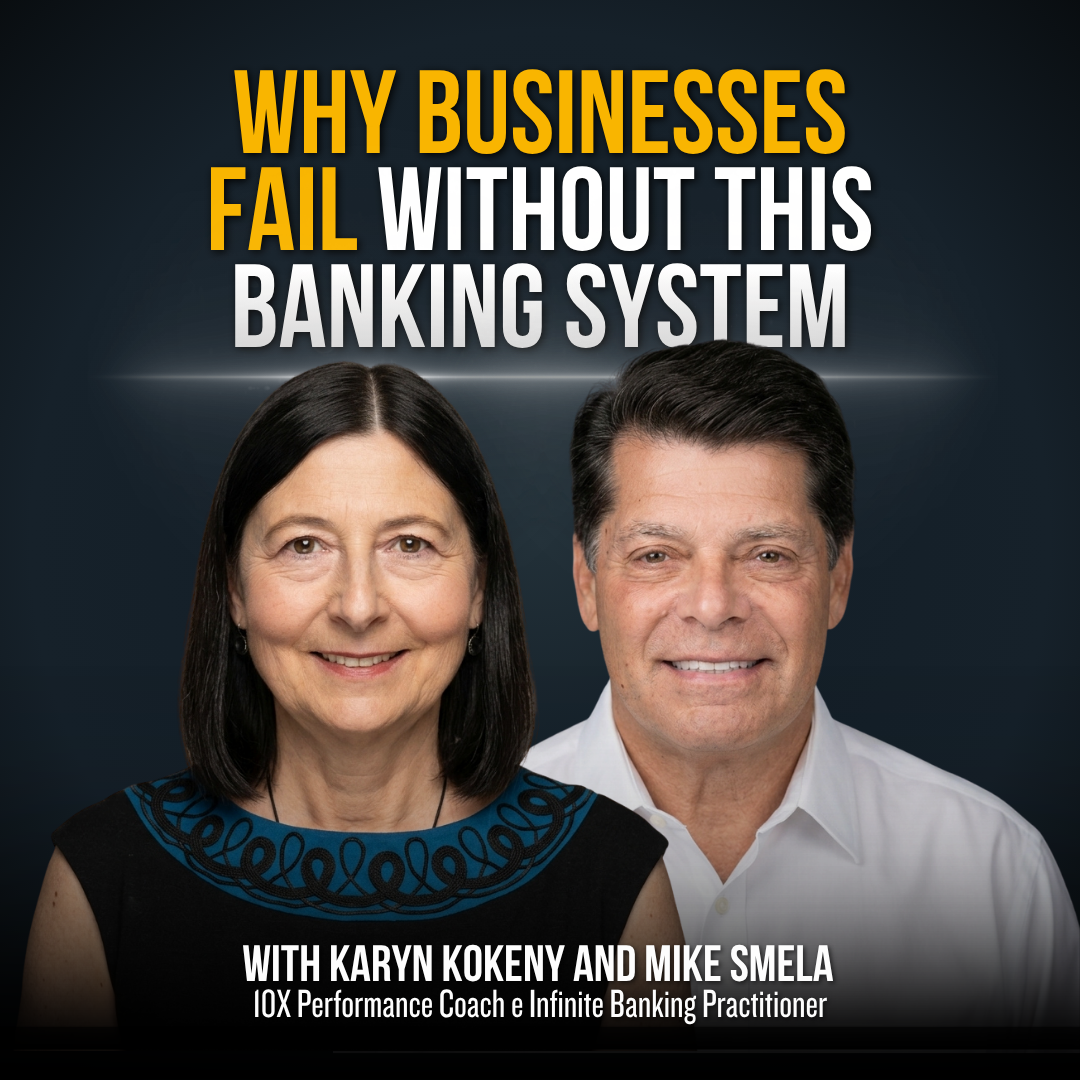
So what exactly is 10x performance coaching and executive coaching? We talk a lot about coaching on our podcast. We're joined today by a 10x performance coach, someone who is certified as a business coach to the Grant Cardone organization and also someone who's been practicing and utilizing The Infinite Banking Concept. And of course, we've got one of our amazing coaches with us here, Mike Smella making another return visit on the podcast. But we are joined by what I just found out is a very interesting history in that these are two amazing individuals who've known each other for quite some time. And we have Karen Kokeni here with us. 10x performance coach. Now an infinite banker. And we're going to unpack a little bit about her journey, both with the concept and with coaching. So, Karen, welcome to the show.
[00:02:24] Speaker A: Thank you, Richard. It's so great to be here. I'm really excited about today and just the opportunity to Be in front of your audience. And my intention is to add some value somehow, some way here today. So thanks again for the opportunity and thank you, Mike.
[00:02:39] Speaker B: Amazing. Now, Mike, you've been trying to coordinate us, you know, lining this up and working again with some of our teammates. The amazing shilpa and getting it lined up. We had. I threw a wrench in the curveball by throwing us on Riverside instead of zoom today, which has been great. We've all been great participants on sorting that out. But, Mike, you guys have known each other for a long time. Walk us through a little bit, maybe the history there, and then we'll let Karen fill in the blanks and tell her side of the story so we get the truth. How's that sound?
[00:03:06] Speaker C: No, we've actually, we've known each other since high school. I, I can't say we were real close in high school, but that, you know, we. There was always a. A mutual respect.
And then life happened and Karen went her way, I went my way, and oh my gosh, it was like, like the early, early 2000s, mid 2000s or something like that. Karen, that, that you and I reconnected and it was about the time that I started learning about infinite Banking and you were just finishing up, I think, in your. In your corporate career and starting to get into the coaching. And we just reconnected and, and it's been wonderful relationship since then.
And you know, when with the wealth on Main street podcast, I'm like, you know what, Richard, we've got to get, we've got to get Karen on because she's just been helping so many business owners and it's something that needs to. People need to hear. People need to hear. She's that wonderful of a, of a person and a coach for sure.
[00:04:04] Speaker B: Well, Karen, you've got a. Obviously it sounds like a corporate background. We'll maybe unpack that a little bit and why you made to the shift to leave. But, you know, Mike's talking about helping so many business owners and that's something our podcast we try to do here, of course. And we can't force feed people, but we certainly like to know that they're listening in their car. So walk us through a little bit about what your journey has been on, you know, the corporate side and then the decision to leave.
And how did coaching become the platform for you to. To begin to thrive?
[00:04:32] Speaker A: Great question.
So corporate. I was, I was with a Fortune 100 company, I'll mention the name Pepsi, for 20 years.
And before that I had worked in, you know, Some other, some other companies, mostly middle market companies, but I ran a $37 million business for, on the food service side.
And I worked my way up through the ranks. I just, I got promotions. I actually started out in. I was, I was part of the union. I started out in the lab, believe it or not, through a common connection. Worked my way up, was eventually ran the supplier development group. So I was negotiating pricing for raw materials, also acting as a conduit, if you will, between the marketing organization and manufacturing to commercialize new packaging, but also managing the whole, like overseeing the whole supply chain with that, including the negotiating of the pricing and the contracts for those new product launches or upgrades to our packaging materials. So the first half of my career was on the operations side of the business. Then I segued over and sat on the other side of the desk and went into some classical selling roles and eventually worked my way up into executive management.
And when I left, I had recently been relocated from, believe it or not, Michigan to Hawaii. So I've lived in eight different states through my career. And when I was promoted to run the $80 million business of Hawaii, it just, it was very apparent to me that I was losing a lot of autonomy and things were becoming more.
They were just, they were so methodical and they're. My ability to be creative, which I think made me so great in what I did, it just was waning. I didn't have those opportunities anymore. So it just was time to leave. And I'd always had an entrepreneurial spirit, spirit for many, many years.
So it was time to. Was time to go. But I never realized how hard it would be to start your own business.
[00:06:26] Speaker B: Interesting. So really coming through the Pepsi organization, you got to wear all the hats, literally probably all the Pepsi hats, because they had various ones came out over that time frame of your career and certainly had some interesting marketing promotions I think during that time as well.
What's really unique is that what I find in your story, Karen, going up the chain, getting to a premier top level executive position and running entire massive elements of the organization territories, but to see your autonomy actually go away, not be enhanced, is kind of almost a weird dichotomy, which I think most people would be like, well, how does that happen? And so what I think I hear you saying, and correct me if I'm wrong, is that the kind of bureaucracy of the machine began to take hold in a way that you found less and less opportunity to move around it. And so we have a saying for that, Jason and I. We call it Big dumb company syndrome. Is that what you were experiencing over there?
[00:07:20] Speaker A: It is. You articulated it probably better than I, than I would have. And an example of that is, you know, I used to set my own pricing strategy for an, you know, an $80 million business. But suddenly things were more prescriptive. And I'm not saying like it was a great company, right, great opportunity and a great fit for many people, just not for me. And so yes, that is what I'm saying. And, and I like the opportunity to be creative now in the entrepreneurial space.
[00:07:48] Speaker B: Well, what I appreciate about all that depth of knowledge you bring from the corporate world and wearing so many hats, like fitting into so many different areas of that structure over a long timeframe, you really did get a chance to be exposed to all the various elements of the business from the floor to the executive chair in the nice office with the windows. But you know, you mentioned negotiation, sales elements, a lot of supply chain management, a lot of stuff around inventory. You worked, you know, you said you kind of started in the lab. So really having all that exposure, that that's going to play a really massive role to your clients in the coaching element because you have experience in quite literally all the major categories to run a business of that size.
[00:08:32] Speaker A: Yes, I really do have more of a general management build out, if you will. And it does make it much easier and it makes, I think for my clients, it makes me more relatable and it, it allows me to be more helpful.
I'm formally trained as an engineer, so I have that methodical, systematic, procedural type mind.
But then, you know, marry the experience because you can't, you can't replace experience with anything else with that well rounded experience really, really has helped me a lot. My emphasis though over the course of the last 12, 13 years has been much more on marketing, sales and even mindset because that's what most businesses, especially when they're trying to get to their first seven figures, they all need the same things and it falls in those three buckets primarily.
[00:09:23] Speaker B: And so is that a good makeup of the type of businesses you find you most love to serve those kind of in that more earlier startup phase where they're just trying to get that first seven figure mark and then scale from there. Is that where you find that you have been maybe helping the most amount of people of late or is that where you is kind of like, man, I really like the, the amount of different things that are going on in a business structure at this time frame and helping them solve some of those challenges.
[00:09:47] Speaker A: It's both that it's, it is most of my clients, they're, I think the biggest one is about $8 million right now. So I'm not, I'm not working with the really large clients. Most of them, like you said, they're trying to hit their first seven figures and oftentimes they're in what I like to call the messy middle. You know, they, they've done well, they understand business. But there's a lot they don't know. And there's still a lot I don't know. Let's be honest, right? We're all, we don't know what we don't know. We're always learning and growing. If we're not, we're dying. But yes, it is that group that they're in the messy middle and they're, they're trying to push beyond and they don't know what to do next.
So I work with them on a proven path, which is actually Grant Cardone's proven system. I used to have my own. And then as I started coaching Grant's clients in 2022 and started using his system, it' remarkable. And so I just adopted that and I use it for not only his clients, but I also use it with my own private clients and work them through this, through the proven system.
[00:10:48] Speaker B: So at what point did you know, reconnecting with Mike and somehow along the line this book showed up. So where's the crossover point where you ended up with a copy of this? Was it Mike send you one? Did you just realize you wanted to get a copy? How did The Infinite Banking Concept show up somewhere in this mix?
[00:11:07] Speaker A: Yes, that's a great question.
And I'm so glad that Mike and I reconnected after going our separate ways for a bit because when we did come back together, we're certainly very like minded. You know, I really appreciate and respect Mike, his depth of knowledge with The Infinite Banking system and principles.
So what, how did that happen? Actually Mike, you first told me about a different book.
I'm just going to be honest here. Like, that's all I know how to be. It's, it was financial independence for the 21st century.
Yes, yes. I loved that book. And I saw myself in one of those scenarios that they walked through that I thought, that's me. And I could see how it could work.
And perhaps I had more of an open mind than most for a lot of different reasons that we won't go into, but it just, it really spoke to me. And so fast forward 2018, Mike actually sold Me, my first policy, and I still have that policy today. And I can tell you that policy saved my behind when, especially when Covid hit and the whole world changed. And I found myself kind of holding the bag for two different reasons.
So I actually lived off that. I borrowed from my own bank and use that money to get me where I needed to go to invest in myself, actually, and to get me back up to speed in this, you know, new paradigm we're living in today, which is a much more digital paradigm. That's what I'm saying.
[00:12:39] Speaker B: All right, I'm calling all the farmers and the ranchers. It's time that you control how you finance your operation, create the ultimate line of credit and keep the farm where it belongs, in the family.
Visit growyourowncapital.com that's growyourowncapital.com get a free copy of our new book that shows you exactly how do that today.
[00:13:04] Speaker A: It was an unfamiliar one to me
[00:13:06] Speaker B: and very different than the type of work you were doing prior to the whole, you know, shutdown type scenario.
[00:13:12] Speaker A: Absolutely.
[00:13:12] Speaker B: And working with business as many, many of the businesses would have had, some of them have shut down or certainly had a lot of cost cutting measures taking place. Sometimes coaching is what goes as part of that, that loop. So, you know, difficult time frame for a lot of people. And we had a lot of businesses that we served similar stories to yours where if it wasn't for having access to liquidity and on demand, because again, when the credit markets start to freeze and they're not providing liquidity and capital, when you used, you know, literally last Friday you could get it, and this Friday, you can't. You know, you, you have to make really immediate decisions as a business about what to do. And you know, Mike, we've talked about this in the past because you remember going further back to the 2007, 2008 time period, you know, ninja loans, everybody could get anybody with two feet in a heartbeat. And some of the people who even didn't have those were getting loans back then. Back then.
And yet, you know, when things shifted and changed, the credit markets froze up. We had people with credit, home equity, lines of credit that got frozen, turned into principal and interest payments, people foreclosed upon. Like the, the restriction around the lending environment when you need the money the most and you can't access it. I think enough people have experienced that that it. There's a. There's a palpable taste in the back of your mouth, a feeling of what that's like where knowing that you can be on the other side of it now. It's just. It's just so liberating. Is that kind of how you feel?
[00:14:32] Speaker A: Exactly. You know what the word is? That came to my mind when you were describing all that. It's like strangling, you know, just strangling. And I actually experienced it first in two.
My first role out of. When I left Pepsi, I was an executive recruiter. I took on a role as an executive recruiter with a very reputable firm in Irvine, California. I was living in California because that's where we had moved to. And I was calling on, you know, CEOs and top executives of companies selling executive search. But the thing was, the timing was terrible because all the capital markets, like you said, it just dried up and people just didn't have the budget for that anymore. There was so much uncertainty. So I was trying to build a business from scratch in that, in that environment. It just didn't work. So I only lasted like seven months. And I said, I'm just cutting my losses here. And I moved on to the next thing and went to. To work for a middle market contract manufacturing facility or business. But anyway, yeah, I felt it firsthand and now I. So now I'm seeing it on the side of a user too.
And it is so liberating, like you say. It's just, you know, it's. It's incredible the things I've gone through to try to access money. And I couldn't get the money. And I thought it was my money. And I've since learned that when I give the bank my money, it's no longer my money, it's their money. Isn't that interesting?
[00:15:54] Speaker B: You get an IOU or a receipt. It's just that you don't see that because it's a digital and it's your account. Well, that account is, that's. That's a liability to them. And it's something we often, we do talk about regularly. But, you know, it's always good to repeat for some folks because every asset is someone else's liability and vice versa.
[00:16:12] Speaker A: Yes, Grant Cardone says that. He says every asset becomes a liability and every liability becomes an asset at some point.
[00:16:19] Speaker B: At some point. And on the balance sheet of. If you look at the balance sheet of the typical, you know, North American, we have assets and we have liabilities and we have. We always list them the way that the bank tells us to because we're a plot. We're used to doing it in a way where we want to make Our, our assets and our look good and our liabilities look low so that we can get more access to liabilities. Right? That, that's the model that we've been trained on for so long. And, and whereas from the bank's perspective, if you look at their balance sheet, well, every deposit account, every savings account is a liability, every loan instrument is an asset and it's cash flow. So, so liter literally we just take whatever your personal balance sheet is and we flip it around opposite and that's the bank's balance sheet pretty much. Only we multiply it by several hundred thousand of people, you know, or millions of people. And you just took the balance sheet of the average North American and you just said, look, this is what the banking system has, right?
[00:17:12] Speaker A: It's a perfect marriage, right, Richard? Only we're on the side of we got used.
[00:17:18] Speaker B: Exactly, exactly. And it's not like it's not a bamboozlement, it's just a, it's just a way of thinking because we talk about mindset and not everyone is brought face to face with that reality because it's, well, I'm not the bank, so what does it matter? Well what, it matters because when you have awareness, you know, if you're in a business structure and you have a major problem with a supply chain issue, or you have a major problem with a piece of equipment on the shop floor that's got deferred maintenance and the, and the message that, you know, the guy running the machine has been telling the foreman and telling the, telling the shop manager and then that's been telling another manager, but that hasn't been coming up to the person who makes the decision about booking the repairs. Well, when that machine goes down now you've got lost revenue and so the impact can be drastic. And so like that's like a communication thing. So when you don't know, can, can actually hurt you if you're not prepared. So bringing awareness to things, asking good questions is how you're able to make now solutions or plan effectively about it. The same thing applies in a business structure as it does in a person's financial picture.
[00:18:18] Speaker A: Very true. And it makes me think about how, you know, we all, we all are a product of our experiences. And so if our experiences have been limited, then our perspectives on solutions to problems are going to be very limited. And so like there's a, I'm a big reader. I read lots and lots of books. In fact, I just read this one too.
But anyway, I read this great book also by, I think it's Edward De Bono or something like that. I think it's a very obscure book. But he does talk about how whenever there's a problem, you want problems. You want. And Grant says this, too. You want bigger problems. Bigger problems.
Once we solve them, they're the solution to our next problem where it's growth. Right. We want bigger problems. We want to be thinking bigger. So, anyway, back to perspectives. It's just when we're able to open our mind and think things through. Most people don't even critically think anymore. So that's what. One of the things I love about coaching. I get people to critically think and to think from multiple perspectives. And in De Bono's book, he. He. He suggests thinking from. I think it's six different perspectives, and he calls it the six thinking hats. And each hat has a color, and you're coming from a different perspective.
So it's a way of opening up minds. And open minds, to your point, are so, so important to really building wealth, building businesses and building wealth for us all.
[00:19:40] Speaker B: Wow. I love that. I. I already am picturing building a custom GPT about six hats from six perspectives, and I can see being able to run a challenge or a problem through that right now. So, like, after this call is over, perhaps I will find myself busy building something like that.
Mike knows I got a little bit of an addiction with building AI tools for our teammates.
[00:19:58] Speaker C: You do? Yeah. You know what, Richard? It's interesting, too, Karen, you're talking about, you know, thinking. Well, that's one of Nelson's principles.
Think you're thinking, and you're right. That's what's one of the. One of the challenges and the opportunities that we all have in common when we're meeting with prospective business owners. Whatever is. We have been so ingrained in thinking one way or another that the concept of controlling the financing in our lives, it's foreign. It's incredibly foreign. Yet it happens every single day in a business's life, in a person's life. It's just. We've been. That's just kind of the part that we've never really been exposed to. And the concept or the thought of controlling that, it's just very foreign. So, you know, that's. That's part of that mindset shift. Yeah.
[00:20:56] Speaker B: Yeah. Well, one of the things that, Karen, you mentioned that I thought was really interesting, it really struck home with me is, you know, looking for problems and identifying them. And it's actually something I'm really working on with my kids. I have an 8 and a 10 year old. And so I've been sharing with them and I, I, I, I, I just try to plant seeds. And Nelson Nash was a really key individual. He would say, Richard, I'm just looking for high quality soil so I can plant high quality seeds. And then it's up to, it's up to nature from that point forward, you know. And he says, you know, when you plant corn, you're going to get something else.
Weeds.
Now if you don't take care of those weeds, they'll take over your cornfield.
But if you can get rid of those weeds, then you just have this nice strong cornfield. And so he was talking about weeds as these, these mindset elements that get into our brain that cause us.
They almost create like a poison, they affect everything else. The nice crop that you're trying to build about around your life. And so with my kids I try to say, look, I need you guys to go find problems and I want you to bring them to me. I want you to assess if you see a problem, let's think through the problem and let's see can we make something that would solve it first? We'll figure out is it, does it make sense to solve, is it a big enough problem that solving it will matter? And then let's build something to do that. Because I want them to go through the experience a few times in the next couple of years where they see something, they identify it, we solve it in some way and then we product, productize it in some measure. Let's build something with a vibe coding AI tool in 30 minutes that can solve this problem and see if there's an appetite for it. But to go through that process a number of times is where I'm really trying to focus a lot of my effort, you know, from a, from a father perspective on what I'm hoping our kids will be able to learn how to do. Because in the future that we're moving into very quickly, the, the, the, the quote unquote traditional model of go to school, get a good job or you know, go get an engineering degree or go do whatever those industries, those positions, those occupations are going to shift and many of them simply won't exist or the degree to which we know them right now in this moment, as we're recording this, in a decade, in 15 years, it'll just be completely different or almost non existent. So I'm trying to think through, okay, I, I'm not a, I don't have a crystal ball, I can't predict the future. But if I'm thinking pragmatically about the future that our children are growing up into. And you know, Mike, your, your grandson, that sort of thing. What is going to, what is the, what is the skill set that is going to be the most demandable in a world that they move into? I think it's the interpersonal skills are going to be the highest ones because as we increase automation and we increase utilization of things like AI and then robotics, well, the manual elements of things will diminish and the amount of thinking we have to do around like math or all these other elements, it's not that they're not valuable, you don't understand the principles. But we're trying to create ways for us to find more time and energy that we can actually spend more time with the people we love and care about doing the things we want to do. So all these labor saving devices are exactly that. They're labor saving devices since the dawn of the industrial revolution to put us in a position where we can have more time doing the things we want to do. Well, those are all interpersonal things.
So if it seems like there's a lot, if I was thinking logically about it, well, those would be the skill sets that I would want to develop and then the critical thinking, the querying, the curiosity, the questioning around all of that. So that's where I'm putting a lot of my effort. What are your thoughts on that, Karen?
[00:24:14] Speaker A: I think you're a remarkable father, that you're raising your 8 and 10 year old to have this kind of view on the world and you're encouraging them to come up with their own solutions and that's coaching, right? I think remarkable. And I couldn't agree with you more. It's just things are shifting and they're shifting increase at increasing rates of speed and yeah, I mean I look at even like my nephew said he was going to school to be a mechanical engineer. I'm not sure how much of a need there's going to be for that in the future.
I'm just saying. So yeah, we have to continually adopt and adapt and the interpersonal skills are going to be the most important ones of all.
Increasingly again, relationships with others and those interpersonal skills that we have to be able to, you know, negotiate, communicate, build, create with one another and for one another is going to be the most valuable thing. And it's because people do business with people. You know, we hear these things all the time. B2C B2B well, it's people, it's all people.
And so the Tools, you're right, Richard. They're there to just make us more efficient, make us more productive, to help us save time. And ultimately, yes, isn't that is what at least everyone that comes to me, and I can speak for myself, wants. Is that freedom. That freedom. And that's how I actually define wealth. It's being able to do what you want, when you want, with whom you want, where you want, anytime you want. That's true wealth. That's true freedom.
[00:25:46] Speaker B: Okay, you want to learn how to implement the process of Becoming Your Own Banker? It's easy. We put it together in seven steps. The exact educational path you need to be successful in this process.
Go ahead, go to 7 steps CA. That 7 steps CA. And get your copy of the report right now.
It's interesting. I'm not sure if you're familiar with the Colby Index. I'm a Colby certified consultant. And Kathy Colby, bless her heart, she, she passed away about a year ago. Wonderful lady. And her definition of success was the freedom to be yourself.
[00:26:18] Speaker A: Freedom to be yourself and to do
[00:26:22] Speaker B: that at any point, at all times, belligerently so to some degree. I don't know if she would have said that, but I knowing meeting Kathy and hearing her a number of times, I think she would have used those, that kind of language. And it's interesting. I'll share this with Mike. I don't know if you've heard me talk about this before, but I've come up with this concept from my strategic coach group.
You know, through some rumination, do a lot of thinking time and strategic coach and the concept of what I refer to as a human energy transfer framework.
And energy cannot be created or destroyed. It can only be transitioned into some other format. And so we are beings of energy, human energy. We have the ability to move around. That's energy. We, we eat food, it creates energy, all that kind of stuff. But we have a, we have things that we need to do. We're, we're driven. Most people are driven by something. We have our work or a purpose or a family or something that creates a utilization of that energy. Now we burn it doing workouts, we burn it doing a walk with a dog, we burn it cooking dinner. And we burn it doing thinking elements at our work or our job or physical elements at work or job. You know, Mike always posting pictures of these amazing decks and cool things, these cool projects that you're on. And I just, one of these days I'm just going to fly down there and bring my tools and you and I are going to build something together, because that just sounds like so much fun to me. But we, that energy, as we see the transition start to happen, as again, more robotic elements and things happen. Well, that energy has to go somewhere. It has to be redirected, the human energy. And if it's not redirected appropriately, it could cause some chaos. And so recognizing that it has to transfer and, and it's still there, that energy hasn't dissipated or disappeared. It needs direction, so it needs to be reallocated. And what I also think is interesting is we talk about capital as energy, financial energy that runs through our life, circling back to The Infinite Banking Concept. And how are we containing or warehousing or storing that energy so that when we need to deploy it, just like a battery, you know, this other thing called interaction currency. Well, I think the currency of tomorrow is what we're doing right now, this interaction.
[00:28:14] Speaker A: Yes.
[00:28:15] Speaker B: And so my battery gets charged by having a conversation like this with Karen, with Mike. And Mike, I've, I know you well enough that I think that charges your battery pretty good too. And so, so our ability to come together and have good conversations or help one another in some way and be in connection, that can be energizing for many people. And so I think that is the currency to which we're thinking about tomorrow in. But it doesn't mean that currency that we operate day to day expenses is going away. And so you still need a warehouse. Well, you store up that energy. After this conversation, I'm going to be fueled for the rest of the day because we're having a great conversation. And then, you know, it might dissipate as I do really detail oriented, monotonous work on my computer that drains my energy. Right? And so in order to refill the tank, I need to get into another podcast, another conversation to go and rebuild up that, that energy tank. Have you ever felt that, Karen? Does that resonate with you?
[00:29:04] Speaker A: Oh, if you only knew.
Everything is energy. And one of my favorite quotes is from Tesla, if you want to understand the secrets of the universe, think in terms of energy, frequency and vibration and even money. Like you said, capital is energy.
And in order, people, you know, business owners, they want more income, right? They want more revenue. So how do we get that? Well, that's an inflow, right? So what do we have to do? We have to outflow our energy. So how do we outflow our energy? How do we have enough of it to outflow? We have to again, inflow. So one of the things that, that we do is like, you Said podcasts, we interact with people, we exercise. That actually gives us energy. Most people don't think about that. And that's one of the foundational elements that I really encourage and Grant encourages. Like, we have to work on our bodies, our physical, spiritual, and intellectual wellness, in order to be our best and to reach 10x goals. So it's all energy. It's absolutely all energy. And it affects everything in turn, including how we show up, right? Our attitude, how we show up and how we, how we perform, how we outflow, how we are perceived by other people.
[00:30:13] Speaker B: Have you ever noticed that if you have like an injury and then it makes it difficult to train, it throws you off your routine and off your game for sure.
What we don't talk about, Mike, we should start doing this is talking about financial injuries.
Because people have financial injuries and then are happening, and sometimes they're like, you know, you have like, recurring ones, like an old wound that recurs or, you know, I, I, I got hit a knee on knee collision playing baseball in Fort McMurray Oil Sands 1 time, and every once in a while that knee acts up, you know, and I see, I feel like I'm the, I'm the guy sitting on the rocking chair in the porch. It's like, oh, it's gonna rain again, you know, because I can, I can feel that knee acting up.
Well, that type of recurrent injury exists in most people's financial lives. And so what allows us to buy time through those periods is having a proper storehouse, a warehouse. And so you warehouse, you know, things like, okay, well, I've got, I, because I've been working out and training regularly, I've got deposits of muscle built up that I can, I can work from for a bit. So that when I do get back into training and I'm able to get back on the horse, you know what, Rebuilding will be a lot easier, you know, So I think, I think the analogies of these things really apply to the financial life in a way that most people don't realize. And we've experienced pain, physical pain, but most people experience a lot of financial pain. And because you're not experiencing it in, you know, it's usually a mental experience. It's not a physical experience.
We don't resonate it with the same way. And so, but if you can really draw the alignment to those things, it's like, well, how can you mitigate that pain? Well, you need to have a storehouse of things available, storehouse of capital. And from a business standpoint, I'm really fascinated to hear about this, Karen, from you because thinking about your past life in the corporate world with, with the Pepsi organization and so on, and then just what you see on a regular basis with business owners that you serve, how important, how critical is having liquidity and access to capital on a demand level situation? In a typical business structure, it's absolutely critical.
[00:32:11] Speaker A: So I work with a lot of home service companies. Right. Let's say a truck breaks down and there's no reserves. Right. There's no storehouse, as you call it, of capital to buy the new truck. Well, yeah, leasing is an option, but also if we've had repetitive financial injuries, I love that term by the way, definitely do some work around that. You have repetitive financial injuries, credit perhaps has been hit hard because of that and you can't get a loan, you can't get access to capital, then that's going to affect the business. And so everything, everything works together. Like these are foundational principles that we're talking about and therefore, yes, they can be applied to everything.
[00:32:53] Speaker C: Yeah, no, I think it's interesting too because when you, you know, when we talk about physical injuries, we've all been conditioned to, okay, what's the, what's the magic pill that's going to solve my ache? It's not. How do we go back to the foundation to get to the, you know, the root of the root of it and cure the root of it, which is maybe a longer term or may take more change, change in mindset and change in activities. Well, it's the same thing from the financial side. Oop, I got a problem. What's my, what's my short term solution?
Where when we need, when we start to think about the longer term solutions, whether it be in our health, whether it be in the financial side, that's where the mindset shift can play a huge, huge opportunity. And that's what I'm hearing. You're kind of seeing that on Karen, from the coaching side.
[00:33:43] Speaker A: Yes.
[00:33:43] Speaker C: Is okay, where's the magic pill to get rid of today's problem?
Well, is that going to be the long term solution or are we just trying to find something for today versus hey, why don't we take a step back and implement long term positive solutions and vehicles and mindsets that will help not only today but will magnify and multiply everything else that we're doing?
Not in a, oh, let's stop doing this and let's start doing that. It's a, one of the things in one of the most recent ones that Ash and And Jason talked about was the tag team, the financial tag team, where when you implement and learn how to create your own private banking system, it becomes the ultimate tag team with everything else that you're doing on a positive, whether it's now or done or in the future.
[00:34:39] Speaker A: Yes, and I love that Mike. And you're bringing up an important point that I recaps everything we're talking about here. We have to have that longer term view. And I don't know what's going on in the world, but people are having a very short term view. And that's why when I'm working, working with my clients, we start with those 10x goals. They're, they're, they're so big you may never achieve them even in the light in this lifetime. And so Those are the 10x goals. And then we have targets which are the milestones on the way to the goals. And we pick a target to work with and we put that on a one page plan and then we reverse engineer so that we don't have to know how are we going to hit that 10x goal. We've set the milestones, we know that those are in alignment with and when we reach the milestones we'll get the 10x goal. But then we take the target and we reverse engineer even further from there. And we have a 90 day plan. We build a 90 day plan that's custom. And now we have three to four goals or targets on that 90 day plan. We know we work out the strategies, our two to three best strategies that are going to help us hit those goals. And then 90 days and we focus. It's intense focus but it all starts with that long term view. You start there in reverse engineer which best ensures we are going to head that direction. And then we even break down further into what are we doing this month, this week and today.
And so that gets down to the task level when we set big goals. The first reason, first people just need to start thinking bigger. Like I'm encouraging your audience. Like think bigger guys. We, we, we should be measuring ourselves against what our potential is, not basing anything on what we've done or haven't done in the past. We have incredible potential that none of us has a clue what that truly is. So if we measure ourselves against that and we just keep asking how can we reverse engineer it and just do the things right? It comes down to discipline and execution. That's it. Like Literally we could end this right here. It's like if we just had the discipline and the Execution every day. Consistently consistent consistency is built into both of those things.
We can actually get where we want to go.
So long term view is key, but it starts with that big thinking. It has to be.
[00:36:58] Speaker C: Karen, would it be safe to say that for the vast majority of us and business owners, I mean it's all of us really, that the this big picture thinking and that that you're talking about and that is so necessary is not being propagated by I guess the powers that be or that are really designed to control all of us. I mean even the business owners, you know, they, you've got the government, you've got the Wall street, you've got taxation.
They all want a piece of the puzzle and a piece of the pie. And the more successful the business owners are, the more that they take.
So why would they want to help the business owners from a income standpoint and from a control standpoint, why would they want to help them to become more autonomous and become bigger thinking? I don't think that they do and I think that's a challenge. What I'm hearing from your side is that's such a huge opportunity that you help them to realize. Because a lot of these folks, I mean I, when I started my mortgage company it was mainly, you know what, I can do it better than these others yahoos can.
And there's a difference between a self employed mindset and a business owner mindset for sure.
[00:38:21] Speaker A: And I'm not going to poke that bear per se, but it's good to be aware of all those things. So yeah, and everything starts with awareness. But then what I say, one of my quotes is everything is an inside out job. So what we have to do is not worry about all that, like be aware, right? Be, be aware of how it impacts us. But now we have to. I wear these to remind myself like we have to take responsibility for everything in our lives. I had an incident in 2012.
Anyway, at that moment I realized that I was the only star, actor or actress in every movie in my life. And so I realized I needed to take control for everything that ever happened to me and everything that will happen from here on out. So we have to take that control is my point. We have to just control what we can control within the machine. And this is where, you know, infinite banking definitely comes in into play. This is where investing in ourselves and coaching for business and figuring out, okay, where are the gaps, where do we want to, where do we want to go reverse engineer that. Okay, let's start working on what we can Control and create our own economy in that. That's what it's all about. Grant Cardone says all the time, control equals income. And it's not control in the sense that we typically think about control, but we have to take. Take back our power and we have to take charge and we have to get in the driver's seat and not be sitting on the sidelines anymore. People look outside, they look to the bank for their financing. They look the. The bank, the whatever bank put a name on a label on it. They look to the bank for financing. They look for.
They look for some. They throw money at things to try to get, you know, solutions to their problems. But where we should be starting is in ourselves. Back to what you said earlier, Richard. The thinking. The thinking makes it so. And what we think, this is one of Grant's partners. What, what we think is what we say. What we say is what we do. And what we do becomes our legacy. So it does all start here with the thinking. And it starts with thinking big. And it starts with taking control. Put the plan in place, put the discipline and the doing, the execution in place.
[00:40:26] Speaker B: Boom.
[00:40:27] Speaker A: And then have someone to hold you accountable. Here I am. And it starts to happen. We don't have to know the how. We just have to know what we're doing today, this week, this month, and the next 90 days.
[00:40:37] Speaker B: Join the conversation with us on YouTube. We have so much amazing content there. We have some exclusive clips and frequently asked question videos available. Go to wealthonmainstreet.com forward/YouTube. That's wealthonmainstreet.com forward slash. Well, and I like that, you know, you need that discipline. And if you're not a person who has that discipline, you hire that person. So someone has got discipline. And if it's not you, you bring that person onto your team. That's how you grow. So rather than, you know, thinking about my time was Dan Sullivan, strategic coach. And of course, 10x is easier than 2x.
I consider that a lot of time. And so 10x thinking happens. Not just. It's not just bigger thinking. It's also, if this is the thing or this item or this idea is what's going to 10x your business or 10x your life or 10x your freedom or 10x your income, whatever that is, then the same thinking that gets you to that stage is not the same thinking that it would take you to double. If you would double your time away or double your vacation or double your income or double your, your time off of work or Double your weekends that you take off, whatever those things are that you want to double. Well, why are you only seeking to double? Why aren't you seeking to do 10x? And if you recognize the difference, the process to go and accomplish the 10x model, the same thinking that gets you to that stage is not the same thinking here. And if you recognize that from day one, well then now you're not applying any of the energy and the effort or the waste of like bringing about the government, the waste that goes into applying to that 2x world. It's not just because 2x is always just work harder, work more hours, do more of this. It's. And so you're doing, you're doing double the amount of the same things to get a double result. You double your amount of staff, you double your amount of customers, okay, but your expenses double. Like everything just rises proportionately. Whereas if you think in a 10x model, you have to reformat from the original thought. You have to get to a first principles way of looking at things.
And Nelson's first rule is you got to think long range. And I think you'll appreciate this, Karen. Before I met Nelson Nash, I first met him in 2012. I read his book in 2009. But before I met Nelson, I, I heard that, I heard the rule. I understood it was in the book. I knew it was one of the key principles. But until I met him personally, I didn't actually recognize and realize I could think beyond my own lifespan.
So the concept of thinking beyond my own lifespan was always there. Nelson didn't come up with that. Many people have done it, but it wasn't present of my own mind to consider it as an opportunity, as a way of thinking about life. And so knowing that I could think beyond my own lifespan and then Dan Sullivan helped me realize that I could increase my lifespan by changing the way that I think. And the things that I do now, I can't guarantee an outcome, but I can guarantee the behaviors that I might shift and change today to optimize for the best possible element. And so, you know, Dan Sullivan wrote a book, My Plan to live to 156. He turns 82 in a couple of months, I think. So hit my plan to live to 156. Now for people, they think that's an outrageous goal. And maybe it is, but why not? And Peter Diamandez has Abundance360 organization and his plan is to live like 725. Well, he thinks that the, the technology is coming on board that will allow something like that to happen them. And so the coalescence of technology and mindset and a change in behaviors. So the same thinking that gets you to live to 85 is not the same thinking that will get you to live to 156.
And of course you do an, you do an example at Strategic Coach. It's an amazing exercise. And so I came up with it. My number is 165 now. Am I going to hit that target? I don't know. But I just looked at it very simply like, well, if Dan Sullivan, who's older than I am, can do 156, if I just take two of his numbers and flip them around and I can beat Dan Sullivan because that seems like a competitive thing to do. Well, it seems logical that if dan can get 156, I should be able to outlive Dan. So I'm just going to pick that target.
[00:44:24] Speaker A: Such a great point.
[00:44:26] Speaker B: And then, and then, and then I realize, okay, well I'm only at a quarter of my lifespan then. So I got a lot of, I got a lot of work ahead of me. I got a lot of things to do, but I also have more time to get it done than I realize. It doesn't mean I can sit on my laurels. What it means is that the capacity of what I can accomplish is actually increased. And so that is all a thinking exercise. And it's a series of thinking exercises that have allowed me to change my mind. So now I, I watch longevity podcasts, I, I listen to materials, I learn about new medical and health technologies and I learn about what's shifting and changing in the world around that. And I, maybe I do slightly less dangerous things than I did in the past. My, my foot has come off the speedometer a little bit to some degree. So like these are, these are all driven behaviors around the thinking element and tying back to The Infinite Banking Concept a little bit. Because Nelson is all about thinking. It's all about how you think. He would start every, every seminar with, you see, it's all about how you think.
It's all about how you think.
It's all about how you think.
So he has said the same thing three, ten, three times, but he would emphasize different words and he would just have a pregnant pause. And that's how he would begin every session for a 10 hour seminar. That's how you would start it. And it would just level set the room and it would open everybody up to be ready to receive and to learn and to be in a learning state. Does that make sense? It was really powerful. It was really amazing. And he was just so calm and practice at. It was just like, man, that guy's a, the guy's a master. And, and watching him deliver his content while he repeated the same thing all the time.
He, he at. He would always ad lib things, but he always included everyone in the learning experience, and I really appreciated that. And so we try to take a lot of those lessons into what we do here, into the podcast, into our meetings with our clients, our coaching services as well. And we, we coach differently because we coach our focus on The Infinite Banking Concept and the implementation of it. But we find that we're working with a ton of business owners these days, and they're gravitating to this. And I'm curious, Karen, if you, you're, you're, you're working with businesses, if they understood or if you could help them understand the value and importance of, say, reading this book or implementing the, the behaviors and the mindsets that are within it as something that became a core element of their business, what would you say to them?
[00:46:46] Speaker A: That's a really good question.
Really good question.
Just learn. Jump on a podcast. Be. Just be open, right?
Just like in coaching, if you want to get somewhere, you've got to be coachable, so you've got to be open. Parachutes don't work unless they're open, and nor does your mind.
So be open. Just be open. Just, just be willing, just for a moment, little crack in the door, to say, you know, I don't know what I don't know.
And maybe I should look at some people who have been there, done that, who are having huge success, like yourself, Richard, like Jason Lowe, and see what they're doing and learn. Just start to learn. Just start to gather information. Be open. That's the first thing I would say.
And go from there. Go from there. That's where it starts. Be coachable. Be open.
And when you do, and if you find that this is a concept that you can gravitate to too, when that truck breaks down and you need a loan, guess what?
You don't really need a loan. You have a banking policy, and you have money sitting there waiting for you that you can borrow from, right, that can pay for that new truck. And, oh, by the way, the money is now out of that policy, but it's still generating income. It's still building cash flow right, while it's in there, because you're not actually borrowing from your pool of money, you're borrowing from the entire pool of money. Of all of the people who have policies with that company.
So it's a hard concept to get your arms around, but it's brilliant. And it's. It's one of the key things to me, it's. It's a foundational stake in the ground thing that everybody, I feel, must have.
And then you have money that's increasing in cash value that you can also take and put out into other investments like multifamily real estate, which I'm very, very much behind as well, which can also help to pay you while you sleep. So when I'm working with business owners, I'm as. They're bringing in cash flow, right? We scoop off that free cash flow, put it in a policy, then take the cash flow back out to fund the things we need to fund, to invest in other things that pay us while we sleep. And now we're creating multiple flows of income and ultimately wealth. And this is all started by thinking beyond even our own lifespan.
[00:49:14] Speaker C: So, Karen, is ultimately, when you talk about the control, is it controlling the systems on each side with the business owner, that is truly the ability to get to the 10x is when they, you know, when they. When they control the different systems rather than controlling what necessarily they particularly do.
[00:49:35] Speaker A: It's all. It's really. It's a lot. It's. Yes. And more. It's first of all controlling the thinking. Right. Because the conscious mind, that's the mind that's with you guys right now, we can control that part of the mind. If we control that, then we can control what goes into our subconscious mind, which is really controlling the actions of our body. So that's. Get handle on that. Even in selling. Right. And selling, we want to be in control of the sale because we. We're owning the process, the sales process. So it's controlling the process. Sales process. It's controlling our time.
We don't manage time. We control time. Many of these principles I've learned. You know, I know you're. You're big on strategic coach love Dan Kennedy, but I also love Grant Cardone and align with him with so many things. And so, you know, it's just controlling. Yes, Mike. The systems, it's just controlling what you can to your desired outcome. And being able to see how these all fit together, that's a bigger conversation. But they all fit together to get to the desired outcome. Yes.
[00:50:36] Speaker B: One of the key principles, I think a lot of business owners, people, they go into business because they're betting on themselves, they're betting on their aptitude. Their ability, their ambition, their drive, their desire. And they found wherever they were doing previously that they didn't fit in that box or they didn't have the ability to let their motor run properly.
[00:50:53] Speaker C: Right.
[00:50:53] Speaker B: They were sitting in idle mode. Meanwhile they just wanted to rev the engine and in order to rev the engine they had to leave that previous environment.
And so what I think about with business owners from that vantage point, again with control and an example I use. So I have a, I have a tax policy. I call it my tax policy. It's actually on my wife and I needed to get a new one anyway and so I thought this was an appropriate way to do it and actually converted some term insurance to create the policy. And I'd gotten that original policy one on her before I'd even proposed her. So I was, because I, I was planting seeds and thinking long range. I'm like, I like my chances. I think it's going to go good. I'm going to lock this down with a policy first, right. And I'll build things in phases. And then I knew when I did that this small policy back here which had a bunch of term insurance on it for the purpose of conversion, when I was ready in the future I will be turning that into another policy. I didn't know what for, I didn't know how much, but I knew it was going to happen. I had that foresight and so it was a, it was about eight or so years, maybe nine years roughly before I was able to make that, that conversion happen. And I backdated the policy and, and so that, that policy I, I use money that I set aside for, for paying my taxes annually to the Canadian government. They want it quarterly. I just don't give it to them.
I can, but I just choose not to. And, and so I, I take a policy loan and I, I pay the bill, but I take the dollar that was going to leave the family forever anyway and I optimize that dollar for efficiency in a long range format and I create a tax free outcome that will appear to my children one way or another with the same dollar that is going to disappear to the Canadian government.
Now it takes a little bit of thinking through to get that operational and it doesn't happen overnight. But if you, but that's just one way of taking energy that's passing through the business. It's a pass through dollar. It just might sit idle in a, in a holding tank of a bank account in the business for 30 days, 90 days, 365 days before it has to be deployed to some pre committed opportunity or, or pre committed expense. So that's just an efficiency line. And all we're doing is we're saying can I capture a portion or as much of this energy starting, starting small and then you can build up over time to eventually capturing all of that line item of energy. And if you just think about the line items that run through the business business, how many of those line items could you start to capture inside of a system? Well, maybe you have executives or you have some key managers and you pay them bonuses. Well, you don't necessarily know for sure if you're going to pay them bonuses until the money's there. But if you're planning on it and you want to.
What if you were already capturing some of that energy in preparation of the bonus and then you used a policy to pay the bonus?
[00:53:31] Speaker C: Yeah.
[00:53:32] Speaker B: How much more efficient long term could your operational balance sheet become? Here's the other thing we talk about, Karen, and I want your opinion on this. I know we're, I'm just really loving this conversation. Is that the business owner or the business partnership of partners?
It's very rare and there's only one way I can think of, and I'm open to ideas that that person, that human being, appears on their own balance sheet.
So you list the assets of the balance sheet, the cash, the equipment, the buildings, all these things, but you don't list human potential or human energy on the balance sheet.
However, if you have a policy on that human, and that policy has cash value, that does show up on the balance sheet. Maybe it's in the holding company or whatever or, or a structure adjacent, but it is now represented in a way where the business owner, who is that usually the number one cog in the machine that if we lose it all elements of the business begin to tank quickly or even completely. You know, they're nuked. And so the number one asset is the human potential and the vision and the, and the, and the whole reputation of that business owner. And that number one asset doesn't show up on the accountant's balance sheet.
And if we're not thinking through, because of our thinking about what should be on the balance sheet, then we'll never put it there. And that's what happens with business owners because they're not being asked the right question to recognize their own true value. If they could put a dollar value on them, that human in the business structure, what would it be? And if you could give me that number, but you're not solving for it where where's the disconnect?
[00:55:17] Speaker A: Quick question.
That's a brilliant concept right there.
That's brilliant.
[00:55:24] Speaker B: And that's what we teach people to do. Because most business, every businesses, every business is gonna, is gonna close shop, it's gonna be sold, it's gonna be sold. Some sort of, it's gonna be defunct, it's gonna crash. Okay. Or some event is going to take the business owner out. It's a business owner out by choice or by, not their choice. Right. A life event. And so whether it's a divorce or it's a, it's a disability or it's, or it's death, I mean those are the, the, the, the, the 3Ds that, those are the most critical things that ruin and destroy a good business and therefore the livelihoods of everyone that depends on it. The supply chain economics of that business structure, the, the suppliers that rely on selling goods to that business, the employees of all the down chain businesses, including the one that we're talking about, and the families and the mouths that are being fed with food on the table. That whole downstream element can all be destroyed by a lack of poor decision, like poor decision making at the top level because we're not protecting what matters most. And so I think that mindset matters, but also having a mindset around how do we protect what we build.
And you spend a lifetime building it.
[00:56:36] Speaker A: Yeah.
[00:56:36] Speaker B: And all it takes is one event to have it all come crashing down. That's right. Isn't it logical to apply some of the financial energy to protecting the thing that you're spending all of your energy to build?
[00:56:48] Speaker A: 100%. 100%.
Yeah. And, and I'll, I'll say like Mike. No, Mike's met a business partner, Marlon, and we came up with a formula around money about, around wealth accumulation.
And we did it together through an exercise that I also use with coaches that I coach to help them understand the problems they solve, the solutions they offer the bridge that gets them from the problem to the solution and the messaging that all goes along with that. But in that exercise that we did for ourselves, we came up with this formula which is so applicable here.
Control your money first.
Control your money.
And then you have to multiply your money.
Multiply your money and then you protect your money. It's, it's more detailed than that, but it's, it's in that order. We have to do that. We have to control our money first. Get control, get back control, then we go multiply it. And we have to also protect it. And this Is what I love about The Infinite Banking policy is it helps do all of that and so much
[00:57:55] Speaker B: more and control and protection together. And then gives you capacity for multiplication.
[00:58:01] Speaker A: Yeah, and exactly. Capacity for multiplication. Love that. And, and again, the alignment here is great because Grant Cardoni has this great money and finance webinar. And in there he talks about a financial seniority's ranking, which is income first, always focus on income first. Second thing is tax strategies. Most people don't know. And if you're a doctor or a lawyer or any sort of. Or a salesperson, high income earner who is listening on this call right now, your taxes are your highest expense, almost undoubtedly. Right. So tax strategy second, Spending discipline third.
And then lastly, investment. But investment of the free cash flow. The free cash flow that's left over. And so what again, infinite banking helps with the tax strategy part of it, the multiplication, the investment, like, it's just, it's brilliant.
And so, yes, really great stuff.
Love this conversation too.
[00:58:56] Speaker B: Karen, this has been an absolute ton of fun and we so appreciate having you and your mindset on the podcast today. One of the things we always like to do. And now, you know, I don't think that you, you probably had a bunch of Pepsi swag back in the day because I imagine they, they just handed it out at the, at the office every once in a while. But I don't imagine you ever had a Pepsi cape. And yet when you show up here and you add so much value to our, to our incredible audience, you're really showing up in a superhero format for the business owners that you serve and for the value you've provided to our listeners today. And so our question for you is, who do you most wish to be a hero to?
[00:59:31] Speaker A: My clients.
My clients. That's the first thing that comes to mind.
I win when they win.
I have a tendency to care more than they do, but I promise to care about them as much as they care about themselves and their business.
Yeah, that's who I want to be a hero too, because I know I'll get what I want, desire when they get what they want.
And you know, everything you described earlier, that whole ripple effect of putting yourself and your capacity on your balance sheet, we all have a ripple effect. I want to have a very massive ripple effect.
So it's my clients that I want to be the hero to, first and foremost.
[01:00:19] Speaker B: Amazing.
[01:00:20] Speaker A: And then I'm a hero to myself. And that makes my life worthy of having lived.
[01:00:28] Speaker C: And that's why we've been friends for as long as we have and reconnected that heart, that mindset, that being there, there's.
It is an absolute privilege to be your friend, Karen. And with everything that you do, with every ounce of your being, it's 100% genuine.
And same with you, Richard. Same with all of us. And that's, you know, rising. Rising tide raises all ships.
That's what we're all here to do.
[01:01:05] Speaker A: Yeah.
[01:01:06] Speaker C: And yes, thanks for being on this, on this podcast, Karen. That's, that's why I wanted to you to be on here is so all of us can make a difference in the lives of people because it is complete, genuine.
[01:01:19] Speaker A: Amen. Yeah, it's absolutely my pleasure.
[01:01:22] Speaker B: Appreciate that, Mike. And thanks for being with us, Karen. Now, of course, for our listeners tying into the rising tide, the water is rising and the tide is more great content. And so if you'll take a look on your screen on YouTube, beautiful video has been recorded recommended that you should be clicking on to watch. That's your next dive into the water on great content. Thanks for being with us today again.
[01:01:43] Speaker A: My pleasure. So good to be here.