[00:00:00] Speaker A: Foreign.
Welcome to wealth on Main street, where conversations about growing your wealth are fun and entertaining. Wealth isn't just about money. It's the skills and the knowledge that we develop to pass on to future generations. Tune in each week to grow your mindset and your net worth at the same time.
[00:00:35] Speaker B: Someone when I first started out told me the two big things with money is one is access to capital and the second one which you hit on is liquidity. And as a real estate investor, you know it's a liquid asset. You have to have a different mindset as you progress and go. That liquidity does become an issue too, because look at the environment we lived in since COVID or since I've even been on the show last time. There's a lot of real estate investors and they face liquidity crises. And no matter how big an investor you are, you encountered the same things.
[00:01:06] Speaker C: So we were having a great conversation before the show began. And you can earn a great living and still wonder, when do I actually get to enjoy the life that I'm working so hard to pay for? The that can happen when your paychecks get bigger, your responsibilities get bigger.
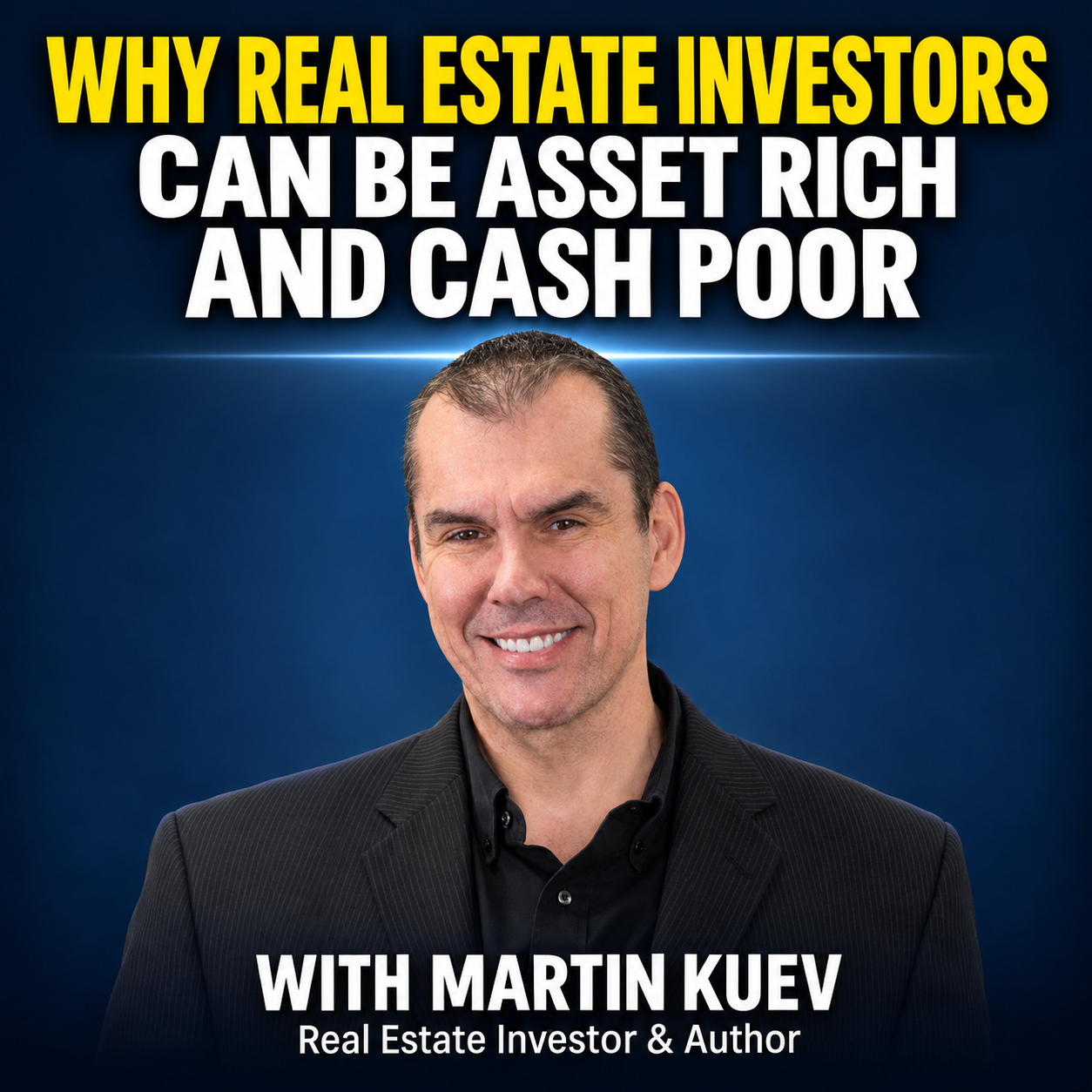
And Martin understands, based on his career, his leadership roles that he had at very large Fortune 500 companies like Coca Cola and Kraft Foods and Nestle and Phillips and I mean, Martin's resume reads like the inventory at Costco. And he transitioned into real estate full time and built a multi million dollar portfolio with his partners. And he's raised millions of dollars in private capital. And his new book, which is titled build wealth, live a life, the investment strategies your financial advisor won't tell you about this book is a must add to your wealth building library. There is a chapter in here on The Infinite Banking Concept. The question that I want you to keep in mind as you listen today we're going to have a wonderful conversation.
Since having Martin on the Show Back in 2022, I think Rich can attest to that. It might even been earlier.
But the question I want you to keep in mind is would your financial strategy still make sense if you judged it by the life that it gives you instead of just the numbers? And so we're going to talk about ownership, access to capital, what it takes to build wealth that you actually get to enjoy. So, Martin, welcome back.
[00:02:41] Speaker B: Thanks for that introduction and I appreciate it. Thanks for having me on, guys.
[00:02:45] Speaker C: So your title, it starts with build wealth and ends with live life. And so have you ever been so busy doing the first that you neglected the second? What brought that to your attention?
[00:02:57] Speaker B: Very much so. And it's actually the slogan for our investment club that we have here in Vaughan. So we started with that slogan, and it's always been the slogan from the beginning. It's we're here to get more time, and then at the same time try to get more finances to live the life that you want. So we put deliberately that slogan into our investment club because we don't want them to be separate. They need to be together and they need to have equal bearing. Because if you're only doing one and not the other, the other one one's going to sacrifice. And so we look at time and, and how you want to live your life, and then obviously building wealth because you want to live your life the way you want to live it.
[00:03:37] Speaker C: Oh, amen to that. Freedom of time, purpose, relationships and money.
[00:03:41] Speaker D: Time has its own roi, but I don't find that it adds up or shows up in most performer spreadsheets when people are looking at a real estate deal. MARTIN so how, how do people accommodate for that return on investment that they get on time, or the return on time potential? Because you could look at any performer and people can massage the numbers a little bit here and there. Of course, when they're trying to sell a deal, we all know that happens, but there's not really a life quotient added onto there. So you have to make that interpretation internally and mentally. And if you're new to the game or maybe you're experienced, but you're, maybe you're trying a different strategy that you haven't done before in real estate. You don't really know what that exchange is going to be. So how would you guide someone in being able to get clear on
[00:04:22] Speaker B: that? Sure, it's, it's one of the hardest ones that I think a lot of people don't pay attention to. They, they sometimes create another job for themselves. And if they get into real estate or they get into something else, they're working full time plus doing that. They've created a job for themselves and potentially have more money, but have lost time.
And the way I kind of started my business is I've always had the mindset of I want to work on my business, not in my business. And we have a lot of people starting out in real estate investment that if they're contractors, they want to do it themselves or they can property manage themselves. And we always tell them, make sure the numbers work without those things, otherwise you're just creating a job for yourself. Now, if it does help you and you enjoy it, Fantastic, Great. But you want to make sure all of your investments work without you physically having to be there. And you can outsource it and still have a great return. Because ultimately it comes down to what do you want to do with that money that you're going to be making? And time is the probably the most. It is the most precious resource that we can fulfill and we can't replenish.
So I'd always tell someone there's two ways you can invest. There's one is actively and one is passively. If you invest actively, then you have to look at it from two periscopes. One is, what is my return going to me from a financial standpoint, how much I'm going to make, and then secondly, what's my return on time? So you have to have both lenses out if you're going to be actively managing or actively involved in your investments. But if you're passive, then you typically want to make that. Like it's going to be like a REIT or investing in stocks or something that you don't have to spend a lot of time managing. Then you're looking at strictly your return on investment. And some. You usually have someone else helping you with that. But it all depends if you're an active investor or a passive investor. But I think you do need to have both lenses, for sure.
[00:06:11] Speaker C: Yeah, I would add to that too.
For anybody watching or listening, if you're planning to invest in anything, because we were chatting again before the show, like, if some people invest in real estate, others invest in shares of publicly traded companies that they might be doing business with in terms of consuming their goods and services.
So like a dividend investing program, much like what I've been doing for the past 33 years, this November, you have to have guardrails that you just won't deviate from. So for myself personally give you an example, Martin, no matter what the investment is, if it's not paying me a return that's greater than my cost of capital from inception, I'm out.
[00:06:59] Speaker B: Agreed.
[00:07:00] Speaker C: It does not matter to me what the targeted rate of return is.
The fact that you need my capital for three years and you're going to give me back 67 times the amount of money that I gave you, if you're not returning cash money to me that's greater than my cost of capital from inception, I've cut more people off halfway through a high caliber opportunity.
When they say, no, no, actually, yeah, it's more of an equity play.
We're targeting getting your capital back to you in whatever timeframe. Three years, five years, whatever it is.
[00:07:37] Speaker B: And sometimes we do have with that too. There's equity investing or if you want to continuously get your capital back. And yeah, two different mindsets to two different options.
[00:07:48] Speaker C: And the point I was going to make is that it's just my own right. It's not. That's not a prescription for everyone other than to say, just establish what your boundaries are and what your investment criteria is and never deviate from it.
It's kept me out of more hidden bombs than I could ever tell you because everything just sounds so wonderful. I share this with Richard often. Nothing surprises me anymore.
[00:08:16] Speaker D: Yeah, I mean, there's a couple of things that come up. Me, I just had a conversation a couple of days ago. I was walking my dog with a client. Real estate investor, done a great job. He's got projects in the US and in Canada, and he just. He just sold some units and kind of made it. Made a pretty good tatty profit. So he's. He's been kind of doing like a cleanup and a little bit of an exit and he's shifting his focus. He's like, you got a young family.
He's like, you know, I haven't really been hitting this pat. This passive scenario all that well. It's been a grind. And that grind has. He's really become aware of it after, you know, the last kind of decade of time and effort. And like, a lot happened. We had Covid. We had this. We had interest rates. Like a whole bunch of things have taken place. So he's. He's really gone through it. He's gone through like, new builds and dealing with municipalities and permits. And he's like, I'm making a pivot about this time quotient that Martin's talking about. And he's. He's redirecting a lot of that capital from the big win into more of a passive, kind of a stock kind of drip portfolio model, that sort of thing. And so he's still a young guy. He's in his early 40s. It's got a long roadmap ahead of him, but he's become really clear on the. The time investment component and the difference between really passive. And like, there was the thought process that dream was being sold through all the courses and the. The membership groups and the masterminds he was in about the passive real estate. People like to really talk about that, but unless you actually know how to go get it, like, it's not you. You find out quickly that maybe it's not all it's cracked up to be. And I have another gentleman, you know, recently he's connected with me, you know, great guy, done a lot. He's got some really big, big deals on the go and they're, they're potentially highly profitable but they've all been delayed by like three to six years because of market turmoil, geopolitical risk, some tariff risk. Some of these things that have made all these exits that were going to happen there were these big ticket exits are all drastically delayed and it's, it's me and have to pull down from other resources or any other cash resources because of it. So it's like everything you're talking about Jason, everything you're talking about Martin, in your book, these are real world stories. Like, you know, this is not just three guys talking about what ifs. Like these are real conversations that we have with people on a regular basis. Martin, I'm sure it comes up in your, in your Vaughn group and in mastermind discussions
[00:10:30] Speaker B: all the time. It comes up and it's, you know, two things on that. First, to, to Jason's point about investing in different types of investing and why I love investing in specifically real estate investing is that you don't have to fit into one mold,
[00:10:43] Speaker C: right?
[00:10:44] Speaker B: Whatever your goal is, there's going to be something else that you can find when they're and I say this in our club all the time, they say that's why I love real estate investment. If you have a need or goal of cash flow coming in, great. You can make potentially higher returns if you can wait and have an equity play in it later on. But you have both options. I always tell them, don't invest like Martin, don't come in here and invest like me. You have many different options out there and you don't have to fit yourself into a mold of a specific type of investment.
You have different types of ways you can do it. For example, let's look at what we did together on my, my infinite banking experience with you guys. I did it a little bit less conventionally than other people do it. And that's basically you can do it in different ways depending on what your particular goals are. And that's why I loved it.
[00:11:29] Speaker A: Not sure if Becoming Your Own Banker fits your goals. Trying to figure out if this is even for you. Well, save some time. Look, our free 7 Simple Steps report is the fastest way to find out. It's designed to give you total clarity and focus your effort on what really matters. Plus you'll get access to Four of our best selling books as a bonus. Go ahead, get it at seven steps Ca. That's seven steps Ca.
[00:11:53] Speaker C: Well, speaking of that, I mean you gave The Infinite Banking Concept a place in your book. And so take us back to, you know, your first encounter with The Infinite Banking Concept. Like what, what caught your attention?
[00:12:05] Speaker B: Sure. And it's, it kind of goes to all the strategies. And I started as a, as a real estate investor you mentioned. I worked almost 20 years in the corporate world, Coke, Nestle, Kraft, and eventually transitioned out of that into real estate. And Infinite Banking is, is one of those ones along with the other strategies. When I first got into real estate, you have that light bulb moment and you have that moment that you know this is not just going to free up time but potentially make much, much more on the financial side as well.
And you have that eye opening moment going, hey, there's something more that I've known real estate my entire life, but there's something more around this that I didn't know about before. That was exactly the same thing for Infinite Banking and participating whole life insurance. And for me it was all about, it's a death benefit I'm never going to be able to take advantage of. I likely will pass that off for now and continue and build up my real estate portfolio. And then I, and all of these strategies were not me going out and searching for them, but I saw other real estate investors, I saw people like you that were in my network and I saw other people doing it. And I go, hmm, maybe there's something more that I'm missing there. And it comes down to a quote that I have that I use all the time. It's the adage of if it's too good to be true, always is. And if you go by that feeling, you may miss a lot of opportunities. I basically have a different philosophy on that. I said, if it sounds too good to be true, well, you got me for 10 minutes. Convince me or lead me in a way that I can learn a little bit more and plant that seed within me. And that's exactly what I try to do with real estate. I just plant a seed and go, is there anything here that potentially can fit with what you're doing and maybe is worth a little bit more of your time? And so going back to Infinite banking, once I got my eyes opened on, hey, this is an asset, this is something I can use both in my lifetime and the death benefit is there, but I can look at it as a gravy because I'm not actually going to benefit from it. That's my legacy portion that I can leave behind. But I have this tangible asset that I can utilize within my entire investing curriculum there. So I started out in real estate investing, but now I have different pillars that I utilize because I love real estate investing, it's long term wealth. But there are other, other avenues too that gave me an equal aha moment. So these are the ones that I utilize and that work for me. But to your point too, like dividend investing, I'd like to learn a little bit more about that one. That's when I didn't, I don't do as much myself, but I think there's many different investments and many different strategies out there that can fit anybody's goal. And this one, I wrote this book for me 15 to 20 years ago when I was working in the corporate world and I had pensions and mutual funds. Didn't know anything about infinite banking.
If it was going to be any types of insurance, it'd be term insurance that people would have because it'd be the lowest, lowest cost in the month.
And so when I wrote this book, it was basically if I had access in my knowledge base to have and know about these vehicles, then I would for sure be interested in them. But I think we're just so focused on what society has told us to do. And I lived that for a good 20 years before I kind of started to unlearn a lot of the things that I, that I learned. And then once I learned about these strategies, as I said before, it's that aha moment. I go, there's a lot more here. And, and my ears are open into them. Like what, what have you done? It's not just infinite banking. You've done much, much more than that. So you're kind of very similar to me, Jason, in that sense in that you have one, but you have many different others too. And you know, one of the sayings is you, I think there's seven streams of income for every average millionaire. So you can't have just one and you have to utilize different ones.
[00:15:46] Speaker C: Well, yeah, that in exchange for that time and energy, there's income. So that checked the box and then everything, you know, all the other things that I do, especially in areas around private equity and private placements and investing in other companies.
When I ask a real estate investor personally, have you ever been in this scenario where you've had a really good opportunity in front of you, you have plenty of wealth on paper.
So you look at how the real estate investor for Example tracks all of their investments and the property values and all of that great stuff. And you look and you go, wow, you got plenty of wealth on paper.
And the real estate investor says, yeah, but I don't have ready access to the capital I need. There's a difference between owning assets and having money available.
And that's been the balance. When people ask me, why do you have 80 policies? Why have you piled up so much cash value? Why are you not deploying all of it into 58 different things to grow your money?
Because I keep gunpowder, dry powder available.
And when a high caliber opportunity finds me, I can take advantage of it instantly if it meets my criteria. There isn't anybody who couldn't put themselves in the same position.
It just takes the discipline, the consistency, the time, the capitalization, all those things that most human beings would rather avoid.
[00:17:15] Speaker B: I, I completely agree. And I think someone when I first started out told me the two big things with money is, one is access to capital. Yeah.
Hardest things to do. And the second one, which you hit on is liquidity. And as a real estate investor, you know, it's a liquid asset. So I remember saying when I first quit my job, I was, I'm asset rich, cash poor. And you have to have a different mindset as you progress and go. That liquidity does become an issue too, because look at the, look at the environment we lived in since COVID or since I've even been on the show last time. It's. There's a lot of real estate investors and they face liquidity crisis. And no matter how big an investor you are, you encountered the same things. And I always look back to real estate, and specifically on real estate, it's not about trying to, it's trying to ride out the storm. Because the storm's going to come. The storm is always going to come. But if you know your numbers and do them right on a monthly basis, you have this business in a box that's taking care of itself rather than you having to go out of your own pocket, then, yeah, you have something that's building there. But on the other side of the coin, if you have all of your money in there, you have nothing liquid, and it's going to be very difficult for you to do exactly what you say. An opportunity comes in and I can take advantage of it or just liquidity for you to, to live. And I know a lot of other investors that face that crunch, and it does, it's real. But you have to have both liquidity and access to capital. And that's why it's not just real estate for me anymore. It's. It's these different types of systems that allow me to have both.
[00:18:46] Speaker D: There's so many, you know, intricacies. I think it's important to identify because you're, you're hitting the, the bigger picture items and when it comes down to people, people will really connect with what these real experiences are like. Being in Ontario, you have certain things you got to deal with, Mark. You've got rent control as an example. You have limitations on how much you can increase rent. Well, in the time frame since you've been with us four and a half years later, we went through some, we were in already in Covid but we hadn't passed as people are still dealing with it. There was an interest rate kind of spike in that time frame. It settled back down to a normalized level. Let's call it that. Just that interest rate increase alone which was completely driven by printing of money. So you had a. Both a potential liquidity issue where now harder lending, harder lending criteria. People now are in a cash flow crunch because they got variable rate mortgages or they got home equity lines because they've been borrowing to invest in the next deal.
You combine these two elements and now you need capital and now it's harder to get because the lending rules have changed, the borrowing criteria is change. It's like, it's like you create a double impact event.
Then another scenario happens because of a rapid rise of real estate prices because of some of these market factors, the boom bust cycle. Well now you also have a rapid increase in property tax prices so you can't even raise your rent to the equivalent degree just to cover the increase in property taxes. And then you have a follow up increase in property insurance because the value of the property more. So it's like, it's like, it's like a quadruple effect of market forces around any piece of real estate that no one could necessarily plan for or comprehend. And many people got really squeezed, they got squeezed out. Some people had to just sell at a discount. Some people are holding properties at a loss because they bought it for timing.
Some people are feeding massive monthly cash flow still into those, those deals today because they caught the wave too late. And I'm sure you've talked to people about this. I have, people I've spoken with. We've had to effectively work on trying to do damage control for them. You know, in a post environment after that. And here they were, they were, they were just kind of flying high in the hog things were just getting rolling but they were under capitalized. They, they thought they had liquidity, they ended up not having it. And then cash flow, even with good planning and a good performer, just, just a host of elements almost take them out of the game. And, and I saw a similar event. Jason, you'll recall this in Alberta. We had a massive boom in Alberta from 2005 to 2007. Kind of July 2007, we hit a peak market and then everything just kind of collapsed after that for an extended period of time. And I've seen a couple of cycles now in different areas, just in Canada where everything was good until it wasn't. We have a colleague of ours, James Nether, he says it's never a problem until it's a problem.
[00:21:40] Speaker A: Hey, I like free stuff. I hope you like free stuff. In fact, we got something for free you can download right now. It's a copy of our book, Cash Follows the Leader. This book is all about how you can develop uninterrupted daily growth with high cash value life insurance. We explain a ton in there. We have some fun images so you can follow along. Go ahead and go to cash follows.com, that's cash follows.com and pick up a copy for yourself today.
[00:22:05] Speaker B: You hit on a few things there. I think from the last time I was on till now. Let's spend a little bit of time talking about that because you're right, no matter, I said it before, no matter how big you are, you got affected by it. This is, you know, the pandemic and what we experienced after that was difficult for a lot and I've seen a lot of people that, that had to pack up or had to liquidate. I myself liquidated a few properties. I, I'm a real estate investor. So all those ones were, I had maybe half the properties that were on variable mortgages and half drowned fixed. So I consider myself one of the lucky ones because yeah, I was able to withstand that and I was able to for other people that couldn't continue to pay. We put them on payment plans within our apartment buildings, properties that I had. We had to have the cash backing to basically deal with that negative cash flow for those number of years. And I also know, yeah, you hit on the money. Money supply was all driven by money supply. And that's kind of one of the other reasons why I'm so short term cautious, long term optimistic on my investing because of money supply. It's not that the investment changes or a plot of land changes, but I need just More dollars to buy that same asset that I had to have. But I also know that it does come in cycles too. And right now we've had all those rates went up and all those rates came back down. And I look at an opportunity right now. We just bought two apartment buildings, the last during this year. And now that you have the rates coming down. But what we haven't seen typically have an inverse relationship of rates coming down and then home prices going up or the other way around when we have rates go up, typically the prices come down. But from market perspective, we've a lot of that has been factored in and we're, we're sitting at a really good time to buy. So that's why we're taking advantage of it. It's kind of when Warren Buffett said, be greedy when others are fearful and fearful when others are greedy.
[00:23:55] Speaker C: Very true. And you know, the subtitle of the book reads that the investment strategies your financial advisor won't tell you about. So let's give that some substance. Like what would be the clearest example that comes up for you, Martin, and why do you think that conversation isn't happening?
[00:24:13] Speaker B: I've written blogs on financial advisors and there's some great ones and there's some not so great ones. And the main thing I say about financial advisors, do your homework, just ask them. And I think I put out seven simple questions to ask them. And you want to basically find out, are they putting their own money into this? Are they getting paid by someone else to sell you this? How vested are they and how well you do? The other thing about financial advisors is they're compensated based on how much you have invested with them rather than how well the asset does. So there's a lot of things on the you want to be aligned and aligned in your goals and what you have. And sometimes those are, those are misaligned for I look in real estate investors and it's hard to deal with contractors and property managers, not for the sake that they're hard to deal with, but just conflicting goals because the more money you spend, the benefit that they have. So you have conflicting goals to, to rise, but you have to find that equilibrium there. So it goes very, very same thing with financial advisors. So when I look at any one of these strategies, it is not what my financial advisor would say because it's going to be very tough for them to get compensated on. Now you have some of them that you can have and go into it, but they need to find a way to get compensated. So some of them can do that. But the traditional financial advisors are likely not going to bring these up just because of the compensation structure that they have.
[00:25:32] Speaker C: Yeah, that's interesting. And you know,
[00:25:34] Speaker D: they also have Big Brother watching everything they do. And
[00:25:36] Speaker B: that's another one too,
[00:25:38] Speaker D: regulators to report to and those kind of things. So, so there's also, you know, a lot of, we'll call it gun shy aspects where it's like, cool, hey, I'd love to tell you about maybe apartment investing and real estate deals. Let's talk about 12 plexus. But. Oh yeah, I can't do anything about that. But here's a, here's a mutual fund that owns a piece of a reit. You know, like, like there's a limitation to what they can do.
[00:26:02] Speaker B: Very true. Yeah. And it's one of those things that you just, you don't have. I had no access to these or knowledge of them when I was working in the corporate world.
[00:26:10] Speaker C: Right.
[00:26:11] Speaker B: I had knowledge of pensions and mutual funds and to these other ones is they're, they're out there and you have to just look for them. And we're compliant. Everything we do is by Ontario securities law as well. It's the same thing. But it's just you need to have access to these different types of investments that, and you and I both, all three of us know that you can make much, much greater returns than traditional investing does with mutual funds. And that's the only reason why I went out is you got my attention on going, hey, we got higher returns. Tell me more about that. Just asking them the right questions and you have to ask them the right questions and see how vested they are in your, in your own growth. And any, anybody that's particularly partners with us, we don't profit until they do. We want to make sure that we're highly vested in terms of them making a return because that's the most important thing. Their money has to be more important than my money.
[00:27:05] Speaker C: And what question do you wish investors would ask you before asking what's the return?
[00:27:11] Speaker B: They always ask about us because they're, if they're going to a Reader mutual fund, you have society around that. So you have something that's basically on the exchanges. I know that it's regulated. With me, they ask a lot of regulation questions for sure. So they ask, is this compliant with Ontario Securities Commissions? And it's typically around how we manage what our systems are and what makes us different than somebody else.
But my response is always, you know, if you go into a reit, fantastic. They're, they're great investments, but they're also highly regulated in terms of how they can distribute as well. So their typical returns could be what, 8 to 12%, let's say.
[00:27:50] Speaker C: Yeah.
[00:27:50] Speaker B: And then if you're going into private equity and what we do is typically the syndication model, real estate, we typically on our side of the, of the, of the investing world, we're looking for returns that are 17% plus or 20% plus. And that comes with, by some people's mind, greater risk. And I look at that and going. There may be less risk than going into a mutual fund sometimes than going into, into what we're doing, depending on what lens you look at it from.
[00:28:17] Speaker C: Well, I mean, you know, just based on your own journey with, with the process, your own journey with investing, it's so important to have clarity. It's so important to, to be educated. And so tell us a little bit more about your investment club and, you know, what fascinates people who attend and how you've seen people grow in their own investing journey just because they're surrounding themselves with people of like mind and they get to hear the tales of the trenches and, you know, the things that worked and didn't work and the lessons that were learned from it. So tell us a little bit about your investor club and what brings you energy in there.
[00:28:58] Speaker B: Great. Yeah, we, we run the Vaughn Investors Club and I had a different one prior to Covid and we launched a new one after that.
I think shortly after I was on the, on the show here, but having the club, we. When I first started investing in real estate, we didn't have a lot of information. We didn't have AI, we didn't have, we didn't have meetups. So when I quit my job, I was a man on an island. And then when I started to kind of go out and learn of these clubs and they were smaller clubs back then, I got hooked into it and I met my partners in clubs like that. And then we, we kind of started this club because it's one of those things that we didn't have when we first started out. And we, we wanted to have an access for people, one where they can learn to, where they can share and then where they, they can find other partnerships too. And you, you bring on you the, you're meeting many different people of many different shapes and sizes in terms of investing and what.
It sounds cliche, but what I love most about the club is not about us working with them, but seeing people in the club and they have a Conversation, they go out for coffee and they start going through things together and they start to strategize and brainstorm and they partner up together.
And it was basically one of those clubs that we launch and we're benefiting from it because we love a lot of them have become our friends and become our investors. And then we, we hang out with them, which is great.
We have socials four times a year. So we're not just talking about investing, but we're also spending time together. And there's a saying you're the average of the five to seven people you hang out with most. And I think with the investment club, it's, you know, it's us but giving something back. And I guess the one basic thing is if they have a question to ask, nine times out of ten we faced it or we can put them in the right direction, but also we're learning from them. I love having people come on and we always say, even if you're, if you're in an industry that could be in competition with us, come out.
We just want to let people know and let people know about different types of investing because I didn't have access to that. So we don't. We. 90% of what we talk about is real estate. We have people come on and talk about infinite banking. We have people come on and talk about stock options trading and different types of investment platforms.
But they all have to have something around them. It's not like a gambling type type thing. They need to be investment type. So we need to analyze risk and analyze projected returns, analyze your probability of those returns. So we only let ones that are true investments come through there rather than, hey, I'm, I'm selling this rock or whatever the case may be.
[00:31:27] Speaker A: Okay? Farmers, business owners, look, stop letting banks control your growth. Our book growing your own capital shows you how to finance equipment, land, inventory, and the expansion of your own family system. Get a free Digital
[email protected] that's growyourowncapital.com
[00:31:47] Speaker C: we love bringing people together of like mind because the learning, the thinking that comes out of it and the ideas, the, the relationships that, that are born, that get nurtured. And so getting to a club like the one that Martin's created, there's no downside to it.
Zero.
It's all advantage.
[00:32:12] Speaker B: I always say there's, there's always. And it gets to the point of, you may have seen this topic before, but I don't think I've ever gone to one club or one meeting, even if it was a topic I knew a lot about. I get always a nugget. I get something that I can take action on. I met another person that could be into my, into my, my circle. There's always that you're going to get something out of, out of going to one of those clubs and it's just a matter of putting yourself out there
[00:32:38] Speaker C: 100%.
[00:32:40] Speaker D: There's a key aspect too, like repetition, being a key teacher for people, and like hearing a message on repeat. So you might hear a similar presentation or hear the same saying or the same quote from, you know, Kiyosaki or something in someone's presentation, but all of a sudden it grabs you a different way because you're in a different place. Your perspective has shifted and changed it. You're in a different life role or you're looking at a different type of deal.
So you're going to have a new takeaway that wasn't there the previous time that you heard it. So there's nothing wrong with that. One thing I'm curious about because of the club and you launched it and when you've been running that club now for a number of years and obviously it's created a boon of opportunity and conversation within your own life and obviously the attendees.
I'm really curious, Martin, because I think about conversations that if I was a fly in the wall and we were having conversations back in 2022, when you first joined us on the podcast, versus the conversations that you might be having with an investor today, what would you say has shifted or changed in how you. What you might bring up or might talk about with somebody now?
[00:33:48] Speaker B: For sure it's changed quite a bit because when we first start launched the club, the interest rates were going up. So it was not a very good buying environment.
So we were basically educating them, going that, hey, that time is going to come. And we basically buy the. What are the fundamentals?
Regardless of the roller coaster that we've had over the last 10 years, the real estate market is exactly where it should be. If you take out the monthly highs and lows, it's pretty much on the same trajectory it's been for the last, I'd say two decades. And we put those charts up and that's kind of what we try to preach to everybody, is that even though right now it's not the right time frame, especially if they're a new investor, a lot of them came to us and started just listening to us in 2022, 2023, and now they're investing with us in 2025 and 2026.
So that's where it came to us is more about let's give the, the information and education.
Knowing that we weren't buying at that point too. We were basically flat out saying it was very difficult for us to buy because cash flow wasn't there. So when I'm buying something, I'm buying a business in a box and that has to sustain itself. If that's not sustaining itself, I'm bleeding money every month. And that's one of the core principles of real estate investing. And if that's not happening, it's hard to go and buy. So we had to give them education around other ways to, even though you're not getting that, educate yourself on real estate. I did that before I quit my job. I, before I quit my job, I was like a sponge and I went out and I think for at least two years I learned and learned and learned and put a transition out for myself that took between two and five years that I planned out that I was going to transition from the corporate world to real estate. I think I did in about a year and a half. But the main thing is you got to prepare for it. I think that was one of the great things about launching the club we knew is not a good environment, but people still want to learn. I think our first event had over 100 people there. And so it's basically just trying to have that out and keep the conversations going. And it's like you're, if you're buying a car, you're buying a house, it's not a one week decision. These are, these are decisions, especially with investment that you're going to spending several hundred thousand dollars potentially on.
It's not a, it's not a decision you make in a week or sometimes in a month in our year. And we always want to maintain those relationships, but just give them that, those tools and the information that now the time into late 2024, interest rates came down. All of a sudden we have cash flow and we go, hey, there's some great opportunities out there. Now all of you that have been here, you may want to perk up and, and start seeing those opportunities that are out there. And we have seen people that started to capitalize on that.
Awesome. Great. Yeah.
[00:36:19] Speaker C: I'm curious, what's your. Do you have a favorite chapter?
[00:36:24] Speaker B: And it's not,
[00:36:24] Speaker C: it's not a trick question. I, I honestly, it's not a trick question, but do you have a favorite chapter?
[00:36:30] Speaker B: One that I'd say one of my favorite ones, and I'll say it's options trading just because it's so different than traditional stock trading. And it's one that I had to very much like Infinite Banking. If you don't get it, it's very difficult for someone to grasp it. And it's hard in a book like this because my whole reason for the book is just to plant a seed. It's not to teach them that. It's not to tell them this is exactly what to do, but it's also give them enough information that they can see what this is. Because each one of the concepts that I have in there are something you need to learn a little bit more about. Each of them had like the conversations you and I had before. I had my own policy.
They were.
We had quite a few.
So on. On all those, you're. There's not going to be a.
I'm going into a grocery store and making an impulse decision. It's something that you're going to have to spend quite a bit of time on
[00:37:22] Speaker C: again with the investment options that are available out there to people.
Get to clarity before you do anything.
[00:37:31] Speaker B: Agree. Clarity and validate it. Validate everything that you have there. Like I always tell people when they come into our club, validate me. Validate what? I'm talking about the. We have AI, we have Internet. We have so much information out there that you can validate a lot quicker now than you could before. You must. You have to trust someone. And I say validate first, trust second, always.
[00:37:51] Speaker C: That's great advice.
[00:37:52] Speaker D: I would extend that, Martin. And also say consider asking good questions because there's an expression, garbage in, garbage out. And sometimes you can ask Google a question and you get a pretty crappy Google answer. And you can do the same thing with AI so the same thing applies if you're trying to learn about a new objective or investment strategy like you. You can't just say, tell me about, blink. Like, you need to be really clear and concise. And people tend to oversimplify and they get. They get these kind of contradictory, almost garbage answers back. So I think that would be a takeaway. I would have. And you know, one thing I'm really curious about, Martin, this has been on my mind is we're having this conversation just because it's been a while since we've had you on with us.
You had the opportunity to go through a few dividend parties since the last time you were on. That's what Jason and I, we. I don't know when we coined Those Jay, we did that. We used to do these boot camp events where we teach people about infinite banking over like 10 hours.
[00:38:42] Speaker C: Yeah.
[00:38:43] Speaker D: Somewhere along the line we created a slide about the dividend party and maybe, maybe it came from Nelson and we just kind of picked up on it. But
[00:38:49] Speaker C: yeah,
[00:38:50] Speaker D: I'm curious, what's it like when you get, you get an annual statement and you get to see what's happened over a year of owning an insurance contract and how you might have used it? Like, what's the reflection process like for you when that happens?
[00:39:03] Speaker B: For me and I do it once a year when I have to put the premium in. But then when I get that new illustration and they look at it and then I put, I go straight to my net worth because I look and I'm using my net worth to guarantee mortgages and to get access. I'm not using it just to access capital, but I'm also using this policy as collateral as well.
[00:39:23] Speaker C: Right.
[00:39:23] Speaker B: Because I have something that's liquid there that I don't even need to touch the policy, but it makes me look a lot stronger. So when I see that and every single year I go, the cash value is that and I put this into it and I go, okay, that makes sense. But then on the other end I have this several million dollar policy that is there and it's guaranteed. It makes you feel much, much more secure that hey, I have access to cash right now, but yet when I'm not here, I have a big chunk at the end that is going to be a lot easier for my kids to navigate through. Because you know, being a real estate investor, you have to play go through probate and you're going to have to pay capital gains on that if there's a change in ownership. This will allow them to one potentially not do that, put into a corporation, so it's tax free, but also has, has that death benefit. But seeing just the cash value on a yearly basis, me going, I'm using this right now in my, in my life. It's not a death benefit, but it's access to capital and it's giving me liquidity and also collateral of all, all those three together. I love seeing that statement every single year. And it's one of those ones that you're not going to get on term policies. And I, I equate real estate to infinite banking a lot. And it's kind of one of those things. It's like you're renting or buying and if you're, if you're renting, you Know that there's a, there's going to come a time when that's going to run out. Like you're not building anything on top of that, you have to keep having the money flowing in. Or if you're buying, you have assets, is generating for you, you're paying it, but it starts paying you back over time. And that's what I love about both real estate and infinite banking, where if you're in a term policy, you're just paying for it and you're going to have to redo something later on, but you're going to have to continuously have that income coming in. It's not going to pay you back.
But then, and same with, with owning real estate. So I, I correlate those two that way,
[00:41:16] Speaker A: hey, if you're getting value from this and you haven't subscribed yet, hit the subscribe button right now. Look, we're marching towards 10,000 subscribers and every single one helps us bring more powerful content. On taking control of your money, that's what we're all about. Go ahead, hit it now.
[00:41:33] Speaker C: And when Nelson shared this with Richard and I many years ago, he would say it just continues to get more efficient.
And we were so early in our journey back then that we heard what he said.
But now with having policies in force for as long as we've had them, we understand with absolute clarity what he meant.
[00:42:00] Speaker B: It's so true. And I think we did my policy in 2021, I think with you.
[00:42:04] Speaker C: Yeah.
[00:42:04] Speaker B: And it's one of those topics that it's not a sexy topic, not a sexy investment topic, but once you're in it, it gets very exciting to you. To your point. It's like I just went through mine. I think my was in September, October, and I just got my new illustrations and I go, okay. I go straight to the net worth and I go, okay. My cash values increase, so now I have more collateral and it makes my qualification for other mortgages that much easier. Once you dive in, kind of like real estate, it gets very, very exciting. Once you learn a little bit more.
[00:42:33] Speaker D: You brought up something really important, Mark, because not everyone and I think, I think a lot of people from the real estate investors space again, they're learning multiple concepts at one time which strategy they're going to use. They, they learn about infinite banking. It's like insurance. How does that operate? But you're really hitting the nail on the head around the unseen. Like there's an illustration and there's a, there's a premium that you pay. But like what are the things that are unseen? Well, you updating your balance sheet every single year to showcase what this accumulation looks like at the end of the day, that's a big part of the decision making process. When you're doing big deals. It's like cool. What is the strength of this borrower or group of borrowers if we're dealing with partners as an example. And so the more that you have that accumulation and then also there's a nice feel good element of protection around the fact that if something does happen, there's a big chunk of death benefit money that's going to come in tax free. So it's not something that we, I would say like promote. Precisely. But it's, it's one of those things that's just so powerful. When you're in the real estate game and you are seeking third party financing, you're always looking for the next deal, the next opportunity. You know, there's going to be a qualifying process up ahead. Anything you could put on paper that makes you look like a stronger borrower than the next person is always to your advantage. And that's a piece that a lot of people don't really understand.
[00:43:50] Speaker B: Very, very true. Yeah. I mean, we look at that one insurance policy and look at the death benefit. But what you see every single year is that grows and grows and grows and grows. So my death benefit is not anywhere near what it was at the beginning. And plus it's got cash, plus it's got so many other tools that I have there, but it has to continue to grow. And then you put it, you put a great point that lenders are salivating to give these out because they're not reliant on something else, they're reliant on a guarantee from insurance company.
And even if I choose not to pay back that loan and I borrow from my own plan and my own policy, they're covered.
[00:44:28] Speaker D: Martin, such a pleasure having you back on with us. Of course, and so neat to get like a context period of time. And you know, you mentioned that you wrote this book for Martin 20 years ago and that's who you wanted to kind of impact. So taking that into consideration, thinking about the other people like Martin, who do you want this book to be a hero to?
[00:44:52] Speaker B: Probably who I wrote it for myself. So probably busy professionals that are probably working in the corporate world knowing that there may be something else out there. But you don't necessarily have to quit your job or giving you the potential to maybe quit your job a little bit sooner if you Wanted to. Basically what I try to put in the book is, and we started talking about this at the beginning in terms of liquidity issues and where I have access to capital, where I don't have access to capital. What I did with each of these strategies is put them into a wealth stack. So one is income generation, the other one is long term growth with real estate and The Infinite Banking. And life insurance is blanket over everything.
And that I will always have money freely going into my available capital, but that available capital will consistently be working. But I also have some of the life insurance policy that is still working, but I can access any time. To Jason's point about if an opportunity comes up, I have liquid capital there. So I have that insurance policy there, which, which I haven't really touched. But income growth, long term, wealth generation, and then you have this blanket that you have access to capital as well as that legacy component. That's basically who I'm targeting is the people that I was before not knowing that I can potentially retire much, much in a much better light no matter the type of job I had. I had a great job. I had golden handcuffs. But I would be losing the time that I had over the last 10 years. And I was always there for pickup and drop off that I wouldn't change for the world. And others can do that. But it's just learning, kind of learning things that are not conventional or not what society puts out there.
And it's, it's tough, like a lot. When I first quit my job, my parents were like, you're being risky and, and it's, you're, you're hitting a lot of nerves that other people are, whoa, whoa, great, good luck to you. But I don't think that's for me. And then I'm, I'm privileged now to the point of I've been doing it for quite a while and I have a lot of ex colleagues and they say, hey, Martin, I see what you're doing. Do you want to have a coffee?
I have a old group of friends right now and they're like, okay, we see what you're doing. We're ready to buy a building with you. And I'm actually talking to friends about that now. And it just, it's when they start to learn to understand it. At the beginning they were like, whoa, that's very risky from the job that you had. If I can hit that person, that's probably the, the, the one that I'd look at. But any one of these strategies could be done individually. But I I choose to do them together because once you are not working or, or you choose to not work, you have access to all of them. You have access to capital that you need. You have income growth, and you can potentially live as well as grow. So I think that went off on a tangent there, but that's how I'd answer that.
[00:47:31] Speaker C: Well, Martin, thank you for joining us again and just giving us a closer look at your book and the title of it.
I think it gives us all something to think about and we spend a lot of time measuring what we've accumulated. It's worth asking what that wealth is making possible in your life. Keep your curiosity alive. So if something that we talked about today challenged your thinking, explore it. Learn enough to ask all the right clarifying questions. And if anybody tells you that an investment has absolutely no downside, take a quick look right now. Make sure you still got your wallet in your pocket.
So pick up Martin's book and spend time with the ideas that he shares in it. Just continue building your understanding. And as rich. And I always like to say, please subscribe to wealth on Main Street. Right. And as these new videos popped up, you just saw it pop up. Now, credit to YouTube's algorithm. Your next financial decision, it deserves a better informed version of you. And so, Martin, thanks again for being here and to all our viewers and listeners. We'll see you on the next episode.