Episode Transcript
[00:00:00] Speaker A: Foreign.
[00:00:11] Speaker B: Welcome to wealth on Main street, where conversations about growing your wealth are fun and entertaining. Wealth isn't just about money. It's the skills and the knowledge that we develop to pass on to future generations.
Tune in each week to grow your mindset and your net worth at the same time.
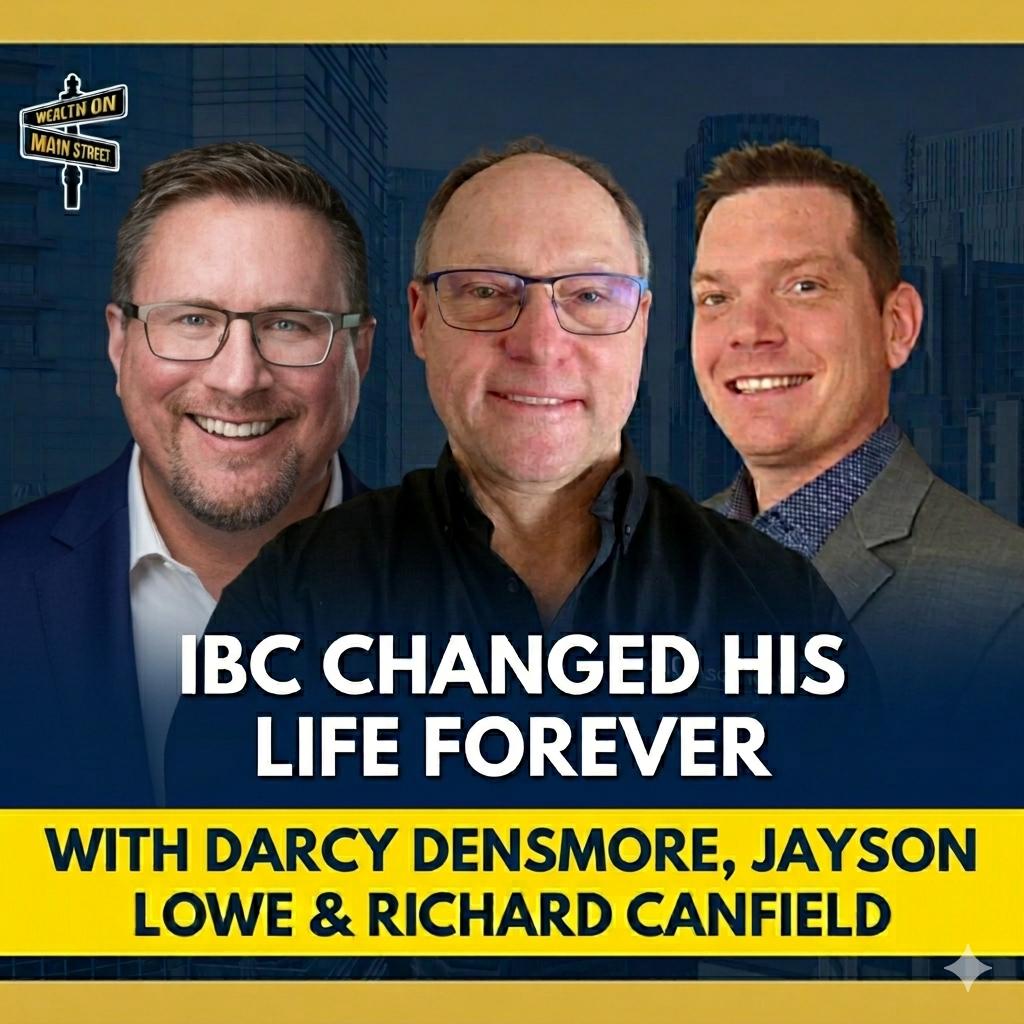
[00:00:36] Speaker C: All right, welcome back to wealth on Main Street. Today's episode is definitely going to feel a little different. And honestly, I think for Rich and I, these are some of our favorites because instead of talking to both of us who have been doing this for.
It won't be long before it's a couple of decades. We're speaking to someone who's right in it right now, figuring it out, taking action, learning in real time. And we've got Darcy Densmore with us today. He's one of our newer advisors. And we're going to unpack what actually happens when you step into this world.
Not, you know, not the theory, just the real stuff, the nerves, the first conversations, the mindset shifts, the moments when things really start to click, when you're on your journey as an authorized infinite banking practitioner on the ascended financial team. And so if you're listening and if you've ever thought, you know, I wonder if this is something that I could do, if this was something that I would want to pursue as a career path, then this episode is definitely for you. So, Darcy, welcome to the show.
[00:01:42] Speaker A: Great. Thanks, Jason. Thanks, Rich, for having me on and
[00:01:46] Speaker C: to dive right in. So before you stepped into this world, what were you doing?
[00:01:50] Speaker A: Well, it was a far from a straight line, that's for sure. I mean, just a quick briefing. I. I'm from suburbia, Ontario, like yourself. I'm from Northern Ontario, from Nickelbilt. And my parents died really young when I was 14, so to live with my brother in B.C. for a couple years of high school, I didn't even know him because he's 20 years older than I was. I didn't even know him growing up. At grade 11, moved out my own with a couple of buddies. We finished off high school, grade 11 and 12 in Campbell was at forestry program. I was doing forestry in, in Camus with intent being the forest industry. And then all of a sudden 88 even I graduated. The industry just dropped right out. There's no work at all. So I toured all over Vancouver island where I was trying to find work and there wasn't much we had. So I ended the Fort St. John and I looked in the oil field and then I wound up in Red Deer. Red Deer, Alberta. I've Been in Red Deer, Alberta ever since. That was in. Back in 1988. And the oil field, I've been. I spent 35 years in the oil field until uh. Yeah, just uh. Yeah, it's a long time. It was a, it was a. Interesting because.
Yeah, my wife, we just bought an acreage in 19 and 2020 and my wife got diagnosed with breast cancer. Oh no. So anyways, it was a big turning point for us. Didn't know what we're going to do and then we could fought through the cancer about a year and a half and then she finally figured she was clear, sounded like. And then uh, I was up north working in Fort Mack and I came back from a three week hitch. I just got home from days off about 7 o' clock at night, had supper with her, went to bed at 10, 11 o', clock, woke up and she had a seizure. Oh. And then we just figured out that part of the hospital he's had a tumor in the brain at that point. Yeah. So anyways, we got him for surgery right away. Lucky was operable. We found it was intact sites and breast cancer to a brain to the lymph nodes. But that was on November 2nd of 2023.
[00:03:29] Speaker B: Wow.
[00:03:29] Speaker A: Last day I seen the old patch. At that point there, I decided not going back again. I discovered infinite banking about three years before that. And I always knew I wanted to do something bigger, you know, rather than drilling the holes in the ground and making money. The oil company was great, provided great living for me, but wasn't fulfilling. And once I discovered this, I knew that this is a path that I wanted to go on. But I kept saying, maybe next breakup, maybe next breakup. Right. And then that was a catalyst and November 2nd just never went back. And I jumped right in. I started doing my training with Senate Financial and yeah, now I'm here and I helping other people out. So my wife is. My wife's progressing. You know, she'd gone through a couple of surgeries. She went through another surgery, second surgery again here in last September. The tumor came back.
So they operated again, but they operated the second time and they found that actually wasn't actually cancerous. It was just more of a scar tissue from the radiation before. So that was good news. So anyway, she's on the recovery there now, so slow recovery, but yeah, it has been a straight line for sure. But happy to be here.
[00:04:24] Speaker B: Yeah.
[00:04:24] Speaker C: And we're happy to have you as a teammate. And you know, there's everything begins and ends with family. Right. There's nothing, nothing more Important than that. And yeah. So, you know, obviously very relieved to hear that, you know, she's holding up as well as she can be and that you're obviously right there with her as.
As you should be. And I'm curious. I know Richard is too. Like when you, when you first heard about the infinite banking concept. So if you go back three years, were you, were you excited, skeptical, confused, like all the above?
[00:04:56] Speaker A: Oh yeah, well, all the above because yeah, like I said, we just, we just moved into the house. It all kind of happened. That's how I discovered it because I was trying to find what to do after finding breast cancer, right. I kind of, I just scouring the Internet and, and we had a bunch of rental properties and stuff. We've been investing over the years, but you know, you can't eat. Eat rental properties or pay mortgage rental properties. So I had to find something else. And then I, I found the rabbit hole of infinite banking and it was all us stuff. So I at first didn't think it was real at all. Of course. Then I just watched enough and I figured this has got some legitimacy to it, but it can't be right in Canada. And then I finally found a couple companies in Canada if I did it including a center financial and I talked to three different companies and I got by far the best feeling of genuine care of the clients within a financial by far. So I, after a few months of doing more research, I finally got my first policy with a center financial client. And yeah, and then after it all started off, I mean, I want to get another policy like six months later once I kind of get my feet wet. But by that time they got a biopsy on my chest. They found a little scar on my chest. Couldn't get a policy because I had biopsy. The fear is cancerous. Like, oh no, I'm a one and done. So I thought, okay, you know what? I've read in the book, you can do it in other people. So I got policy with my kids while I was waiting just in case I got so policy to all my kids. And then few months later, bosses came back negative. So thankfully they came back negative. So I got a much larger policy that is more meaningful to my objectives at that time. But yeah, it was. But yeah, that my, my first feeling was, is it, is it? Is the truth real? Can we do it here in Canada?
And I want to figure out what it was. It's like, I'm all in. Why is everybody doing this?
[00:06:33] Speaker B: What's also like really important about your story, Darcy? Is, you know, you have a combination of personal examples around, you know, health challenges and, you know, like Jason said, I mean, we're grateful to know that your wife has been going through recovery and, and getting on the other side of this, which is amazing. But, you know, now that gives you a very unique perspective and conversations that you can have with people as you meet them because, you know, you can share from a personal experience what happens when you are insurable and then, and then when you aren't. And even from your own perspective, there was a period of time just because of a test that was pending and unknown results. You know, it sounds like that was a few months. And you know, for some people, they're in the queue waiting to get testing and that testing, depending on which medical system they're in, that could be a year out. And so they could be in this limbo of unknowing if they're insurable or not for a pretty extended period of time. And that happens when we go into underwriting with some people. So you never know what your, what your kind of best before date is in regards to your insurability. And you've, you've gone through that experience, but it didn't stop you. So there's a couple of key elements I hear is, number one, that you, you wanted to progress. You recognize what you wanted to do and how you wanted to do it, and you weren't going to be stopped in the process. You, you were going to be committed to what you wanted. So you got other people insured. You used your kids, hey, that's great. Now, now they're covered. Boom, you found out you were able to get insured and you say, you know what, I don't want to go through that again. Let's make this thing a little bit bigger so we can meet some of the long term objectives. Like I really, there's a lot of powerful lessons in your own personal story there to share, and I'm sure those probably come up in some way or another from time to time when you're having meetings with, with people exploring this concept.
[00:08:21] Speaker A: 100%. 100%. You know, my wife and I talk about this lots. You know, when life kind of drags you along and pushes you along, do certain things. And I think that things happen for a reason. She said to herself, you know, things happen for a reason. You know, it's horrible. She got the breast cancer, but she's pulling through. But had that not have happened, we would not have wound up in this here position. Now to help other people so we think that it was you know things do happen for a reason so it's. It was good but I mean I talk about all the time with my clients too because we don't you know we might be sure about today but we don't know what tomorrow brings and I and my son saying I got policies for all my kids at that time and now my son got a policy himself a year and a half ago he's 25 got a 23 year old or 24 year old daughter just yesterday I got 25 year old son and a 30 year old daughter my D Paul and all of them my son got his own policy and then he had a baby here a year and a half ago married and had a baby so I put policy they weren't in position policy themselves so I put policy on his wife and his son was my grandson as well like. Like last September. So even my daughter in law's got a policy now that I own and my grandson but now he's in position now I talked to him I says he said that I want to get policies in these kids now too in my family too. Can I still do that? Said absolutely. So we got just got through application I said well just do one step further said let's get a policy on your wife for sure because she's looking after the farm they got a small farm while you're gone for a few or something the diamond mines as a mechanic time so she looks after everything's a toddler and on your son too because that's me his banking system later on I said let's go one step further. Your mom's not insurable unfortunately I got some term insurance from years ago convert that's another story but but for new policy but I mean and. And her and his wife's dad is not insurable but his I said I am still insurable today and his wife's mother is still insurable today. So why don't we go and see if we can get him policies on on me and his wife as as mother in law instead too so now we just disfiged application just got them all approved like three days ago. So now he's got a policy on his wife his son policy on me and the mother in law. Wow. The whole family's covered now.
I feel so. So relieved.
[00:10:23] Speaker C: I bet you are.
[00:10:24] Speaker A: It's expanded system quite fast but it's. It's good.
[00:10:28] Speaker C: You're not going to look back you're not going to look back on it years from now and say gosh, you know, I really wish I would have done that much slower.
So if, if someone is listening right now, Darcy, that is curious, you know, maybe, but unsure. What would you tell them?
[00:10:45] Speaker A: Curious about getting a policy mean or.
[00:10:48] Speaker C: Yeah, well, about you know, implementing the process. Right. About going on this journey of becoming your own banker and implementing this, this process in their lives. If they're curious about it but they're unsure.
[00:11:01] Speaker A: Yeah.
[00:11:01] Speaker C: What would you tell them?
[00:11:02] Speaker A: Yeah, I mean I would say, you know, life doesn't wait for anybody and they can help any of us anytime. So you don't know until you to find out. But it's, it sure is a go, go and go and apply and find out if you can get insurance because if you can, you, you just the feeling of relief knowing that your family's looked after. But not only they looked after, you can utilize it through all life as well too, you know. And it's, it's a, it's such a good feeling known that feeling that you've, you've looked after your family that way,
[00:11:28] Speaker C: you know, so good.
[00:11:29] Speaker B: Well, and your story about your son is exciting because number one, you know, being creative, checking to see who's all insurable, all that's fantastic. But it's also just the knowledge and you can see, see the pride visibly, you know, Darcy, when you, you, you give us a story about your son because you now know that you're connecting the message and what you are so passionate about yourself, what caused you to go down this road and you're seeing that connection, that transition point happen with your son, with his, his family. It's connected to his extended family now through the in laws and so the, the power, what that means for your grandson now is, is really something special.
[00:12:08] Speaker A: Yeah, yeah, I'm very excited about it. Like I said, you know, it's, he was going to put a larger policy on his wife and his son and I said that's great, you can do that for sure. And I, I don't, you know, discourage that but I said, God willing, me and your mother in law are going to go 30 years before you guys and we're in a sherbille today, may not be next week. So when I look into it because your policies on us that can be a tax free windfall for you guys when you're my age potentially that could really take care of a lot of your debts and stresses and you know, for policy loans and farm debt and everything else. So was, yeah, I'm pretty happy to do that. Amazing.
[00:12:43] Speaker C: And I'm curious, how have friends or family reacted to what you're doing now on this journey of being an authorized infinite banking practitioner? How have they reacted to that?
[00:12:54] Speaker A: Yeah, no, it was, it, it was different at first because you know, I, I spent 35 years in the old patch. Yeah, I was a hands on guy my entire life. And to go to this career now or more of an advisor role, at first they didn't think I was going to stick with it. They thought, well even you're, you're an old past through and through for your lifer. I was like, no, what, no, I'm just going to see this true. Because I got a purpose now. And, and, and first, now that I've seen, now that I've got my son's policies and stuff set up and the extended family's kind of growing now, the other ones are all starting to look at, it's like, wait a minute, wow, they're actually growing and they're their whole system growing. There's some really legitimacy to this now. Their other, other siblings now are looking into, want to talk to me about it and just get more information about it and yeah, I'm happy about it.
[00:13:34] Speaker C: How has your confidence changed since you began this journey?
[00:13:37] Speaker A: Oh, for sure, for sure. Yeah, for sure. It's huge. Know, it's, it's a, again, it's not a straight line. For sure. It's definitely a learning curve. I didn't come from a background of any kind of sales and but the good thing about this, I don't consider sales. I don't sell anything to anybody. I'm just like, tell them what I'm doing. I'm just, this is my story. This house affected my family. You know, this is the, the path that I've taken, the path I could have taken. And it's, it's really, it's, yeah, you know, you don't got to sell this. It's just, just do it.
[00:14:02] Speaker B: So good.
[00:14:03] Speaker A: Yeah.
[00:14:03] Speaker B: Well, what, what's something that surprised you, Darcy, once you made the commitment to, to join, to come aboard and, and to start training? What, what was something that you found interesting that you didn't expect about getting into this industry and into this business and, and, and going through a lot of training?
[00:14:20] Speaker A: Well, you know, there's a lot of challenges of course, to be able to communicate with, with, with clients and stuff, but I, I, I just found that it's just really the, the way we all kind of network together, help each other as a unit, to help other clients is pretty powerful. You're not like a lone wolf on it, for sure. You know, when I'm helping all my clients, I tell them all the time, you know, you're not just getting me as a client, you're getting our whole team. And we have so much different experience in all different levels. So it's. I feel like I'm really got a lot to offer them because I got a whole team behind me, which is nice.
[00:14:51] Speaker C: That's really good. You know what I found, the teammates that we've talked to that, you know, we interview on the show, they always have some shift in terms of how they viewed money and how they viewed thinking long range, which most people don't do. And I'm just genuinely curious, like, now that you've got policies in place, and like you said, you moved forward pretty rapidly in ensuring people that you have a beneficial interest in.
And so, as Nelson would say, you're very well diversified.
You're diversified in lives, insured.
And so how has your thinking about money shifted since you started this process?
[00:15:33] Speaker A: Oh, tremendously, tremendously. I mean, before I did this, I was. Like I said, every dollar we made pretty well went towards, you know, buying rental properties, whatever else, you know, we didn't live. You know, we lived relative, what that means, I guess. But I mean, Robert Kiyosaki always kind of. I kind of could follow out of his stuff and philosophies about, you know, managing your money and make sure your money's working for you. That was always good. But now that I've discovered this concept here, like I always tell my clients all the time, before I discovered this, Rich Dad, Poor Dad's most impactful book in my life, you know, now it's the second most impacted book my life. Now this is. Here's the most impactful book of my life by far. Because it's just changed the whole way I think about money, you know, and now whenever I'm doing something, anything at all, I still gotta stop myself sometimes and. Wait, wait. No, no, no, no. We're gonna do this way here. First we're gonna flow the money here, here, here, and then it's gonna go over to there, right? That's an ongoing battle that we all kind of go with. Got to make sure we're always thinking those. Those pass through. But, yeah, it's. I don't feel the urge no more. I don't feel the urge any longer to jump into investments either. It's kind of nice. It was just. It's more peaceful like now. I've been into A few investments where I wish I could have the money back and a few investments where I'll never get money back. You know, let's be honest, right. I think we've all been there. But now that I discovered this and that now my money goes into policies first and this, I'm like 100% sure. I'm confident this, this investment opportunity, I'm more than happy that money sitting in that policy and grow daily cash flow every single day just, it's so much less stress, you know, but the opportunities are there. We need it. Yeah.
[00:17:01] Speaker C: Rich, if you and I had a dollar for every time that we heard exactly what Darcy just said, for sure.
[00:17:08] Speaker B: It's hard, it's hard to figure out where that your statement lands up on the spreadsheet that everyone shows you on how good the investment is going to do because they never seem to put that statement anywhere on the on the line item. It's not like in the bottom in the notes or anything.
[00:17:22] Speaker A: Yeah, yeah, no kidding.
[00:17:24] Speaker C: Just a very peaceful, stress free way of life when you've got readily accessible capital without reducing your own assets value, you're not triggering a taxable event and you're not interrupting compounding, which is the one thing compounding does pretty darn good on its own. Would you guys agree? Yeah, the only thing that screws it up is interrupting it.
And so that's. I think Darcy, in addition to what you described, what Rich and I hear so often, not just from fellow teammates but from clients as well that we interview on the show is exactly what you said. When you know that you've got access to an opportunity and the opportunity checks all the boxes for you in terms of what characteristics of an investment you feel drawn toward and you want to deploy capital in. And it's just a very peaceful, stress free way of life because you know that you've got all the cash value in the policy rising on a daily basis uninterrupted and you've deployed the life insurance companies money into whatever that investment opportunity happens to be. But speaks to the truth. Nelson said when you have ready access capital opportunities of high caliber will find you. And we have an incalculable number of examples of that being true.
[00:18:46] Speaker B: It's interesting you mentioned that Jason, because I have the perfect investment book in.
[00:18:51] Speaker C: Yeah.
[00:18:51] Speaker B: With Carlos Lara and you know we've, we've done some kind of before but I just recently released and we should be able to point to it here or in the description to an episode where I recorded about a couple of the chapters in this, in this book. And the perfect investment. Well, what are the characteristics that you would list if you could, you could name anything in the world. What would, what would the most magical investment have? And it's so interesting to hear the context of you sharing piggybacking off of Darcy's own experience. And it's like, you know, I literally just recorded content on that. It's right here in this book beside me. It's kind of funny how it all kind of comes together, but there's, there's so much power in your story, Darcy. You know, the, the past informing your bigger future. And I think there's a, there's a general excitement about what you're doing right now. And you know, I'm hearing from you that, you know, 35 years of oil life which treated you well. You know, you mentioned purpose a number of times and how this is giving you purpose that you, you didn't necessarily feel you still had in that previous environment. So what's the biggest dis. Differentiator there between, you know, the, the old world career and, and the new world career?
[00:19:54] Speaker A: Well, I mean, it's. I used to work with shift works. I worked two weeks on and two weeks off, typically most of my career most of the time or two weeks on the week off. So it's gone all the time. But I mean, now I don't feel like I, I put in more hours probably now because I love what I'm doing though. Even though I don't get only the two weeks off, I'm home all the time. I put a lot more hours because I'm enjoying what I'm doing. You know, I just, yeah, I just can't. I just enjoy what I'm doing. So it's not a work at all. You know, I, I definitely put a lot of time in, but yeah, it's fulfilling for sure. I didn't get that with the oil field. You know, the Oldfield is good, paid me good money. The first few years was challenging for sure, but after 35 years, you kind of need to change anyways. But like I say, it was nice to be able to help out the big old companies, but I like, prefer to help out the umes there a lot more.
[00:20:37] Speaker C: Well, and just a different sort of take on the question that I asked earlier. So if, if someone's listening right now and thinking, could I do this as a career, what would you tell them?
[00:20:49] Speaker A: Yeah, I mean, if you have a, if you have a love and a passion for helping other people, you know, you're definitely Compassionate person, then it's good. You know, it's. It's definitely. It's. You got to have the want to really help people. And if you do have that, then it's. It's good that way because there's so many people that, that, that we can help with this, you know, that need our help. This, this. We all said before, anybody that's discovered this, this should have been taught in schools, you know, for, for a century. And it's a shame that it's not taught, nor of us don't know about it. So we can. A lot of people, we can definitely help out for sure.
[00:21:21] Speaker C: Very well said.
[00:21:22] Speaker B: What would you say has been one of the most interesting experiences so far since you've been on the other side of the chair in the advisor seat, compared to when you were just learning and discovering and implementing this on your own, what's been a surprise moment for you?
Is it the. Is it the connection that you get to create with somebody that you're helping?
Is it the coaching moments and opportunities? Is it the camaraderie and the connection that you're finding with just being around other members of our team? What would you put your finger on there, Darcy?
[00:21:55] Speaker A: Yeah, no, a little bit of all. But I mean, I do, you know, most of our, our career is done through zoom nowadays in this new age, you know, but you do get, even though you're not face to face, you're screen to screen, and you do get that camaraderie, you know, And I actually, I actually have more of a connection now with people now than I have in the oil field. They had like five or six guys in my crew or whatever it was, and that was all I dealt with. And now I'm doing clients all the time, which is nice. I can Talk, you know, five or 10 clients on a day over Zoom. And plus co workers. It's just nice that way. You do get the camaraderie for sure.
Other than that, I mean, like, I had a conversation today with one of my earlier clients, one of my first clients, when I first come in Advisor, and, And it was nice because I got a chance to speak with her and see how she's utilizing her policy. And, you know, I really made. She said, like, I'm so glad he had this call because a lot of things came clear to her after this call. We had a couple calls since before that, but this one call in particular just happened to click a couple things with her. And that made me feel good afterwards. Like I told my wife after, like, that's why I'm doing this, you know, she left that conversation feeling like, oh, man, I'm so glad we have this call, she said. And I was like, yeah, that's. That's awesome.
[00:22:56] Speaker C: That's pretty darn good feedback to get. And it makes you feel great. So what excites you most about what, you know, your. This career path for you, what excites you most about.
[00:23:05] Speaker A: I mean, yeah, there's, I think the fact that excites me, the fact that I'm just. I'm just helping people. I mean, I like that. I like to be able to do, to. To share it. A lot of people that I still need to connect with, and there's a lot of people that are. Don't understand. They're little standoffish yet, and I don't want to. I don't push that to anybody. It's like, this is what I'm doing. This is why I'm doing it. And these results I'm getting. I hope you join me in this journey. You know, I don't tell anybody to do this, what I'm doing. And. And then that seems to resonate with people don't, you know, not trying to push anybody with it at all. And once they understand a little bit, then also they're like, oh, man, I wish I done this sooner. So, you know what? That's fine. We're not ready for nobody. It doesn't click everybody right away. It all takes just a little bit longer sometimes for it to catch on, myself included.
[00:23:43] Speaker C: Yeah, it's why Nelson said that it's more caught than taught.
[00:23:47] Speaker A: Yeah, 100%.
[00:23:48] Speaker C: And when someone catches it, oh, boy. Yeah, it's. It's. It feels pretty good to be a guide and, you know, to help people along and. But, yeah, it's. Yeah, it's so great. It's so great to hear these stories. Every time I get to interview a teammate.
[00:24:04] Speaker B: I love it. We have a good opportunity here, too, Durst, because, you know, you mentioned picking up some rental properties along the way, you and your wife, and that's part of your. Of your portfolio and like, part of your retirement path, you know, prior to learning about this. And so, you know, you must have chosen that path for a reason. I'm sure there was a direction and a purpose in that. I'm curious, what. What would you say for your past decision to do real estate and get, you know, get rental properties? How does that has some of that overlap with what you're doing when you decided to start IBC and Is there an example of how you've seen those two things intersect now since you've been doing them together?
[00:24:40] Speaker A: Oh yeah. Yeah. For sure. 100.
When I, when I first discovered this IBC, my wife and I both looked at each other right away. Like once they actually understood it. After watching hundreds and hundreds of videos and stuff, we finally want to finally start clicking and it's like this is a missing link we've been looking for. We've been putting money into real estate and doing this and that, but it's like man, other people are getting somewhere a lot faster than we are. I don't know what we're doing differently. But so now I've kind of, I've definitely slowed down. I'm not really buying, investing real estate anymore. I'm kind of past that phase now. Our kids are all kind of growing up so I'm kind of actually slowly divesting out of it. But first thing we said is like why didn't we know about this 30 years ago? We put the money into policies first and bought the real estate. I would have, could have, should have. Nice. Didn't know back then. We do now. So what I've been doing now is slowly divesting out of them as the properties get older, you know, getting rid of the ones that aren't doing the best performance. And then I'm putting those proceeds into my policy, starting new policies or capitalizing on what I got. And then from there I can use it for other investments. Like for example, two years almost to the day I had a property that was a five year term is up. The property had for about 18 years, I guess 17 years. And the interest rates are going to jump because that's when the interest rates are going up pretty fast that time. So it's going to jump from like three and a half percent to like five and a half percent. My payments are going to go from 1500 bucks to 1700 bucks a month to the bank payment. So you know what, I got enough collateral or capitalization. My policy now took a policy loan. We paid out that commercial bank altogether, took over that mortgage. Well now we didn't pay it off. We actually just took over the mortgage. Which is nice because now you know, owning debt is, can be a tough hill to swallow sometimes. Good debt and bad debt. But owning debt, it's a pretty nice place to be. It's nice when you own that debt because now, now those renters still pay that rental income just like before. But instead of three quarters of it or probably seven eighths of it going out to the commercial bank. Now all this go straight into my own pocke, my own, my own policy, which is nice. We actually sold that property. Actually we, we listed it here last summer. So I think with a six month holiday on payments, which is nice. Goes back to control.
[00:26:31] Speaker B: Right.
[00:26:32] Speaker A: You can do that with policy loans. Obviously took a six month holiday in payments, put money towards contractors, got it all cleaned up, renovated, upgraded, listed and sold. And when I sold it, I paid back that policy loan plus interest. But then my wife and I were talking like well that's nice, that's great. We did that. But I said now what? Now we lost that differential, we lost that interest income. So now we're going to take another policy loan. I got two other rental properties that are coming up here this summer. We're going to take over those mortgages, the exact same thing. So at least we're investing ourselves and it's a safe investment rather than putting investment somebody else and hoping investment does good.
[00:27:01] Speaker C: So we tell people all the time, Darcy, we share that, you know, your debt is someone else's passive income.
[00:27:08] Speaker A: Yeah.
[00:27:08] Speaker C: And so when you're able to flip that switch and, and take over the debt and you become the banker literally as it relates to yours and your wife's needs and that, that is an incredible example.
I love that. I see every time Rich, every time we get a teammate on, we get to something that's just a golden nugget for our listeners. I really sincerely hope that everybody heard what Darcy just described and what they've done. How did that make you and your wife feel, Darcy?
[00:27:39] Speaker A: Oh, it was great. I'm still gritty thinking about it, you know, because like I said, it's the old adage, you know, like our own personal mortgage. Same thing, you know, it's 2,500 bucks a month payments, but we're only paying 1.95% interest out of that 2,500 bucks month payments. Thousand bucks of that is, is interest. Well that's a hell of a heck of a lot more than 1.98%. It's like almost 40%. So the volume that we're saving is huge on non rental property. And I realize that it's, it's a, it's a investment interest but still I can still own it, which is nice. Yeah.
[00:28:08] Speaker B: Well and one of the key things I think that you know, you, you mentioned it but I don't know if everyone really captured like you, you were able to go on a six month payment holiday because you own the debt and that gave you the time to find, hire and get the contracts in. But also you had to exit a tenant at some point, right? So you knew you had to give notice, tenant was going to move out. You had a timeline to get things done to meet the market so that you could get it posted in the market, you know, and then you have holding costs. Well, anyone in the real estate game understands holding costs and they got to budget that in. Well, they're usually budgeting it in with someone else's money. They're looking for the joint venture partner or we got to get private money, let's get a private lender. And then we got to factor in all that, that cost in there. And like you, you didn't have to worry about any of that because you owned the debt and you not only did you own the debt, you had control over the repayment terms of the debt. So like, the degree to which you create autonomous control over various areas of your life is, you know, people are always trying to figure out what's the secret sauce to this infinite banking thing. There's, it's too good to be true, Darcy. There's gotta be some kind of secret sauce. Yeah, it's called control. Control is the secret sauce and the degree to which you can level up your capacity to influence and have control over your life and your decisions. You know, there's nothing magical about a policy. There's nothing magical about policy loans or third party loans, like loans are loans. It's, it's, who do you control? And if you're going to make the repayment and those rental properties, a tenant is making the repayment on those rental properties when you, when you pay them out.
And that payment is going to go directly back to an entity, an insurance company that you, your wife, your son, your son's mother in law, your grandson co own.
So everyone in that loop in your family, Nucleus, are all co owners in that big machine. So what if you pay them some interest, you know, they're, they're putting your money to work and they've placed a giant piece of tax free benefit on the sidelines to help solve everything if somebody goes early. Like it's just such an amazing, interconnected, controllable and self fulfilling system.
[00:30:23] Speaker A: Yeah, yeah, no, absolutely. You know, even when I met that first property I was talking about, we took over the mortgage because the interest rate was going to go from 1500 to 1700 per month. We decided to put the entire 1700 portion towards our policy, rather just what we were already paying. It was going to go up anyways. We would have been paying it had we stuck with that bank.
So that extra money went towards capitalizing our system, which is just nice to be able to capture that too.
[00:30:44] Speaker C: You know what's interesting, Darcy, is the whole time that I heard what you shared in relation to your story and what Richard added, it reminds me entirely of. I could hear Nelson saying, the infinite banking concept is meant to be ridiculously simple. This is all about controlling how you finance the things that you need throughout your lifetime while recapturing the interest that you would have otherwise paid to someone else's bank or someone else's finance company. And when you shared this real example, every single time we get a real example, and in your case, you know, taking over the mortgages on rental real estate, you're shifting this from just talking about the concept, but you're also, you're, you're telling people how you're experiencing it, how you're seeing it and you're watching literally how this process is playing out in the real world for you and for your wife and for those of you who are watching or listening, that's the key takeaway. This is not about a product, this is about a process. It's about a different way of financing the things that you're already doing. Whether that's real estate, whether it's business, whether it's vehicles, whether it's appliances, or just life in general. And like Darcy, I'm really proud of the way that you're stepping into this and the conversations that you're already having. Like, again, to everybody listening and watching, like, I cannot emphasize this enough. If these conversations are sparking something for you and you're finding yourself just thinking a little bit differently, then get connected with Darcy. Get connected with the right person on our team and, and share this episode with someone who's on that same path. It's what a peaceful, stress free way of life it is when you get the banks out of your life.
[00:32:29] Speaker A: Absolutely. My, my daughter just turned 24 yesterday. Her car transmission went on a roll for Escape here like a month and a half ago. And she couldn't afford. She's going to school right now. So we looked at upgrading her car. So we found her an older. It's a 2017 for Escape. So like 10 years newer, 12 years newer. It was like $11,000. But she hadn't any money right now. Some money right now. So I said, well no, it's not a problem because she's in the process. She wants to get a policy, her Own. I already posted on her. But she wants her own policy and she get a policy as a student. But she's also on the verge of starting her own part time job as well too. So we'll just get a policy on your here in the next few weeks or month or so or so. But I just said we'll take my policy loan for now. We'll buy your car car that you want when the deal's right and when you get your policy going, then you can pay back my policy with your own policy. On that point you can control that debt over the next few years until you need to replace that car. But you know, it's just nice to be able to have the option to, to do that. And after we're financing through a finance company or something else.
[00:33:22] Speaker B: Well, you're, you're helping but you're also teaching. Like you're not just, you're not just giving a handout, you're giving a hand up. And that hand up is in mindset and in value proposition and recognizing, you know, you want to hand the keys of control over not just the keys to a car.
[00:33:40] Speaker A: 100.
[00:33:40] Speaker C: Yeah, Darcy, I want to do something for the listeners and viewers. Are you ready for this?
[00:33:45] Speaker A: Yeah, sure. Okay. Rich.
[00:33:48] Speaker C: Okay, Rich knows that he knows exactly where we're going with this. So Darcy, thanks in advance for being a good sport.
Okay, so here's a quick. We'd like to do like a 10. Just a quick 10 question. Rapid fire. Okay. So don't overthink it. But let me know when you're ready.
[00:34:03] Speaker A: All right, Let me. Okay. Have a sip of water. Let's go harder.
[00:34:07] Speaker C: Environment.
Oil patch winter or your first prospect call.
[00:34:11] Speaker A: Well. Okay. Oil patch winter. Okay.
[00:34:14] Speaker C: Bigger pressure. Pipeline deadline or explaining the infinite banking concept to a skeptical person.
[00:34:21] Speaker A: That can be exactly hard sometimes. Yeah, Just a couple people. Yes.
[00:34:24] Speaker C: Okay, which is more dangerous? Drilling rig coffee or your first zoom presentation?
[00:34:35] Speaker A: Coffee can be pretty dangerous.
[00:34:37] Speaker C: Okay. Early mornings. So rig shift or prepping for your first client meeting truly means.
[00:34:43] Speaker A: Okay.
[00:34:44] Speaker C: More confusing oil price swings or a dividend paying whole life policy design.
[00:34:51] Speaker A: Definitely, definitely drilling prices.
[00:34:53] Speaker C: Okay, we got four more. Five more.
[00:34:54] Speaker A: Four.
[00:34:55] Speaker C: Okay. Bigger adrenaline rush hitting a big well or your first Yes, I want to do this.
[00:35:00] Speaker A: Wow. You know what I would say the big yes was? Yeah, I want to do this.
[00:35:04] Speaker C: Okay. Which has more jargon? Oil and gas or the financial industry?
[00:35:10] Speaker A: I guess the oil and gas.
[00:35:13] Speaker C: Okay. Dirtier boots. Oil field or walking into your first networking event?
[00:35:19] Speaker A: Probably dirtier. Yeah. Oil field.
[00:35:21] Speaker C: Okay. Two more longer conversations. Safety Meetings or explaining infinite banking differently?
[00:35:28] Speaker A: Oh, I'm gonna say actually explain different infinite banking differently.
[00:35:32] Speaker C: Okay.
[00:35:32] Speaker A: Just like, go into more depth.
[00:35:34] Speaker C: And last but not least, okay, be honest. Harder transition oil and gas industry to infinite banking or figuring out the zoom mute button?
[00:35:46] Speaker A: Yeah, it depends on the day I scroll to find that mute button a few times.
[00:35:51] Speaker C: Okay, here we go. Here's the bonus. This, this one. This is the bonus. So if you could go back, would you rather explain the infinite banking concept to an entire rig crew or fix a broken pipeline at minus 30 degrees?
[00:36:03] Speaker A: I would definitely go back and fix that. And.
[00:36:05] Speaker C: All right, I, I try to, you know, I try to match this to. To the industry every time we do it, but thanks for being a good sport, Darcy. I appreciate it.
[00:36:14] Speaker A: That was good.
[00:36:16] Speaker B: Nice, nice responses. And, and not altogether unsurprising, I think with some of the answers. The questions, however, may be a little surprising.
Darcy, it's. It's always great to connect with you and to be. Have a chance to be able to showcase you and your story, what you've gone through, what your. What you and your wife are still going through, but you're progressing through how you're. How you're learning and growing, developing and in which you're excited about, in how you're going to be able to help people as part of the Ascendant team. So we really appreciate that. Thank you for sharing your story here. And of course, one of the things we like to do is while, you know, fire retardant coveralls aren't really the same as a superhero suit, you did wear those for a period of time and you had an H2S monitor, I suspect, now and again when you had to go on site. So at least you had a warning bell when superhero activity was necessary. Well, now you get the opportunity to be a hero in a totally different context. And so, of course, our question is, who is it that you most want to be a hero to?
[00:37:11] Speaker A: Oh, well, it's a tough, tough question. You know, I want to be a hero to everybody who needs to learn this. This opportunity. Because some people need this. Not just want it, but need it. But I mean, ultimately I want to first be a hero to my family and get them all to really get the place where they got security and comfort. Not comfort in life, but just in a stress free way of life. So they can also help to help other people.
[00:37:34] Speaker C: RC yeah, we loved this conversation and I think Rich would agree. I mean, it's. These are grounded in real life. You know, you spent 35 years in oil and gas. And you've seen a lot, right, in terms of cycles and long days and pressure and all that. And now you're playing a completely different role, and you're applying a completely different way of thinking, and not just about money, but about control. And the story that you shared about taking over those mortgages, utilizing this process, that's where I think it's really going to hit home, you know, for the viewers and the listeners, because you're not talking about theory. You're talking about changing how you finance the things that you need in life, which is exactly what the infinite banking concept is. And so, for those watching and listening, that's the takeaway. This isn't about learning something for the sake of learning it. It's really, truly about rethinking your thinking and the moves that you're already making with real estate, with major purchases, and just getting an answer to the question, right? Is there a smarter way to do this? And so, Darcy, really appreciate you coming on and being open and being real about your journey and rich. And I know this is just the beginning for you and for everybody listening and watching. You know, if you've found yourself nodding along or if that real estate example got your wheels turning, do something about it. Get connected. Talk to someone on our team. Connect with Darcy.
Share this episode, right, with somebody who's on the same path. Like I mentioned earlier, these conversations have a way of sparking bigger ones, is what I'm trying to say. And really appreciate you spending time with us today, Darcy. And as always, to all our viewers and listeners, keep thinking differently about money and keep building wealth on Main Street.
[00:39:13] Speaker A: Oh, thank you, Jason. Thank you, Richard, for having on. This was fun.
[00:39:16] Speaker B: All right, have a great rest of your day, guys. Appreciate it.
[00:39:18] Speaker A: All right, buddy.
[00:39:19] Speaker B: Want to connect with more people just like you, people that love this podcast, love the show, love the concept of infinite banking. Well, you can do that by joining our private community. Go to wealthonmainstreet.com forward/community. That's wealthonmainstreet.com forward slash community.